The Austrian police’s attempt to deploy electric vehicles within its ranks has faltered, highlighting the current limitations of this technology in demanding professional contexts. This retreat raises questions about the future of electric fleets in public services.
An Ambitious Project with Promising Beginnings
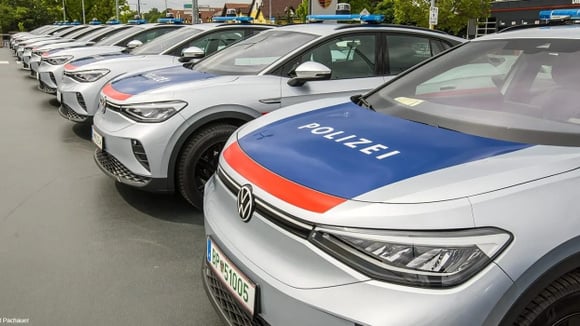
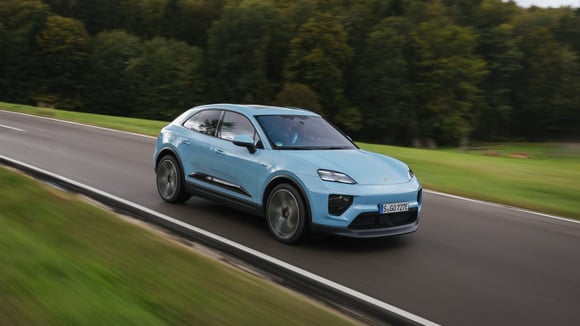
In 2024, the Federal Ministry of the Interior of Austria launched Project Tron, aiming to introduce a fleet of 24 electric cars across four brigades: Lower Austria, Salzburg, Tyrol, and Vienna. The selected models, primarily Volkswagen ID.3 and ID.4, along with a Porsche Macan for motorway interventions, seemed to meet the demands for modernity and sustainability. On paper, these vehicles offer interesting performance, but the reality on the ground quickly revealed major incompatibilities.
A Bitter Realisation: Urgency Does Not Tolerate Constraints
Feedback from law enforcement is unequivocal. While electric cars are suitable for routine administrative journeys, they face critical limitations in emergency situations. The availability of vehicles is compromised by the need for frequent, often lengthy recharges, hindering their response capability. The equipment constraints, which add weight to the vehicles, further exacerbate this issue, reducing range and rendering these models unsuitable for the demands of the job.

Insufficient Performance for Critical Missions
The Volkswagen ID.3 and ID.4 have a maximum speed of 160 km/h. This may seem adequate for daily use, but for the police, this limitation is problematic, particularly during high-speed pursuits on the motorway. At this speed, range decreases drastically with multiple passengers and all necessary equipment on board. While the Porsche Macan has demonstrated superior performance, its prohibitive cost (starting at €83,100 in France) makes large-scale deployment unfeasible.

A Matter of Budget and Efficiency
The cost of electric vehicles and their profitability are at the heart of the debate. In France, the police recently opted for superethanol E85 for its fleets, a more economical alternative, but one that does not seem easily replicable elsewhere in Europe. The choice of electric by the Austrian authorities appears to be a risky bet, poorly assessed against budgetary and operational demands. With additional adaptation costs, deploying electric vehicles proves burdensome for public finances.
A Return to Square One: What Alternatives Exist?
The report published by the ministry mentions a positive use of electric cars only for delivery missions outside of police operations. This situation raises a crucial question: what alternatives are available to law enforcement? Traditional combustion engines, often perceived as more reliable and suited to emergency missions, are regaining favour against a technology still maturing in the electric realm.
Technological Challenges to Overcome
It is clear that transitioning to a fully electric fleet requires significant technological advancements. Issues of rapid charging, real-world range, and infrastructure adaptation must be addressed. Manufacturers must redouble their efforts to develop viable solutions for professional fleets, as the Austrian police are not the only ones questioning the effectiveness of electric vehicles in demanding contexts.
In Summary
- The Austrian police abandon their electric fleet project after two years of trials.
- Charging and range constraints were determining factors in this decision.
- The Porsche Macan showed better performance, but its high cost limits its adoption.
- The choice of electric raises questions about the future of public fleets in Europe.
- Technological advancements are necessary to make electric viable in critical missions.
Useful Conclusion: This return to a more traditional powertrain could prompt other countries to reconsider their choices regarding vehicles for public services. Alternatives such as superethanol or even hybrids could emerge as viable short-term solutions. In a world where the energy transition is increasingly pressing, it is clear that each sector must find its own path to balance performance and sustainability.