China, amidst an automotive revolution, is tightening its regulatory framework surrounding assisted driving. The recent decision from the Supreme People’s Court emphasises that, despite the rise of technology, responsibility in the event of an accident still lies with the driver. This emphatic message could resonate beyond China’s borders.
An Evolving Legal Framework
In recent years, China has intensified its efforts to regulate the use of assisted driving systems. This move is part of a broader initiative where the Middle Kingdom seeks to ensure road safety amid rapidly evolving technologies. Activating these assistance systems does not delegate responsibility to the vehicle; the driver remains involved. In other words, even when advanced functions manage steering or braking, it is the driver who remains legally accountable.
This decision is particularly crucial as assisted driving technologies become ubiquitous in the Chinese market, especially in electric vehicles. The implications of this stance are vast, as they could influence the design and marketing of vehicles worldwide. The Supreme Court does not hesitate to clarify any ambiguity, reminding manufacturers that assistance should not be perceived as a delegation of power.
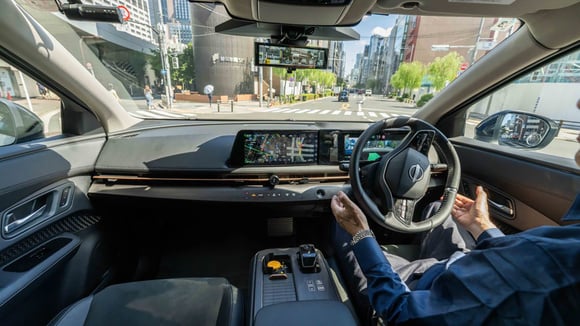
The Chinese Supreme Court reminds us that assisted driving never transfers responsibility to the vehicle. A strong signal for the global automotive industry. © Nissan
Concerns Addressed by Beijing
The Supreme Court’s decision is based on concerning behaviours observed among some drivers, such as excessive phone use or a lack of attention after activating driving aids. The Court also points to devices that deceive driver monitoring systems, allowing drivers to avoid alerts by simulating an active presence at the wheel. Such practices could now exacerbate the driver’s liability in the event of an accident.
The Court’s intention is clear: to clarify the boundaries of “intelligent driving”. This move could also encourage other countries to adopt similar regulations, reinforcing the need for human responsibility in a context where technology is advancing rapidly.
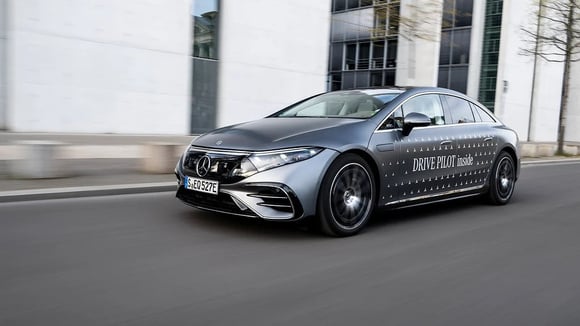
In Europe, only a few manufacturers have taken the step to level 3, such as Mercedes, under very controlled conditions and on limited motorway stretches. © Mercedes
A Decision Consistent with Level 3 Openness
The firmness of the Supreme Court may seem contradictory given China’s openness to level 3 automated driving systems, which have already been tested on certain motorways. Brands like Changan and Arcfox have received permits to deploy these technologies, but under strict conditions. At this level, the driver can effectively divert their attention, and responsibility can be transferred according to established rules.
This innovative legal framework clearly distinguishes level 2 assistance, which requires constant driver supervision, from level 3, where the vehicle can take dynamic control. This Supreme Court decision sets a clear boundary: outside of approved level 3 scenarios, activating assistance is not enough to transfer responsibility to the vehicle. China is advancing towards automation while ensuring that there is no grey area between assistance and actual delegation.
Europe: Cautious Deployment but Already Structurally Established
In Europe, the approach is more measured regarding the deployment of these technologies. Currently, only a few manufacturers, such as Mercedes, have crossed the threshold to level 3, and this is under very controlled conditions. European regulation, inspired by the UN R157 framework, remains restrictive. However, France has anticipated liability issues by incorporating a provision in its Highway Code that states a driver cannot be held criminally responsible if the automated driving system is effectively exercising dynamic control of the vehicle.
This European approach, although slower in implementation, demonstrates a willingness to share responsibility between the driver and the manufacturer, depending on the degree of actual delegation. This sharing could become a model for other regions of the world as technology continues to evolve.
Implications for the Automotive Industry
This Chinese decision could have profound repercussions for the global automotive industry. As manufacturers seek to develop increasingly sophisticated assisted driving systems, they will need to consider this new legal reality. Marketing messages surrounding “autonomous driving” will need to adapt to avoid any ambiguity regarding liability in the event of an accident.
In summary, this clarification could dampen enthusiasm surrounding certain technologies, as consumers are now aware that their role remains central in driving, even with advanced assistance systems. It could also influence the strategies of market players, leading some to prioritise innovations that ensure better safety and clearly established responsibility.
In Summary
- China reinforces its regulation on assisted driving, asserting that responsibility remains with the driver.
- Dangerous behaviours observed prompt a clarification of legal responsibilities.
- Level 3 automation is in development but under strict conditions.
- Europe is progressing cautiously, already integrating elements of shared responsibility into its legislation.
- Manufacturers will need to adapt their communication and technologies to comply with these new standards.