In an ever-evolving automotive landscape, the longevity of a model has become a significant issue. The recent story of a Toyota Corolla surpassing 2 million kilometres without major intervention highlights the invincibility reputation of Japanese cars, while also raising questions about durability in the face of new consumption standards and modern driver expectations.
A Legend on Wheels: The Story of an Unusual Corolla
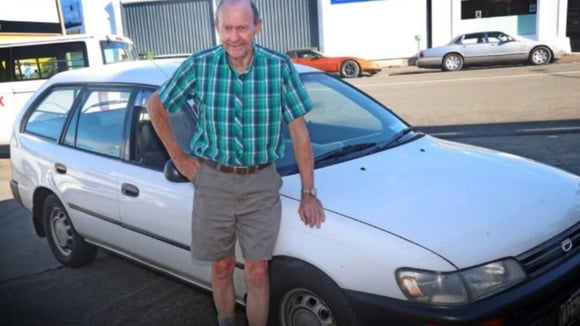
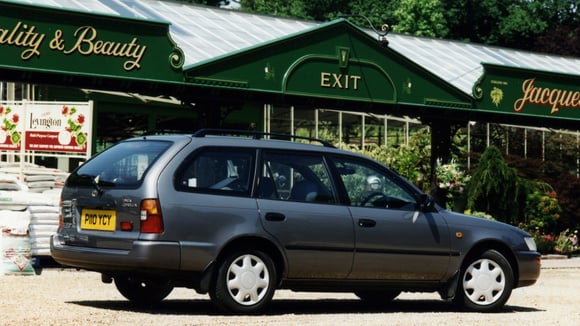
This particular model is a seventh-generation Toyota Corolla wagon, produced between 1993 and 2002. This vehicle, which became the workhorse of a New Zealand delivery driver, has covered 2 million kilometres in 25 years. To put that in perspective, it’s equivalent to circling the Earth 50 times! This impressive figure comes not from occasional use, but from a daily delivery routine across the island. Owner Graeme Hebley maintained a pace of nearly 5,000 km per week, intertwining his fate with that of his car. This case is not unique in the realm of older Toyotas, but it reveals a car culture where reliability reigns supreme.
The Secret to Longevity: Rigorous and Preventive Maintenance
What sets this Corolla apart is its meticulous maintenance. Hebley followed a strict maintenance schedule, with oil changes every two weeks and regular replacement of wear parts. In contrast, many modern car owners sometimes neglect these aspects in favour of more advanced technologies. This raises a question: does the increasing complexity of today’s vehicles hinder their longevity? Indeed, while this Corolla still runs on its original engine and transmission, newer models, often more sophisticated, can require costly repairs as soon as the warranty expires.

A Testament to Timelessness
Graeme Hebley’s Corolla has become a showcase of Japanese reliability. With its 1.8L naturally aspirated engine producing 117 hp, it embodies a mechanical simplicity often overlooked by technological innovations. As the automotive sector focuses on electric engines and complex onboard systems, this example serves as a reminder that robustness can sometimes outweigh sophistication. This Corolla demonstrates that a model can endure through decades if its design and construction prioritise durability.

The Challenge of Modern Standards: Redefining Reliability?
As modern cars trend toward increased electrification and connectivity, the question of durability becomes more pressing. New environmental standards and consumer expectations are shifting the landscape. Yet, this type of longevity could become a rarity as manufacturers focus on technological innovations at the expense of robust construction. In short, the example of this Corolla could prompt manufacturers to rethink their priorities, placing reliability at the core of their strategies.
A Symbol of Hope for Car Enthusiasts
The longevity of this Corolla has sparked excitement among car enthusiasts. It has become a source of inspiration for those aspiring to own a vehicle capable of defying time. Collectors and vintage car lovers may see this model as a long-term investment, contrasting with the rapid depreciation of recent vehicles. Thus, this Toyota reminds us that the bond between a driver and their vehicle can transcend mere utility.
In Summary
- A Toyota Corolla has covered 2 million kilometres without major interventions.
- A rigorous maintenance routine ensured the vehicle’s longevity.
- This model highlights the reliability of older Japanese cars.
- Modern standards may redefine what constitutes a durable automobile.
- This story is a symbol of hope for vintage car enthusiasts.
Conclusion: Graeme Hebley’s Toyota Corolla represents much more than a mechanical feat. It embodies an era where simplicity and robustness took precedence over complex technology. As the market evolves toward increasingly sophisticated models, it may be wise for manufacturers not to forget the very essence of what makes a reliable car. For enthusiasts, this Corolla is a model to emulate, a reminder that sometimes, the past can illuminate the future. For those seeking an alternative to modernity, older Japanese cars, particularly Toyotas, could be a wise choice.