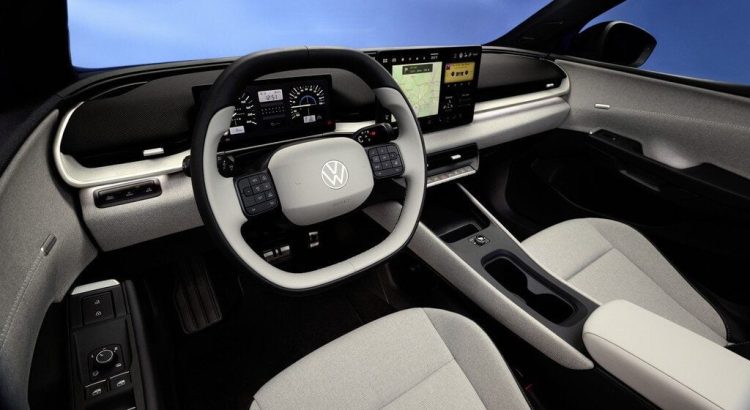
Volkswagen has succeeded in piquing our curiosity by unveiling the interior of its upcoming ID. Polo, an electric city car that promises to reconcile tradition and innovation. With a giant 13-inch screen and physical controls, this car seems to move away from the excesses of all-touch interfaces to return to the fundamentals appreciated by motorists.
The interior of the new Volkswagen ID. Polo
Who would have thought that a weekend at the end of the school holidays would be the moment chosen by Volkswagen to reveal the first images of its new ID. Polo? It’s almost a gamble, as if the manufacturer wanted to avoid the attention of the crowds. However, these snapshots reveal much more than just lines on glossy paper. This return to physical controls could well redefine the standards of modern ergonomics, a trend that we had already sensed last year. Good news for customers who were tired of haptic feedback buttons: the upcoming ID. Polo combines the screen with real, tangible, and intuitive buttons.
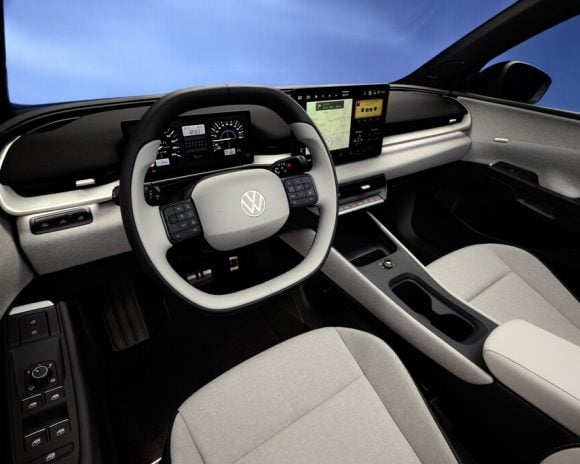
Here is the interior of the Volkswagen ID.Polo © Volkswagen
To start this new era, Volkswagen has decided to integrate a large 12.9-inch central screen, a record size in the city car segment. While this might raise a few eyebrows, the brand has managed to balance this technological advancement with a row of dedicated buttons, allowing adjustments for:
- Temperature (separate settings for driver/passenger).
- Ventilation power.
- Demisting functions and hazard lights.
And that’s not all! The steering wheel also abandons impractical haptic buttons in favour of real buttons, which are much more pleasant to use. Even the lighting controls return to a physical format, while a rotary knob on the centre console allows for audio volume management, a small pleasure for budding music lovers.
ID. Polo cockpit: between gigantism and nostalgia
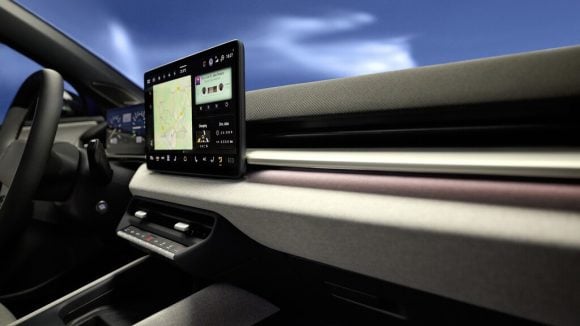
(Very) large touchscreen for the new Volkswagen ID.Polo © Volkswagen
Aesthetically, the ID. Polo follows the current trend with a large digital panel in the centre and a streamlined dashboard. Its double flat-bottomed steering wheel strangely resembles what is found at Renault, particularly on the new 5, bringing a touch of nostalgia to those who experienced the 80s. This shape of the steering wheel and the size of the screen are divisive, but they contribute to creating a strong identity for the model.
The dashboard, on the other hand, is stripped back and horizontal, without the traditional “visor” above the digital instrumentation. This wise choice enhances the feeling of space and highlights the two screens: a 10.25-inch display facing the driver and the central 13-inch panel. To appeal to purists, Volkswagen has even integrated a digital “Easter Egg”: the instrumentation can adopt a retro display mode mimicking the needle gauges of the Golf 1. A nod that will surely delight nostalgic customers!
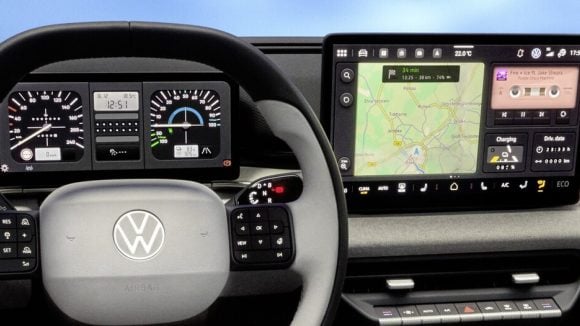
The gauges styled like the “Golf 1” of the ID.Polo © Volkswagen
ID. Polo: farewell to foamed plastic
The ID. Polo also marks a break in material choices. The foamed plastic, often criticised and likely to disappear in the coming years for ecological reasons, gives way to large textile surfaces. This fabric adorns a complete band of the dashboard as well as the door panels, integrating customisable ambient lighting. The door handles, now integrated as vertical levers on the armrests, add a modern and ergonomic touch.
Finally, let’s remember that the ID. Polo is promised at an entry price of around €25,000, with the announcement of a GTI version to come. Enough to entice thrill-seekers!
With this new model, Volkswagen seems to have taken customer feedback into account while remaining true to its heritage. The upcoming ID. Polo could well redefine expectations regarding interiors in the electric city car segment.
To follow all the developments of the German brand, visit our Automotive News section.