

In the automotive world, size isn’t everything. Some of the greatest legends on four wheels hide in miniature bodies, ready to make you smile or dream. These small models, often overlooked, are like rare jewels, sparkling with history and charm. Let’s explore these treasures of the tarmac.
What is a small car?
The definition of “mini” is more elastic than a tyre under pressure. Here, we are talking about vehicles smaller than the norm, a category that excludes iconic cars like the Ford Model T, but includes mythical references like the Volkswagen Beetle. I set a size threshold: no larger than a beetle, but I won’t include Japanese supercars like the Honda Beat or the Daihatsu Copen – they deserve their own essay. That said, we will focus on compact cars, both European and Japanese.
We will leave utility vehicles aside, so no vans or food trucks here! We have a tasty mix of iconic miniature models that have marked their era. Some will remind you of childhood memories, while others will charm you with their originality. Get ready to discover some of these mechanical wonders!

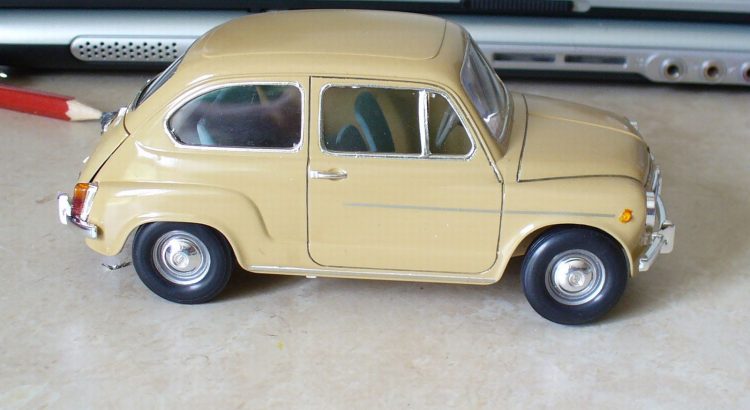
Let’s start with a classic: the Fiat 600. An elegant model with a sleek design, this little gem is equipped with a rear-mounted inline four-cylinder engine. It’s not just a car; it’s an Italian work of art. Imagine a small café in a square in Rome, where the Fiat 600 rolls slowly, attracting all eyes with its charming curves.
Pioneers of the small car segment
The first model I would like to discuss is the BMW 3/15. Although sometimes considered a copy of the Austin Seven, this vehicle has its own features that make it unique. Produced under license from Dixi in the 1920s, it offered Germans a motorized means of transport that seemed revolutionary at the time. Seeing it, one realizes how much times have changed; this car is almost rudimentary compared to modern standards.

Look at this model: a beautiful piece of automotive history that paved the way for more advanced designs. With its vintage look and quaint charm, the BMW 3/15 is a living reminder that progress does not come without some trial and error.
Next, let’s dive into the world of Renault with the 4CV. After World War II, Renault had the brilliant idea to launch this model with rear engines. This vehicle enjoyed great success in Australia in the 60s and has managed to traverse the decades with style. Its robustness allowed it to outlast other models like the Dauphine, which were less appreciated.

The 4CV is much more than just a car; it is a symbol of resilience and French ingenuity. It represents the spirit of an era when access to mobility was on the rise.
The adventure continues: icons that inspire dreams
Now let’s move on to the Austin A30, a model that debuted with the innovative idea of monocoque construction. With its small noisy engine and compact size, it was indeed a bit cramped, but it managed to win the hearts of small car enthusiasts. The fact that this car is shorter than a Morris Minor is both amusing and revealing!

This model perfectly embodies British charm: it is both functional and disarmingly simple.
Speaking of simplicity, who could overlook the BMW Isetta? Introduced in the 1950s, this little bubble on wheels is often mocked as “a car without wings.” But in reality, it was a major innovation in automotive design. It represents a key moment when manufacturers began to think differently about mobility needs.

The beauty of the Isetta lies in its ability to make urban transport not only practical but also fun. Who wouldn’t want to take a spin around town in this little marvel?
A delightful mix of automotive culture
The Messerschmitt KR175 is also worth mentioning, often regarded as a sort of bizarre contraption. Contrary to what some might think, it was not just a wingless shell! With its distinctive design and modest performance, it perfectly represents the quirky side of the small car market.

Enthusiasts can appreciate its atypical appearance and fascinating history. A true piece of German culture that will make any car lover smile.
Let’s not overlook the Fiat 500, often considered the ancestor of modern city cars. With its rear engine and impressive compactness, it has made its mark on the Italian automotive landscape and beyond. It’s as if every Fiat 500 is dressed in a tuxedo for an elegant evening – always ready to make an impression.

With its timeless design, the Fiat 500 remains an undisputed reference in the world of small cars.
Conclusion: The legacy of small cars
Ultimately, these iconic small cars remind us that sometimes, the greatest stories are hidden behind the smallest bodies. Each one carries a rich cultural heritage and a unique story. Whether through their technical ingenuity or undeniable charm, they continue to enchant enthusiasts and novices alike.
Whether you are a collector or simply curious, these iconic miniatures deserve to be celebrated as an integral part of our global automotive heritage. So don’t hesitate to explore these gems on wheels further! If you wish to discover more about these fascinating models, dive into our section dedicated to automotive passion and collection.
Official sources:


