


Flipping through an old issue of Car and Driver from May 1964, one finds themselves immersed in a world where power and speed are the true stars. Forget practical considerations; here, every advertisement is a hymn to performance. Between nostalgia and exhilaration, let’s discover how these ads have shaped our vision of the automobile.
A monochrome aesthetic
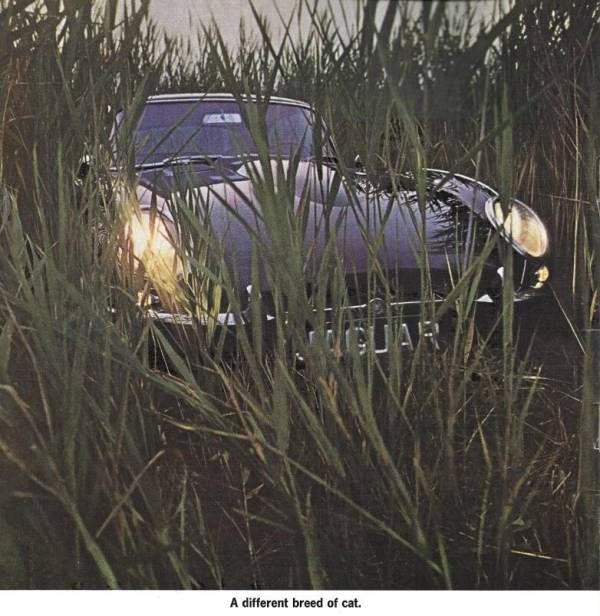
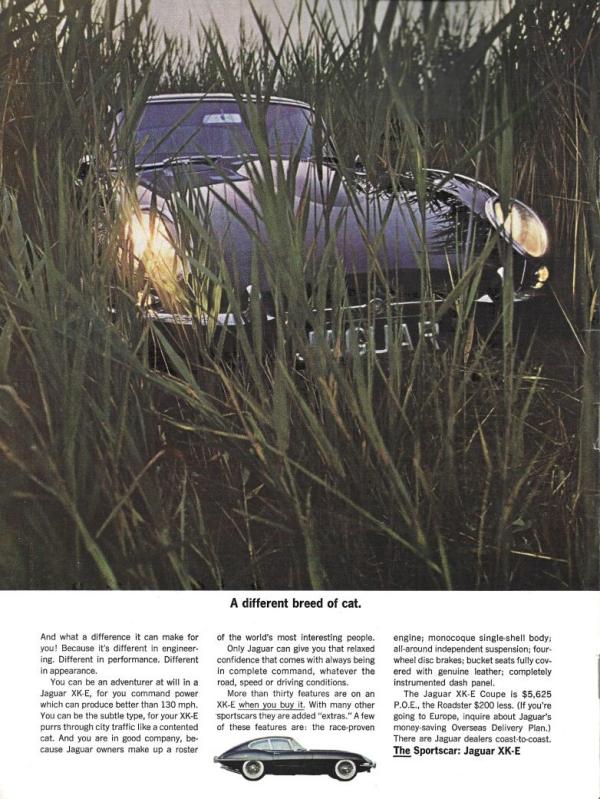
For a future archaeologist, deciphering our advertisements could prove to be a fascinating task. The pages of Car and Driver, compared to other mainstream magazines like Life or even National Geographic, seem rather bland, almost monochrome. This ad for the legendary Jaguar E-Type, one of the few in colour, stands out for its elegance. It quickly reveals that this beauty can reach over 210 km/h. At the time, the price of $5,625 for the coupe, and $5,425 for the roadster, was a true bargain considering its performance.
Citroën and its avant-garde technology
Imagine for a moment that you are in America in the 1960s. A Citroën ID or DS would be as rare as a unicorn. Yet, if someone decided to buy one, they would probably have a subscription to Car and Driver or Road & Track. The ad starts with a little joke about front-wheel drive before proudly announcing its ability to exceed 160 km/h while offering exemplary fuel consumption of 8 to 6.5 L/100 km. There is something comforting in this promise of economy.
BMW and the art of performance
Ah, BMW! Who can resist an ad that highlights the engine, the true heart of this German brand? This model, emblematic of the Neue Klasse, is described as a masterpiece of German engineering. With a promise of excellence on the road, these cars were must-haves for thrill-seekers.

Lotus and humour in performance
Lotus is not lacking in personality, even in its advertising. If you have ever heard the slogan “Lots of trouble, usually serious”, you will understand that the British manufacturer has a sharp sense of humour. Seeing an Elan immediately transports me back to the era of Emma Peel in The Avengers. But it’s not just a pretty face: “Fourth gear can pull from 27 km/h.” Not 26 or 28, but 27. That’s what you call precise marketing!

Corvair: the American sports spirit
The ad for the Corvair Monza Spyder is a timeless classic. This model has become iconic and still raises questions: “Is it a Spyder?” The advertiser invites us to try the sport bucket seats while reminding us that driving requires a certain mastery of manual gear shifting. The turbo touch adds a dose of mystery and excitement to the package.

The British gems
It is impossible to talk about this era without mentioning the Triumph TR-4. For only $2,849, one could get a beautiful British car with figures that make you dream: 0 to 100 km/h in 10.5 seconds. A bit optimistic? Perhaps. But that’s what makes the charm of these vintage advertisements.

Mercedes and the unattainable luxury
The “Grand Mercedes” (model 600) might seem out of reach for most readers, but it undoubtedly drew curious onlookers to showrooms to discover less luxurious yet equally impressive models. The exorbitant price of $19,500 for the five-passenger sedan was an invitation to dream.

Volkswagen and its quirky humour
If there’s one brand that knows how to play with its image, it’s Volkswagen. In this advertisement for the Karmann Ghia, the slogan “Volkswagen, Italian Style” evokes both Italian elegance and the quirky personality of the German brand. It’s a bit like offering a fine French wine in a plastic bottle; it shouldn’t work, but strangely, it does!

Pontiac and the free spirit of the 60s
Pontiac hits hard with its ad for the 2+2 model with bucket seats. With a slogan that seems to foreshadow Timothy Leary’s famous “Turn on, tune in, drop out”, this advertisement plays on the idea that driving is a personal emancipation experience.

The charm of small cars
It’s hard to overlook small cars like the Peugeot that were much more common on American coasts than in the heart of Michigan. The ad presents all the technical details necessary to entice the informed enthusiast.

The authenticity of the 60s
That’s the beauty of car advertisements from this era: they do not seek to mask their flaws behind unrealistic promises. Rather than selling an unattainable dream, they offer an honest glimpse into the automotive world as it was, raw and unvarnished.


