In a crucial turning point in its Formula 1 history, Alpine reinvents itself with its new A526, a model aimed at correcting the course after a disastrous 2025 season. The engineers at Enstone have no excuses left, and they prove it with bold technical choices, including a rear wing that bends to the demands of innovation while defying conventions.
A Challenging Context for Alpine
Alpine must navigate through turbulent waters in Formula 1. After a 2025 season where it finished last in the constructors’ championship, the pressure is immense to return to the top. Flavio Briatore had made the customer Mercedes engine a sine qua non condition for the project’s survival, and now that this goal has been achieved, the Enstone team is pushed to deliver performances worthy of its status. The new Alpine A526, under the leadership of David Sanchez, is the spearhead of this renaissance.
A Single-Seater with a Unique Design
The A526 features technical choices that provoke as much admiration as debate. In terms of suspension, Alpine opts for a pull-rod system, a solution found only in Cadillac, while other teams prefer push-rod suspension. This bold choice could make a difference on the track, but it also raises questions about the car’s handling.
Aerodynamics: Innovation at the Heart of the Strategy
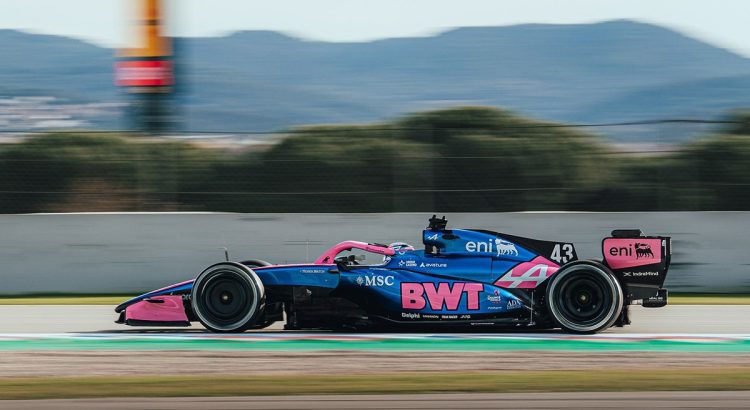
The aerodynamicists at Enstone have been hard at work. They have experimented with an active aerodynamic system that is already making waves. Unlike most teams that raise the leading edge of their rear wings, Alpine chooses to lower the trailing edge. This reverse movement could offer unexpected advantages, but it requires meticulous calibration to avoid compromising the overall balance of the single-seater. At the rear, there is also a sidewall elegantly curved outward, designed to optimize airflow over the rear wing while respecting the limits imposed by regulations.

The Alpine A526 during testing in Barcelona
Promising Evolutions
The first tests in Barcelona have already revealed interesting aerodynamic modifications. The radiator inlet, located well ahead of the side safety device, slightly protrudes from the bodywork. This choice is bold and could affect the car’s road behavior. By the third day of testing, adjustments were observed, hinting at further evolutions to come.

Franco Colapinto, Alpine A526
Cooling and Thermal Management
Thermal management is a major issue in F1, and the Alpine A526 is no exception. On the third day of testing, the engine cover was opened to improve cooling, a decision that reflects the importance placed on reliability and engine performance. The team continues to refine its design by integrating elements such as a robust deflector behind each front wheel, and a second support rod has appeared on the imposing bargeboard.
Conclusion: Boldness as a Driver of Performance
Alpine seems ready to play in the big leagues with its A526. By shaking up established codes through bold technical choices and an innovative aerodynamic strategy, the Enstone team hopes not only to step out of the shadows but to shine on the global Formula 1 stage. The initial tests are encouraging, but the real test will begin on the circuits. To follow the developments of this promising model and discover all the news in Formula 1, feel free to check out our dedicated Formula 1 section.