


In the ruthless world of Formula 1, communication is often the key to success. Ayao Komatsu, the new team principal of Haas, recently revealed the chaotic behind-the-scenes of his team before taking office. With a 2025 season marred by major issues, he almost walked away. But what really happened?
A Delicate Start
As a guest on the High Performance podcast, Ayao Komatsu made a striking return to the tumultuous beginnings of Haas. From the very first Grand Prix of the 2025 season, the American team faced a major performance issue with its car, resulting in a significant loss of lap time compared to the competition. Imagine starting your first day at work only to find your office on fire; that’s a bit of what Komatsu experienced.
Despite this chaotic start, Haas managed to turn things around, finishing the season with its second-best points total since its arrival in Formula 1 in 2016. An achievement that Komatsu did not fail to highlight, while reminiscing about the crisis management that preceded his arrival at the helm of the team, at a time when Günther Steiner was still the director.
A Communication Breakdown
The Japanese director did not mince his words: “To start with, I don’t think we would have agreed on acknowledging the fundamental problems, because communication was catastrophic.” In other words, transparency and open-mindedness were sorely lacking, creating an environment where everyone blamed each other without ever moving forward.
Komatsu quickly realized that to turn the situation around, it was imperative to resolve the communication issues. “The only important thing is to find a solution, in a professional manner. That didn’t exist before,” he stated. Imagine a football team where the players don’t talk to each other: the result is often disastrous, and that’s exactly what was happening at Haas.

Before taking on his current role, Komatsu was the engineering director within the team, which allowed him to have a good understanding of the internal workings. Upon his arrival, he immediately planned interviews with team members, first at the Banbury factory, where he resides, and then at the Italian facility, where communication seemed to be even more problematic. The goal: to understand the perceptions of different members regarding the difficulties faced by the 2023 car.
Productive Disagreements
During these exchanges, many admitted to not having a clear idea of the problems affecting the car. “During debriefings, we explained exactly the feedback from the field and what the drivers were saying. But some people claimed that it wasn’t really the problem,” Komatsu stated. This somewhat resembles a reunion of former students where everyone remembers an event differently; the goal is to reach a consensus to move forward.
For the director, it is normal to have disagreements, but it is essential that a decision is made quickly to avoid wandering in uncertainty. “If there are ten senior engineers in a room, they won’t all agree on the priority issues. But if a direction is chosen, at least everyone must understand why that direction was taken.” This lack of clarity was a real poison for Haas.

A Moment of Reflection: Leaving F1?
When Komatsu was asked about his ability to change things before his arrival, he admitted to having moments of doubt. “To be completely honest, I was ready to leave at the end of 2023,” he revealed. The situation was such that he saw no way out. The tensions were palpable and collaboration nonexistent. The perfect analogy would be a ship taking on water, with the crew unable to agree on the best way to patch the leaks.
“I felt like I had laid everything on the table, but nothing was changing. I’m not interested in coming to a track just to be present,” he added. He then decided to stay, driven by a sense of responsibility towards his colleagues. “I won’t leave until I’ve tried everything,” he told himself.
The Impact of His Past Experience
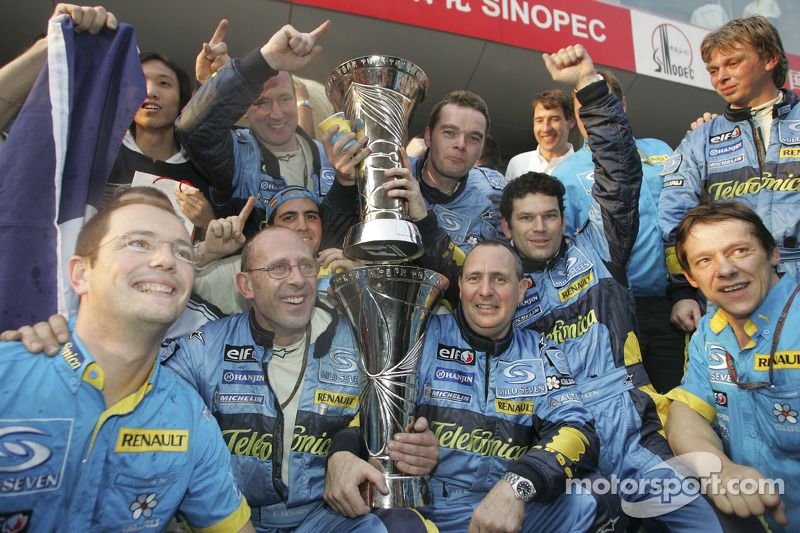
Ayao Komatsu is no stranger to the challenges of motorsport. Before joining Haas, he honed his skills at Renault, where he contributed to the team’s success. “When I worked at Enstone… I arrived there in 2006,” he recalls. At that time, Renault was winning world titles thanks to an internal organization that concealed a formidable efficiency. “It was incredible. The difference is that these eight people all contributed directly to performance,” he emphasizes.
He compares the efficiency of Enstone to the chaotic situation at Haas: “At Enstone, there was a very clear backbone within the team.” In an environment where everyone knows what they need to do and why, success becomes almost inevitable. For Komatsu, this represents a model to follow for Haas.
In conclusion, Ayao Komatsu embodies the hope for a revival at Haas F1. His determination to establish clear and transparent communication could very well transform this struggling team into a high-performing one. It remains to be seen whether his expertise and strategic vision will be enough to steer the ship in the coming seasons.


