The Formula 1 of 2026 is set to redefine the limits of speed and acceleration. Drivers like Esteban Ocon and Kimi Antonelli are discovering unprecedented performance thanks to a hybridization pushed to its peak, blending thermal and electric power in a frenzied dance. Hold on tight, it’s going to blow your mind!

A New Hybrid Breath
The 2026 version of Formula 1 pushes hybridization even further than in the previous decade, with a power distribution now balanced between the V6 thermal engine and the electric system (ERS). At its peak, the electric part can provide up to 350 kW, energy harvested only during braking phases thanks to the MGU-K. Although this energy stock is limited by battery size, its impact is striking.
Unlike previous years where the share of electric energy represented only 15 to 20% of total power, the impact of this new distribution is clearly felt during acceleration phases. Electric energy is available immediately, turning every pedal push into a true thrill.
Mind-Blowing Impressions
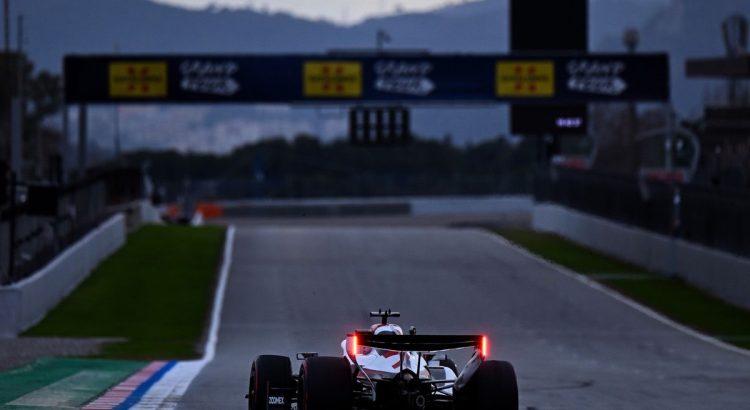
During private testing in Barcelona, Esteban Ocon shared his astonishment at this new dynamic. Asked by Motorsport.com, the Haas driver stated, “What surprised me the most is how quickly the speed climbs on the straight. I never thought I would reach 350 km/h so fast.” A statement that speaks volumes about the evolution of the single-seaters.
Ocon also mentioned a particular moment: “We had an irregular deployment during one lap, and I reached 355 km/h in the first corner in Barcelona. The braking was very different from previous laps.” This surge in power left the driver speechless. “It’s something I’ve never felt in Formula 1 or in any other car I’ve driven before. It was really crazy.”
Unmatched Speed
Later, speaking in French, Ocon added, “This is probably the F1 that accelerates the fastest of all time, with the most instantaneous power. In Barcelona, reaching 350 km/h at the end of the straight was unheard of compared to before.” His words resonate like an echo of a new era for Formula 1, where every second counts and acceleration becomes almost hypnotic.
A Shared Experience
Kimi Antonelli, driving the Mercedes W17 during testing, also corroborated this impression. The driver confided, “In terms of power unit, the difference is huge compared to last year.” He continued, “The electric motor gives us much more power. The acceleration is quite brutal, especially when we reach 350 km/h.”
It is true that this sensation does not last the entire straight, but it remains enjoyable to drive. Drivers are faced with a radically transformed driving experience, where every turn becomes a challenge and every straight invites exploration of the limits of speed.
A Promising Future
As these new single-seaters reveal their potential, the future of Formula 1 looks promising. Spectators can expect even more thrilling races, where acceleration and driver performance will be tested like never before. With this hybridization pushed to its extreme, motorsport enters a new era where technology and adrenaline meet on the track.
It’s undeniable, we are on the brink of a revolution in Formula 1. An evolution that is already exciting fans and could well redefine speed and acceleration records in the years to come. To follow all the news of this fascinating sport, feel free to check out our dedicated section on Formula 1.