

As technology advances at a rapid pace, car insurance fraud is taking a worrying turn. Scammers, armed with sophisticated digital tools, are exploiting vulnerabilities in online reporting systems to maximise their gains. This phenomenon, amplified by artificial intelligence, raises critical questions about the viability of insurance and the protection of honest policyholders.

A Growing Epidemic
Car insurance fraud is not new, but its scale is steadily increasing. Recent statistics show that between 2022 and 2023, false claims rose by 26%, resulting in a loss of €237 million for insurers. This figure only accounts for identified cases. In short, it is a genuine plague impacting the premiums of all policyholders, raising costs for those who play by the rules.
When AI Becomes Scammers’ Ally
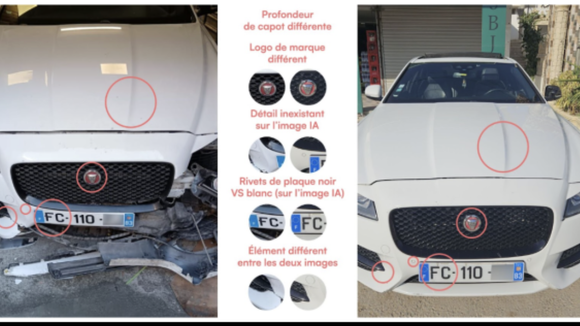
Scammers are constantly reinventing their tactics, and the latest trend involves the use of artificial intelligence. Now, fraudsters manipulate images to deceive insurers. They can present a damaged vehicle as if it were in perfect condition through digital retouching. According to a report from online insurer Leocare, 50% of analysed fraud attempts involve physical or digital alterations of the vehicle at the time of underwriting.
Increasingly Sophisticated Methods
Scammers do not just send retouched photos. They go as far as creating false claims using manipulated images of vehicles identical to theirs, placing their number plates on these vehicles. This makes fraud detection even more complex. On average, each fraudulent claim costs insurers €2,500, a significant burden on the finances of insurance companies and, by extension, on honest customers.
Insurers’ Response: A Technological Battle
In response to the rising tide of fraud, insurers are integrating advanced technologies into their detection processes. Photos submitted by policyholders are now analysed by specialised teams, assisted by artificial intelligence algorithms. These tools help identify anomalies and suspicious modifications in images. However, this technological battle comes at a cost: up to 10% of an insurance premium may be allocated to fraud detection.
Consequences for Scammers: High Stakes
The repercussions of confirmed fraud are severe. Beyond being excluded by their insurer, scammers face legal action for fraud. In the most serious cases, the use of forged documents can lead to fines of up to €45,000 and up to three years in prison. If fraud is proven, penalties can reach €375,000 in fines and five years in prison. In summary, the risk often outweighs the reward.
Impact on the Insurance Market
The rise of AI-driven fraud could redefine the landscape of the car insurance market. Companies will need to adapt their economic models and strategies to confront this new reality. This may also lead some insurers to reassess their underwriting methods and integrate even more advanced technologies to secure their processes.
In Summary
- Car insurance fraud is experiencing an alarming increase, driven by AI.
- Scammers use image retouching techniques to deceive insurers.
- Insurance companies are investing in advanced technologies to detect these frauds.
- The consequences for scammers can be severe, both financially and legally.
- The insurance market may evolve in response to this growing threat.


