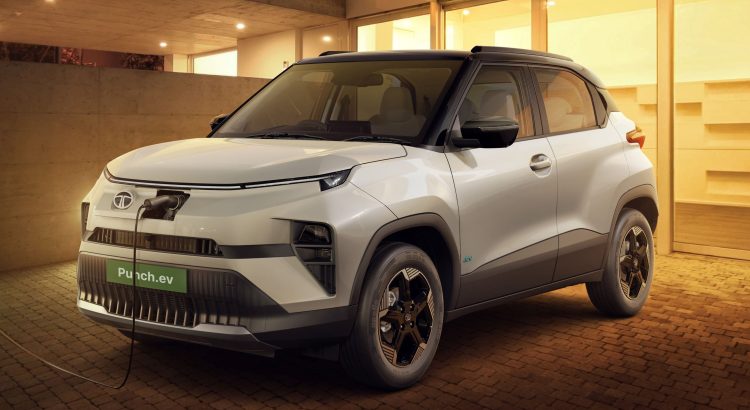
The quest for a new low-cost car seems to be a minefield for French buyers today. While prices for small city cars are soaring, other markets, such as India, continue to offer accessible models, albeit with very different choices and compromises. The Tata Punch EV exemplifies this disparity between two automotive worlds.

A Very Different Economic Reality
In France, the Dacia Sandero, long regarded as the symbol of automotive accessibility, now starts at €13,290. This figure is hard to swallow, especially when one recalls it was offered at €8,890 in 2019. This phenomenon can be attributed to a challenging economic climate, marked by the pandemic, rising production costs, and new regulations mandating safety equipment. In short, the French automotive landscape has changed radically, and budget-friendly small cars seem destined for extinction.

The Punch EV: An Enticing Entry Price
In contrast, the Tata Punch EV offers a dream entry price of around €6,050, nearly three times cheaper than a Dacia Spring. For this price, Indian customers benefit from an electric vehicle with a number of basic features, such as a regenerative braking system and digital instrumentation. However, this entry price conceals a reality: it does not include the battery. To access a “complete” version, one must fork out at least €9,030.

A Bold Yet Risky Strategy
Tata’s strategy of separating the cost of the vehicle from that of the battery is a bold gamble. Indeed, renting the battery by the kilometre may appeal to some consumers with limited purchasing power, but it also raises questions about long-term profitability. Each kilometre travelled costs around 2.6 rupees, or over 2 euro cents. This unprecedented economic model could attract customers, but it may also lead to frustrations if costs accumulate.
Inevitable Compromises
The Punch EV is not without its compromises. The entry-level version with its 30 kWh battery offers only 260 km of range, while the Long Range version, with a 40 kWh battery, reaches 355 km of range but remains limited in terms of fast charging. This situation raises a crucial question: are these compromises acceptable for Indian consumers, and what about European customers who might be tempted by such a model?
Choices That Impact Brand Image
By playing on prices, Tata aims to establish itself in a market where the demand for affordable electric vehicles is growing. However, this approach could harm its brand image if perceived as a low-cost strategy lacking appeal. In France, where expectations for quality and equipment are high, such an offer may struggle to find buyers without a judicious repositioning.
Towards a Redefinition of the Automotive Market?
The current situation could well provoke a redefinition of the European automotive market. If manufacturers do not adapt to the growing needs for accessible vehicles, they risk leaving opportunities to foreign brands like Tata. In this light, the future may see the emergence of a “Tata-style” segment of cars, combining low prices with technical compromises. An evolution that could also be influenced by new environmental regulations in Europe.
In Summary
- Affordable small cars are gradually disappearing from the French market.
- The Tata Punch EV offers a very attractive entry price, but without the battery included.
- The battery rental strategy is innovative but complex.
- Inevitable compromises on range and equipment.
- The European market could evolve towards more accessible models if manufacturers adapt.
Who is this analysis for? Potential buyers in search of a new low-cost car will face tough choices between cost and equipment. Alternatives exist in other markets, but with sacrifices to consider. The strengths of the Punch EV lie in its entry price and positioning in the Indian market, while its limitations are tied to range and the proposed economic model. The question remains: what will be the winning economic model in the years to come?