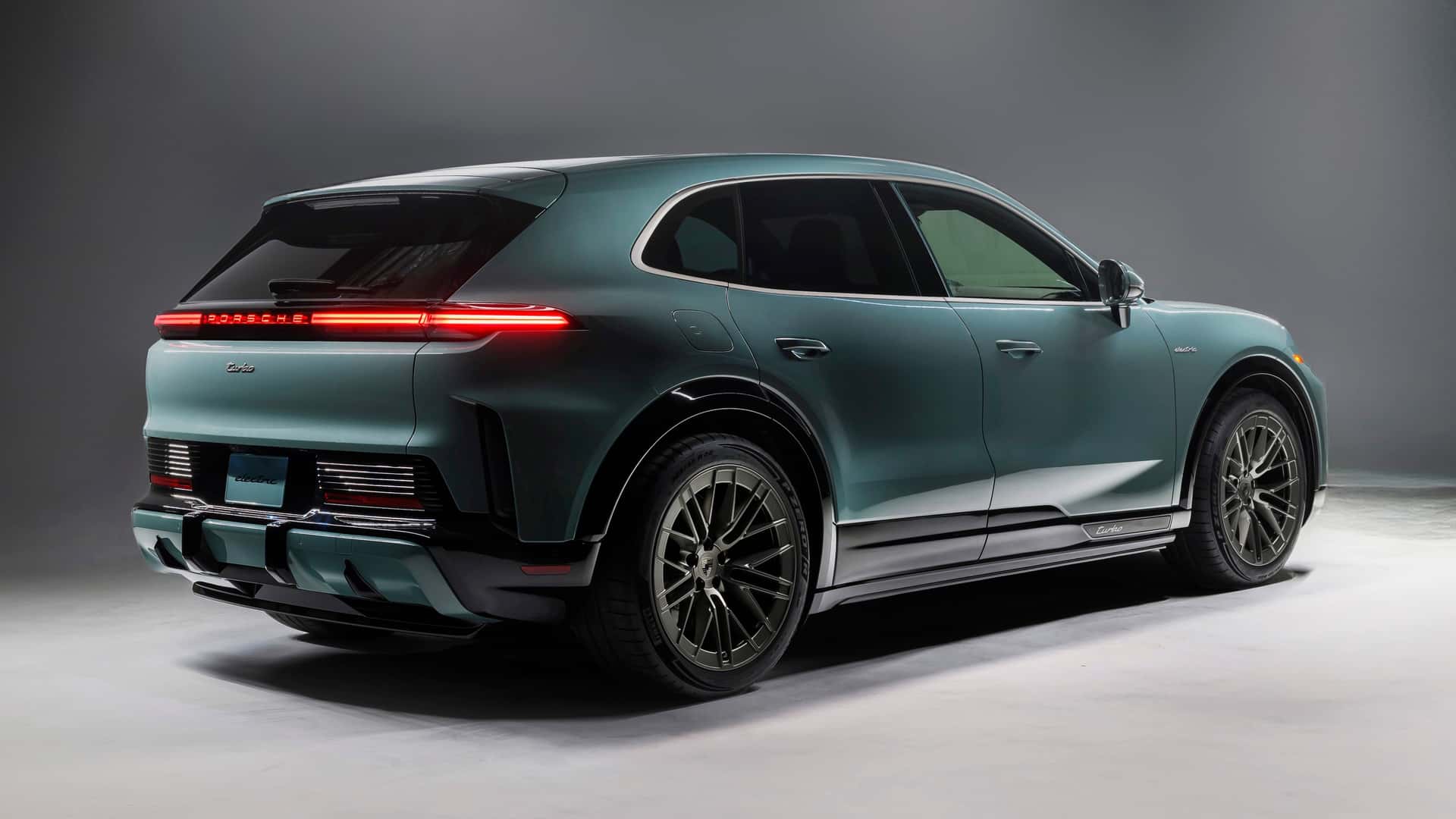
Porsche is making a strategic U-turn by abandoning its goal of an electric SUV, the K1, in favour of internal combustion engines. This decision, at the crossroads of electrification and market realities, raises questions about the brand’s future.

Initially, Porsche had set its sights on electrification as a growth lever, with a model range spanning sports cars, saloons, and SUVs. However, as interest in electric vehicles appears to wane, the German manufacturer seems to be recalibrating its ambitions. The recent announcement regarding the future K1 SUV, which was originally intended to be fully electric, comes as a surprise. According to a report from Autocar, the K1 will ultimately be offered with V6 and V8 engines. This decision highlights the challenges Porsche faces in a rapidly changing market.
A Platform that Changes Everything
The K1 will utilise the Volkswagen Group’s Premium Platform Combustion (PPC) instead of the fully electric Scalable Systems Platform (SSP). This change is significant. It allows Porsche to offer welcome flexibility, with configurations for five or seven seats and traditional internal combustion engines, as well as plug-in hybrids. In short, this strategic choice aims to meet the expectations of a customer base that seemingly still clings to internal combustion.
Familiar Powertrains, but Uncertain Positioning
The powertrains considered for the K1 are tried and tested for Porsche: a 3.0-litre V6 and a 4.0-litre V8. Power output is expected to mirror that of the Cayenne, with an estimated range of 350 to 730 PS depending on the variant. While these figures may appeal to thrill-seekers, they also reflect a repositioning that could be perceived as a step back by electrification purists. Nevertheless, this choice could also be interpreted as a pragmatic response to fluctuating demand in the SUV market.
A Retreat from Electrification
Oliver Blume, Porsche’s CEO, recently addressed this shift, emphasising that it reflects “the new market realities and the evolution of customer requirements.” This admission is telling: it reveals disappointment with electrification, a trend that seemed inevitable. While a 100% electric variant is not entirely ruled out, the fact that Porsche is choosing to take a step back on this issue raises questions about the brand’s global strategy.
Tricky Timing for Porsche
The K1 is set to launch about a year after the presentation of Audi‘s Q9, scheduled for late 2026. This timing is crucial. With production taking place at the Volkswagen Group’s factory in Bratislava alongside the Q9 and the electric Cayenne, Porsche must deftly navigate between tradition and innovation. In a market where competition is intensifying, particularly with players like Tesla and traditional brands heavily investing in electrification, this choice could impact Porsche’s image and perception.
A Changing Market
Porsche’s decision to forgo a fully electric powertrain for the K1 can also be seen as a response to market realities. Consumers appear hesitant towards electrification, particularly in the SUV segment. Thus, the K1 could appeal to a customer base seeking uncompromising performance, but also a form of psychological security that an internal combustion engine provides. In short, Porsche seems to be aiming to build on its historical strengths while continuing to explore electrification at its own pace.
Summary
- Porsche abandons electrification for its K1 SUV in favour of internal combustion engines.
- Utilising a shared platform with Audi for greater flexibility.
- The V6 and V8 powertrains hark back to the brand’s sporting roots.
- A repositioning that raises questions about Porsche’s electrified commitment.
- A choice dictated by market realities and consumer expectations.
In summary, this strategic shift highlights the challenges Porsche faces in a changing automotive market. Who is the K1 aimed at? Those thrill-seekers who have not fully abandoned internal combustion. Nevertheless, this manoeuvre could also be seen as an opportunity for the brand to redefine its image while keeping an eye on the electric future. In the medium term, it will be interesting to see how Porsche manages this duality between tradition and innovation in the face of increasingly tough competition.