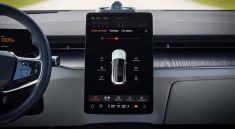
As Tesla positions itself for the approval of its autonomous driving system in Europe, the American manufacturer appears intent on redefining the rules of the game in an increasingly competitive market. However, behind this advancement lies a bold strategy that is both risky and potentially revolutionary.

The FSD: A Step Towards Autonomy in Europe
In a recent interview at the Berlin Gigafactory, Elon Musk mentioned a key date: March 20. On this day, the Netherlands could grant initial regulatory approval for Tesla‘s fully autonomous driving system, the Full Self-Driving (FSD) in its “Supervised” version. This development could mark a turning point for the European automotive industry, which has traditionally been more cautious than its American counterparts.

This approval is not merely a formality. It could pave the way for a gradual rollout in other EU countries, thereby altering public perception of the car from a mere means of transport to an autonomous device. In short, this could transform sales dynamics and the acceptance of automation technologies across the continent.
A Bold Strategy in the Face of Regulation
Tesla’s strategic manoeuvre rests on several pillars. On one hand, Dutch approval could strengthen its position against European competitors, often hampered by stricter regulations. On the other, it could serve as a precedent for other markets, prompting regulators to reconsider their stances on advanced technologies.
Technically, the FSD relies on neural networks trained on real driving data, primarily using cameras and artificial intelligence, without heavily relying on sensors like radar or lidar. This raises questions about the safety and effectiveness of this approach, but Tesla’s figures suggest that the FSD Supervised has fewer serious accidents per mile than manually driven cars. However, the lack of official validation in other European countries could hinder this ambition.
Cybertruck: A Necessary Repositioning
Meanwhile, Tesla has executed a strategic turnaround regarding its flagship model, the Cybertruck. Initially offered at an attractive price of $59,990, the base version’s price has recently been adjusted to $69,990. This change comes with a reduction in some high-end trims to contain costs. A decision that may seem contradictory in a market where demand remains strong, but reflects a desire to maintain profitable margins amid increased competition.
This repositioning could impact the brand’s perception: an iconic product that, while retaining its impressive technical characteristics (0-100 km/h in 4.1 seconds), must also adapt to the current economic reality. Indeed, the balance between innovation and profitability is more crucial than ever for Tesla.
Lunar Ambitions and a Long-Term Vision
Elon Musk is not just reinventing the automobile; he also dreams of a future where Tesla extends beyond our planet. In his recent statements, he reaffirmed his ambition to develop Optimus robots and consider factories on the Moon. While these projects may seem distant and somewhat abstract for now, they reveal a long-term strategy that could transform Tesla into a key player in various industrial sectors.
This futuristic vision may appeal to investors and consumers alike, but it also raises questions about the feasibility and profitability of such projects. In essence, Tesla’s ability to realise these ambitions will determine its future in the automotive market and beyond.
In Summary
- Tesla’s FSD aims for approval in the Netherlands, a major strategic advancement.
- This approval could transform the perception of the automobile in Europe.
- The repositioning of the Cybertruck highlights the need for adaptation in the face of competition.
- Elon Musk’s lunar ambitions reveal a bold long-term vision.
- Tesla’s ability to realise its projects will determine its industrial future.
In conclusion, Tesla finds itself at a strategic crossroads. The approval of the FSD could not only redefine the standards of automation in Europe but also influence future regulatory decisions. On the other hand, the repositioning of the Cybertruck illustrates the challenges the manufacturer faces amid growing competition. In the medium term, we could witness a complete redefinition of the European automotive landscape, where technological innovation and regulation will need to find a balance. For consumers, this could mean more advanced vehicles, but also an increased need for vigilance regarding their safety and effectiveness.