

As global automotive electrification seems inevitable, Toyota takes a bold stance defending the relevance of internal combustion engines. The Japanese brand, a pioneer in hybrids, questions the effectiveness of an exclusive shift to all-electric. Tomoya Takahashi, head of Gazoo Racing, recently stated that the real enemy is not the combustion engine, but carbon. This statement raises questions about Toyota’s long-term strategy amid increasing pressure to reduce CO2 emissions.
Combustion Engines Aren’t Inherently Bad
In a context where combustion engines are often vilified, Toyota positions itself as a defender of technological diversity. According to Takahashi, the focus should be on reducing carbon dioxide emissions rather than eliminating internal combustion engines. This viewpoint echoes that of BMW, which also advocates for a “technology-neutral” approach. In essence, Toyota does not dismiss electric vehicles but insists that well-managed combustion engines can still play a role in the fight against climate change.

Global Political Strategies Often at Odds
Toyota’s message is particularly relevant in a chaotic global political landscape. While the European Union considers banning new combustion vehicle sales by 2035, the United States appears to be taking a different direction with an administration questioning strict environmental standards. This dichotomy places Toyota in a delicate position, having to juggle varied and sometimes contradictory regulations. Japan, its home country, also remains hesitant about “zero-emission” mobility, further complicating the brand’s task.

Critical Minerals Pose Potential Issues
The shift to all-electric also raises concerns about the supply of critical minerals like lithium, cobalt, and nickel. Takahashi warns against excessive reliance on these resources, whose extraction can lead to environmental and social issues. Indeed, the growing demand for these materials could lead to shortages and geopolitical tensions. Moreover, the military crisis in Zimbabwe serves as a reminder that dependence on oil also presents significant risks. In other words, the electric solution is not without consequences.

Internal Combustion Engines: A Strategic Choice
Continuing with a diversification strategy, Toyota aims to maximize the use of internal combustion engines. The brand continues to invest in hybrid technology, an area where it has successfully established itself with models like the Prius. In 2022, Toyota ranked third in hybrid sales in France, with over 89,000 registrations. This strategy not only meets current demand but also prepares the ground for the future, gradually integrating greener technologies while preserving traditional engines.

Fun Over Numbers: The Priority for Toyota Gazoo Racing
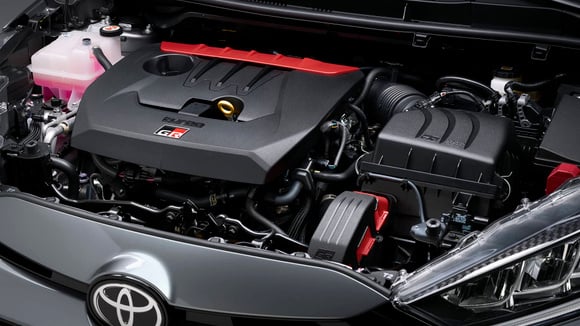
Beyond technical and environmental considerations, Toyota Gazoo Racing emphasizes the driving experience. Takahashi highlights that the goal is not just to reduce emissions but also to offer vehicles that provide driving pleasure. Recent innovations, such as the new high-performance four-cylinder or the planned biturbo V8 for the GR GT, reflect this desire to balance performance and environmental respect. In short, Toyota seeks to redefine what it means to be “green” in the automotive sector.
In Summary
- According to Toyota, combustion engines remain relevant, advocating for a diversified approach.
- The brand must navigate varied and sometimes contradictory regulations on a global scale.
- Concerns about the supply of critical minerals for electric vehicles are rising.
- Toyota continues to invest in hybrid technology while preserving its internal combustion engines.
- Gazoo Racing emphasizes driving enjoyment, even in an electrified context.
In the medium term, Toyota’s strategy could have notable consequences for its image and market share. As the pressure to adopt more eco-friendly solutions continues to grow, the Japanese brand will need to prove it can innovate while respecting its combustion roots. This approach may allow it to stand out in a rapidly changing automotive sector while continuing to attract a loyal customer base seeking driving pleasure.


