In 2025, SUVs once again confirmed their dominance in the global automotive market. Despite the rise of electric city cars, regulatory pressure on CO2 emissions, and debates about vehicle weight, it is still SUVs that occupy the top spots in sales rankings in almost all major countries.
This article revisits the reasons for this enduring success and then provides a numerical summary of the year 2025 through two boxes: a global top and a ranking by major markets.
A driving position that continues to reassure
The first explanation remains unchanged: drivers favour the high driving position. It gives the feeling of better visibility of the road, anticipating traffic, and better protecting occupants. In 2025, customer studies show that this argument remains one of the main reasons for purchasing an SUV, even ahead of the engine or onboard technology.
This perceived sense of safety is particularly appreciated by families and drivers who travel a lot, and it largely explains why the SUV format withstands criticism so well.
A status symbol, between style and versatility
In 2025, the SUV remains a symbol of status and modernity. Muscular silhouette, high bonnet, large wheels, sophisticated lighting signatures: everything is designed to convey an impression of robustness and modernity. For many buyers, the SUV has become the “natural” face of contemporary automobiles.
In addition, there is real versatility: wide tailgate, generous rear space, modular bench, usable boot volume for everyday life. Even though an estate car is often more rational, the SUV combines usage, style, and image in one object.
Electric vehicles have not slowed the SUV wave; on the contrary
It was thought that electrification would challenge this format due to weight and unfavourable aerodynamics. The opposite has occurred. Platforms dedicated to electric vehicles pair very well with a high body, allowing the battery to be integrated into the floor while preserving habitability.
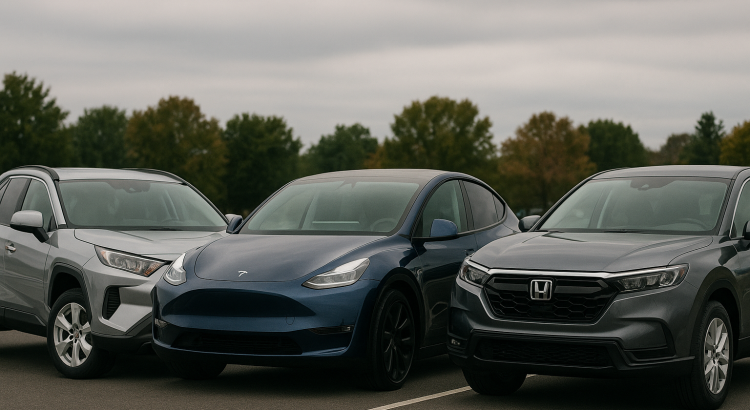
The case of the Tesla Model Y is emblematic: this electric SUV has established itself as one of the best-selling models in the world in 2025, across all powertrains. Manufacturers have therefore continued to focus their investments on this type of silhouette, whether thermal, hybrid, or 100% electric.
2025 in numbers: the confirmation of global dominance
To concretely measure this dominance, one only needs to look at the sales rankings. On one side, a very homogeneous global top 10, dominated by compact SUVs. On the other, national markets with very different automotive cultures, but all placing SUVs at the forefront.
The big winner: the Toyota RAV4
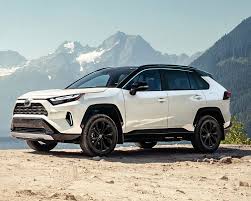
In 2025, the Toyota RAV4 once again established itself as the best-selling SUV in the world, confirming a dominance that has lasted for over a decade. The Japanese model owes its success to a perfectly mastered recipe: recognized reliability, a very efficient hybrid range, low running costs, and an image of robustness that continues to appeal across all continents. Whether in North America, Europe, or Asia, the RAV4 remains a preferred choice for drivers seeking a versatile, spacious, and economical SUV in the long term. Its consistency in global sales makes the RAV4 a true barometer of the segment: year after year, it demonstrates that efficiency and rationality can compete with more technologically advanced or stylistically ambitious SUVs. In 2025, the RAV4 simply reminded everyone that it is the absolute safe bet in the market.
Top 10 SUVs worldwide in 2025
- 1. Toyota RAV4 — Toyota’s compact SUV remains a safe bet, present on all continents.
- 2. Tesla Model Y — A reference for electric SUVs, it stands out as one of the most widely distributed models in the world.
- 3. Honda CR-V — A historic best-seller, still very strong in North America and Asia.
- 4. Hyundai Tucson — A global SUV, well positioned in Europe and the United States.
- 5. Kia Sportage — Cousin of the Tucson, it confirms Kia’s rise in the segment.
- 6. Volkswagen Tiguan — A pillar of Volkswagen’s SUV offering, particularly strong in Europe and China.
- 7. BYD Song — A representative of Chinese “new energy vehicles,” showing strong growth in its domestic market.
- 8. Honda HR-V — A very popular urban SUV in Asia and some American markets.
- 9. Mazda CX-5 — A dynamically positioned SUV, appreciated for its driving pleasure.
- 10. Chevrolet Equinox — High volumes in North America, where it remains a pillar of the Chevrolet range.
Together, these ten models summarize the reality of the 2025 market: a core range dominated by compact SUVs, a mix of thermal, hybrid, and electric powertrains, and a very strong presence of Asian manufacturers.
The best-selling SUVs in 2025 by major markets
Zooming in on a few key countries reveals the same trend: SUVs are at the top of sales charts everywhere, but with different profiles and brands depending on the markets. From France to India, through the United States, China, and Germany, each country has its stars.
The SUVs that dominated major markets in 2025
- 🇫🇷 France — Dominance of generalist compact SUVs:
Peugeot 2008 II (≈ 50,000 units), Peugeot 3008 III (≈ 36,000 units),
Dacia Duster III (≈ 35,000 units), Renault Captur II (≈ 34,000 units),
Toyota Yaris Cross (≈ 29,000 units). - 🇺🇸 United States — A mix of compact and family models:
Toyota RAV4, Honda CR-V, Tesla Model Y, Chevrolet Equinox, Chevrolet Trax
make up the core of the American SUV market. - 🇨🇳 China — Rise of local players and electric vehicles:
Tesla Model Y, Geely Xingyue L, BYD Song Plus and BYD Song Pro DM-i,
as well as the Changan CS75 Plus, occupy the top of the rankings. - 🇩🇪 Germany — European brands remain at the forefront:
Volkswagen T-Roc, Volkswagen Tiguan, BMW X1, Cupra Formentor, and Mercedes GLC
dominate in a country very sensitive to brand image and highways. - 🇮🇳 India — A rapidly growing market focused on affordable compact SUVs:
Tata Nexon, Tata Punch, Hyundai Creta, Mahindra Scorpio, and Maruti Suzuki Fronx
illustrate the demand for robust and accessible SUVs.
Sources: manufacturer statistics, national sales organizations, data firms (2025 compilations).
From the perspective of these major markets, the year 2025 confirms that the SUV remains the dominant silhouette, regardless of price level or powertrain. Only the names of the models and positioning change: premium in Germany, generalist in France, electric and “new energy” in China, very accessible in India.
Conclusion: in 2025, the SUV remains the reference
The 2025 figures clearly show that SUVs have not only resisted market changes: they have benefited from them. Electrification has largely taken place on SUV-type silhouettes, customers continue to love the high driving position, and manufacturers are focusing their margins on this segment.
In 2025, SUVs have therefore once again dominated the global automotive market, and nothing currently indicates that this trend will reverse in the short term. The question is no longer whether the SUV will remain, but in what form — lighter, more efficient, more electric — it will continue to shape the automobiles of the coming years.