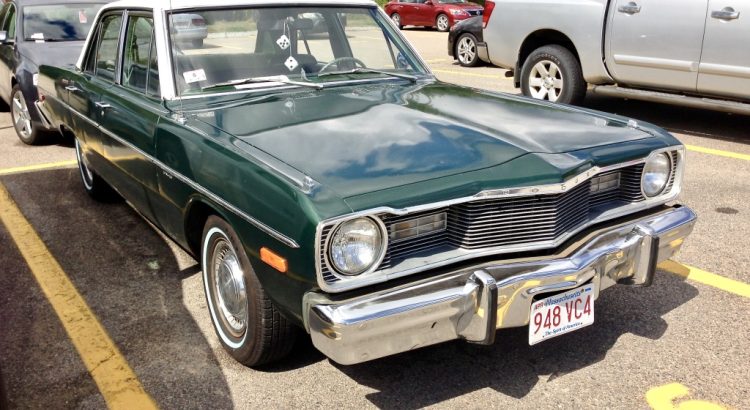
The 1976 Dodge Dart is a bit like a forgotten song that comes back to mind: its simple melody and touching story leave no one indifferent. This model, a witness to an era when the automobile was mainly synonymous with practicality, evokes nostalgic memories. With its unpretentious design and unwavering efficiency, this vehicle made a mark, even if it wasn’t the most flamboyant of the lot.
A well-rooted heritage
First appearing in 1960 as a full-size model, the Dodge Dart underwent a major transformation over the years. In 1962, it became an intermediate model before shrinking to the compact category in 1963, where it would achieve its greatest success. Marketed as a compact until 1976, it built a solid reputation as an honest and reliable “workhorse.” Although it saw special models like the performance-oriented Demon and the luxurious special edition, the Dart remained primarily a modest, no-frills vehicle… a car of few words.
A discreet yet familiar look
At first glance, this 1976 Dodge Dart doesn’t seek to stand out. With its dark green hue, probably Deep Sherwood Metallic to be precise, it wonderfully embodies the spirit of the 70s. This base model is a four-door sedan that showcases simplicity. Inside, there is fabric and vinyl upholstery, as well as a dashboard adorned with faux wood that is not meant to impress.

Options are difficult to determine precisely from the 1976 brochure, but it is likely that this Dart includes the Easy Order Package, with a three-speed TorqueFlite automatic transmission and power steering. An AM radio, a cigarette lighter, and wheel covers complete what is a fairly basic package — true to the spirit of Darts produced at the time.
A well-filled journey
By the end of the 70s, the Dart and its Plymouth Valiant counterpart were already veterans of the automotive market. Their last major redesign dated back to 1967! However, significant updates had been made over the years to keep the model fresh in the minds of buyers. This is how they managed to sell over 700,000 units in 1974, despite an increasingly difficult economic context for Chrysler.

The last major update of the Dart was in 1972, followed by a minor refresh in 1975. The changes were minor but effective, allowing the Dart to remain competitive against its rivals. What more can be said about this model? Its essence lies in its simplicity and its ability to serve without drawing attention.
A personal resonance
I remember my encounter with this Dodge Dart in 2013, when I was still a business school student, lost in my thoughts and uncertainties. I was working part-time as a cashier in a supermarket, and this car made me reflect on the passage of time. My own memory of this Dart is intimately linked to the stories I heard about it: it was my mother’s first car, a vehicle shared among siblings. For many, it represented their first automotive experience.

Like my photos taken back then, the Dodge Dart has always been there, a discreet companion in the lives of many people, often forgotten amid daily troubles. Reflecting on everything that has happened in my life since those years, I realize how much this vehicle marked an era for me and for so many others.
An timeless legacy
In summary, the 1976 Dodge Dart is much more than just a car; it is a symbol of an era when the automobile was synonymous with practicality and reliability. Even if it didn’t compete with the flashiest models on the market, it knew how to meet the needs of its users with efficiency.
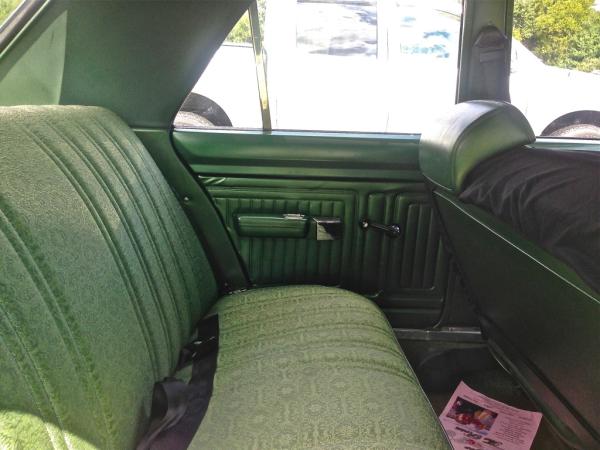
This model reminds us that sometimes, it is not the power or gadgets that matter, but rather the imprint left in our lives. And that is precisely what makes the Dodge Dart so memorable: its ability to be there for those in need, even if it never shouts from the rooftops.
Photographed in Hanson, Massachusetts – September 2013