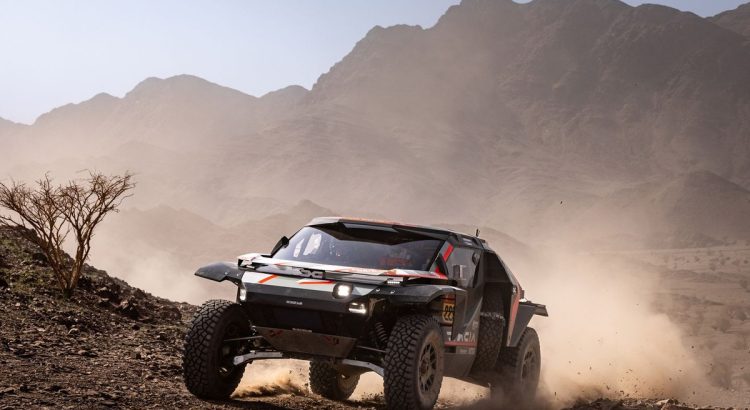
On the Dakar 2026, navigation is not the only challenge: the delicate terrain puts competitors to the test. Indeed, the fear of punctures has turned the 400 km special stage into a true obstacle course. Sébastien Loeb, in his relentless quest, had to slow his pace to avoid ending up on the sidelines.
Difficult terrain and cautious strategy
Navigation was feared by several competitors during the third stage of Dakar 2026, but it was ultimately the treacherous terrain that made the difference. Punctures multiplied, making the special particularly tricky, especially in its first part. The drivers were thus forced to conserve their vehicles in hopes of reaching the finish.
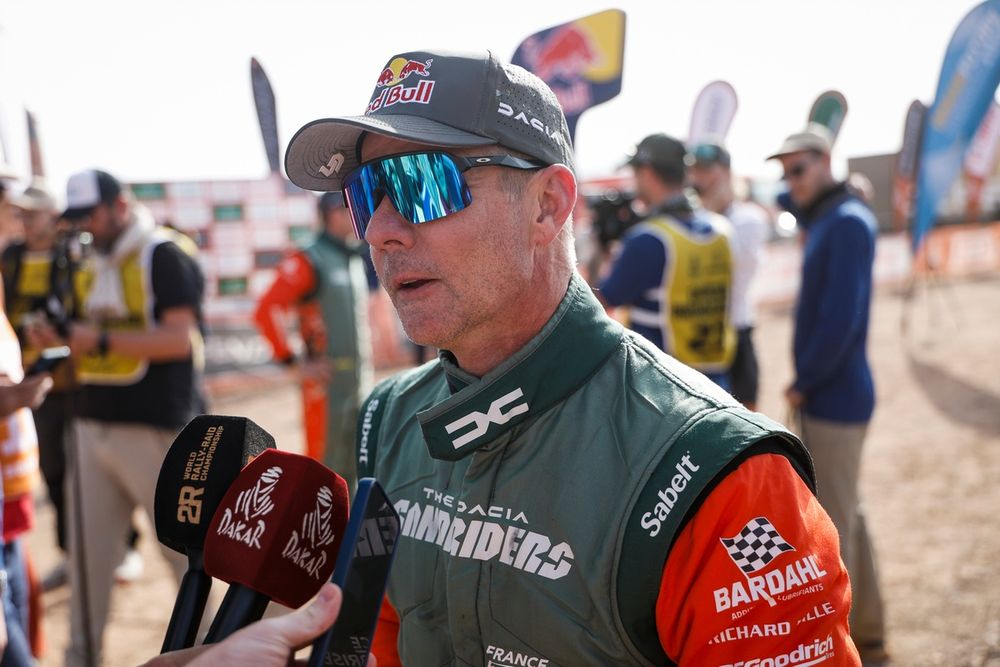
Sébastien Loeb, the iconic French champion, had to deal with this harsh reality. After barely covering a quarter of the stage, he already found himself without a spare tyre. Accompanied by his co-driver Édouard Boulanger, he made the strategic decision to significantly slow his pace to ensure a finish, conceding 25 minutes to the day’s winner, Mitch Guthrie.
Unpredictable punctures
“It was a difficult special,” sighs Sébastien Loeb. “It’s not suited to our cars, in fact. We drive at 20% of our capabilities just to avoid puncturing, and we still get punctures. I had two punctures after 100 km, whereas yesterday I had none. I set off with the same mindset, I was careful, and punctures… You don’t see them coming and then, with two punctures and 300 kilometres to go, I had no spare tyre left, so we drove at a complete stop for the entire special, and there you go.”
Loeb’s words resonate like a cry from the heart amidst this deluge of challenges. Far from being a mere epiphenomenon, punctures were omnipresent that day. “Nasser [Al-Attiyah] lost time too, less than I did I think, but indeed we saw cars arriving with punctured tyres at the finish, it was really tough. I’m just happy to be at the finish, because at one point, I didn’t believe it much.”
Dacia faces the challenges of punctures
Sébastien Loeb is no longer in the top 10 overall, a hard blow for the driver who has shone so brightly in the history of Dakar. Since last year, Dacia has invested heavily in optimising the Sandrider to minimise the risk of punctures. However, the performance of the Fords, which avoided the same issues this Tuesday, highlights a gap between the brands.
Leading the Dakar at the end of the previous stage, Nasser Al-Attiyah also experienced similar setbacks. Despite his problems, he managed to maintain his position in the overall top 10, while Sébastien Loeb now finds himself in 12th place, over a quarter of an hour behind the leader.
Strategies to reconsider
“Today was complicated, we had two punctures, we played it safe on the last hundred kilometres,” explains the Qatari, echoing the difficulties faced by Loeb. “We had to survive, like yesterday. But I’m quite happy, we didn’t lose too much time, tomorrow will be a better day.”
This reality underscores how much Dakar is a race where strategy takes precedence over speed. Drivers must constantly assess risks and adapt their driving according to the often unpredictable terrain conditions.
The overall standings after the third stage
As the competition rages on, it is clear that every minute counts in this frantic race. Drivers must juggle between performance and caution, as a misstep can be costly. The challenge of Dakar is not just about speed: it is also a matter of survival on a hostile terrain where every puncture is a battle in its own right.
To follow the progress of competitors in this epic adventure, feel free to check our articles on other championships. The saga of Dakar continues, and each stage holds its share of surprises!