

Pierre Gasly’s first Grand Prix with Alpine revealed challenges far more complex than expected. While the battle for points seemed promising, reality highlighted the shortcomings of a car still in the learning phase. This situation raises questions about the team’s strategy and its adaptation to new regulations.
A Fierce Struggle, but at a High Cost
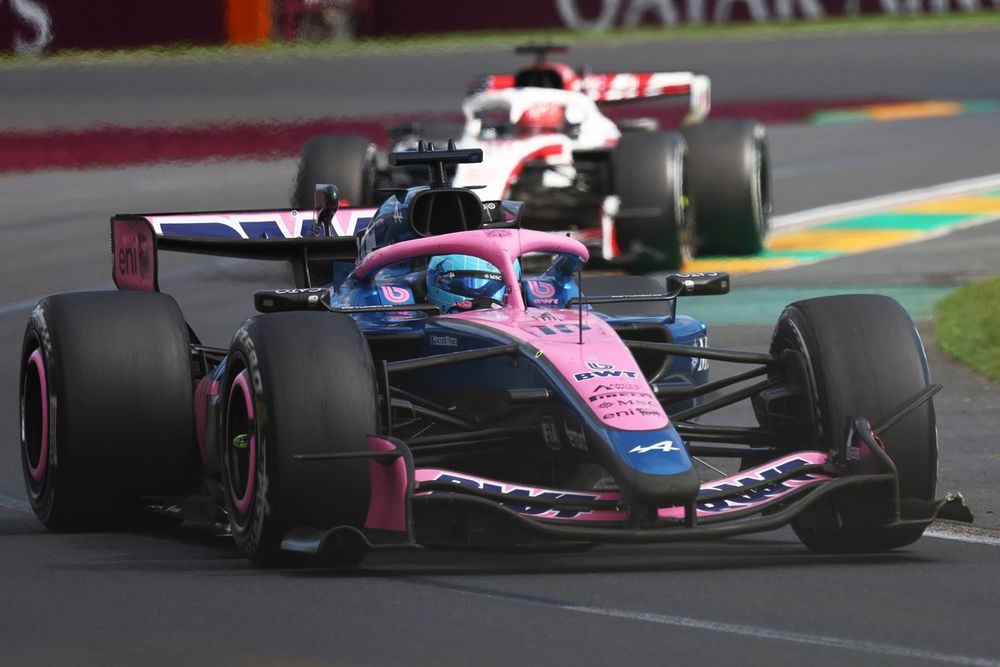
The Australian Grand Prix was a true battlefield for Pierre Gasly. The French driver had to fight incessantly with his compatriot Esteban Ocon, which could have led to an exciting spectacle. However, the reality was quite different. Both drivers were forced to manage their energy intensively, a strategy dictated by the overtaking mode. This situation led to a series of fleeting overtakes, making the race feel more artificial than authentic.
Gasly himself described this experience as intense, noting that the constant battles kept him on edge for 58 laps. In short, this race highlighted not only the intensity of the fight on the track but also the flaws in a strategy that still seems improvable.
Mixed Results Despite Encouraging Performance
Despite scoring a point in Melbourne, Alpine’s overall performance remains mixed. Gasly finished behind direct competitors such as Racing Bulls, Haas, and Audi. These performances underscore a glaring competitiveness issue in the pack, where every second counts. The driver did mention damage sustained to his floor, compromising his performance potential. This situation raises a crucial question: is the team really capable of competing with teams like Haas, which seem to have gained a significant advantage this season?
The answer may lie in analyzing the data collected during this Grand Prix. Gasly noted that the team learned a lot from this race, suggesting that adjustments could be made to improve competitiveness. However, these improvements will not be instantaneous.
Alpine Facing a New Reality
Beyond immediate results, Alpine’s situation reflects a complex transition. With the A526, a completely new car, the team must tame a package that remains largely mysterious. Gasly clearly indicated that the team has not yet tapped into the full potential of the car, pointing to the challenges posed by the new regulations. Indeed, every area, from energy to chassis settings, requires special attention.
This observation is not trivial. With such significant regulatory changes, the development work must be intensified to allow the team to catch up. The need to accumulate trouble-free mileage is crucial for gathering useful data. This means that every race is vital for the future development of the car.
A Necessary Adaptation Strategy
In practice, this situation calls for a strategic reevaluation at Alpine. The team must not only focus on improving the car’s performance but also on managing races and battles on the track. The ability to leverage lessons learned from each Grand Prix will be decisive for the rest of the season.
The stakes are clear: if Alpine wants to reposition itself against competitors like Haas or Audi, it must optimize every aspect of the car and race strategy. This involves a deep understanding of new technologies and current racing dynamics.
Growing Pressure on the Team
Pressure is also mounting on the shoulders of Alpine’s management. Expectations are high, and disappointing results could have long-term consequences for the team’s image. Every point scored is crucial, but it is equally important to demonstrate tangible progress over the races. In short, the team must quickly turn its lessons into concrete results, or it risks losing ground in an increasingly competitive championship.
In Summary
- Gasly experienced an intense race, but the results are mixed.
- Alpine still needs to unlock the mysteries of its new A526 car.
- Damage sustained by Gasly highlights strategic weaknesses.
- Pressure is mounting on Alpine to improve its competitiveness.
- Every race becomes essential for the team’s development and image.
Conclusion: Who is this analysis relevant to? Fans of Formula 1 and motorsport observers will closely follow Alpine’s trajectory. Alternatives abound in the paddock, with teams like Haas and Audi seemingly pulling ahead. Alpine’s strengths lie in its development potential, but its limits are clearly defined by its inability to compete effectively from the start of the season. In the medium term, Alpine’s ability to transform its performances on the track will be crucial for its survival in the competitive Formula 1 pack.


