

Championship leader Kimi Antonelli was once again left playing catch-up off the line in the Miami sprint, and Mercedes has now effectively owned part of the problem. The team also conceded that its rivals have made better use of the opening phase of the season on track.
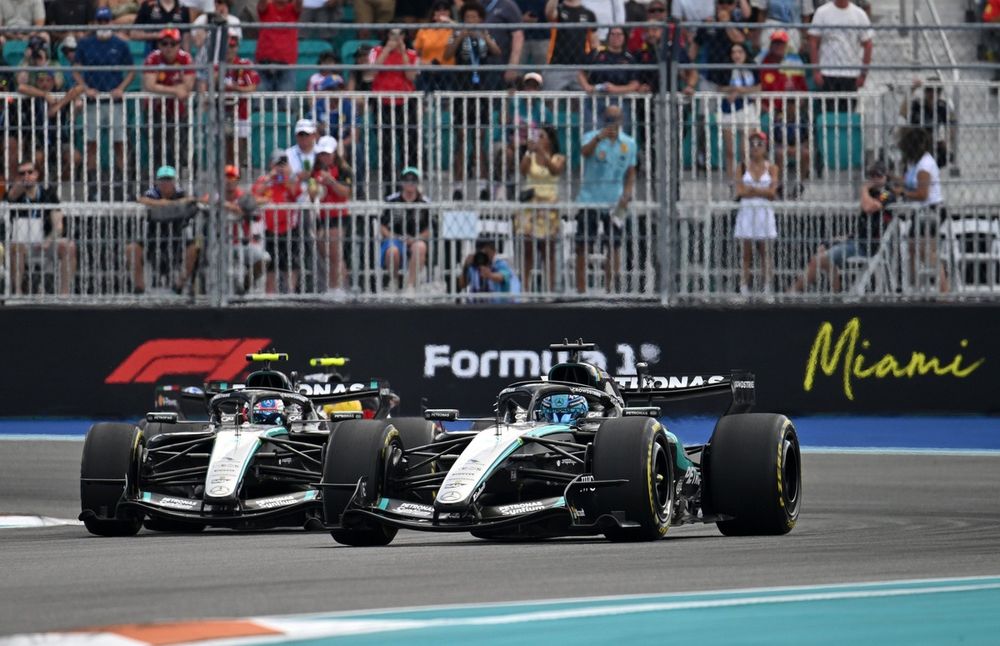
For those following this one closely, the Formula 1 section helps put the Miami sprint into proper context. This was about more than a messy getaway. It was another snapshot of the current balance of power: a Mercedes still searching for momentum, upgrades held back for later, and a field where a few tenths are enough to reshuffle the order.
Antonelli loses ground again as the lights go out
The issue is no longer a one-off. After five starts this season, Antonelli had already lost a combined 20 places on the opening lap. In Miami, the pattern repeated itself: the Italian started second for the sprint, only to slip to fifth before he had even reached the first corner.
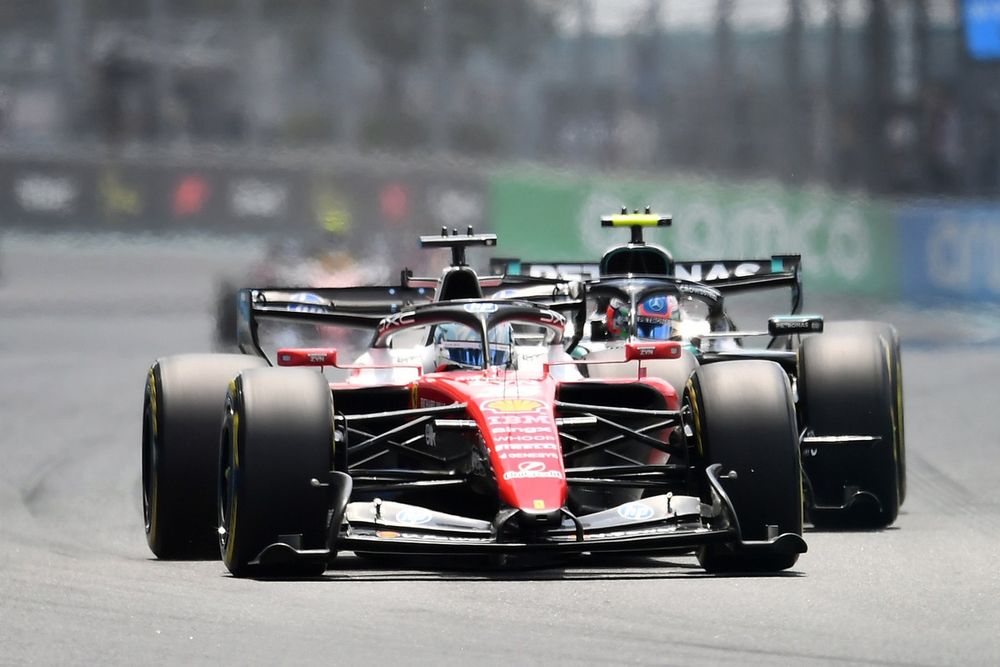
This time, though, the youngster did not immediately take the blame. Unlike earlier weekends, when he had been quick to accept responsibility, he said he had followed the procedure and pointed instead to more wheelspin than expected. In other words, it did not look like a simple driving error so much as a launch compromised by poor grip.
Mercedes points to the car, not the driver
The team’s response was unambiguous. Mercedes described it as an issue on its side, making clear that Antonelli was “absolutely not” at fault. In a paddock where responsibility is usually distributed with surgical care, that is a fairly direct piece of self-criticism.
That matters. For a driver still learning the ropes, the difference between a procedural mistake and a car-related launch problem changes the whole weekend narrative. If the procedure is the problem, the fix is straightforward. If the car is contributing to the wheelspin, Mercedes has a genuine weakness to address rather than a one-off blip.
At Miami, the Silver Arrows were mostly chasing
The sprint also underlined Mercedes’ pace deficit. Expected to be a little more competitive in the pack, the team instead found itself fighting its own corner, unable to properly challenge Charles Leclerc’s Ferrari and well off the pace of a McLaren that looked out of reach on the day.
George Russell put it plainly: he struggles on this sort of circuit, where grip is limited and the car seems to move around on all four corners. Miami is exactly the kind of track that tests a chassis’ composure and a driver’s confidence. And when the car is sliding, starts tend to become even more fraught.
Track limits added insult to injury for Antonelli
As if the sprint had not been tricky enough, Antonelli was then handed a penalty for repeated track-limit violations. What had been fourth at the flag became sixth in the classification, while Russell gained a place.
On a broader level, that punishment tells its own story. When pace is lacking, drivers often push a little too hard to stay in touch, and the margins disappear quickly. Antonelli admitted as much, describing a frustrating race, mistakes and the need to avoid that sort of off-track running. At this level, one poor start often triggers a chain of smaller losses.
Mercedes has delayed its updates until later
The bigger picture here is also about development timing. Mercedes has chosen to hold back most of its upgrades until the Canadian Grand Prix, while McLaren, Ferrari and others have introduced new parts earlier, including in Miami. That leaves the Brackley outfit slightly out of step, hoping to stay in the fight with a package that is not yet fully refreshed.
Toto Wolff has already admitted the team knows it is behind on that front, while still hoping to remain competitive on track. He also dismissed the idea that recent regulatory changes were the reason, arguing that the real battle is still about development and who finds the extra tenths first. In Formula 1, that is about as close as it gets to a universal truth.
Miami has made the gap a little clearer
This sprint was not just another reminder that Antonelli needs to tidy up his launches. It also showed that Mercedes is not setting the tempo when grip drops away and the opposition has brought its updates at the right time. Miami was a fairly blunt reminder that in Formula 1, a development delay tends to show up very quickly on the stopwatch.
For Antonelli, the next step is obvious enough: get the starts under control, then keep the car within the limits when the rear end becomes less predictable. For Mercedes, the job is two-fold: fix any launch-side issue and make sure the Canadian upgrades actually move the car forward. Otherwise, the same story risks repeating itself, with the drivers left to recover positions lost in the first few metres.
- Antonelli lost more ground at the start of the Miami sprint.
- Mercedes accepted that the issue was on its side, not the driver’s.
- The Silver Arrows were again behind McLaren and Ferrari on pace.
- A track-limits penalty made Antonelli’s result worse.
- Mercedes has delayed its upgrades until the Canadian Grand Prix.
- The sprint underlined a clear early-season development gap.


