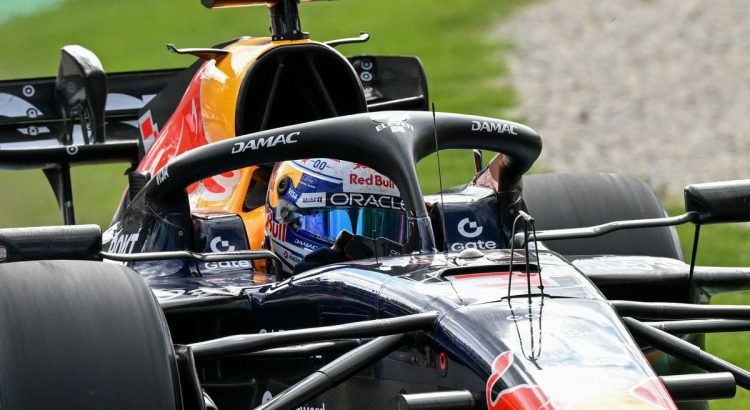
The first race of the 2026 Formula 1 season has revealed unexpected flaws in Red Bull’s battery management, highlighting the technical challenges the team must overcome. Between Max Verstappen’s frustration and Isack Hadjar’s ambitions, this situation raises crucial questions about the reliability of new technologies in competition.
A Chaotic Start: When Technology Falters
The season opener in 2026 was marked by a significant surprise: both Red Bull drivers, Max Verstappen and Isack Hadjar, started the race with completely depleted batteries. In a discipline where every millisecond counts, this lack of power had immediate consequences for their performance. “Terrible, I had no battery,” Verstappen stated, illustrating the gravity of the situation. Isack Hadjar, for his part, suggested he could have aimed for the front of the race if his engine had been fully operational.
The Limits of a New Engine: A Technical Challenge to Overcome
The Red Bull Ford engine, which made its debut this season, was supposed to mark a turning point for the team, but it seems the transition to new technology is not without its hurdles. Laurent Mekies, the team director, acknowledged that the battery issue was their responsibility. Indeed, the atypical behaviours of the drivers during the formation lap—repeated braking and acceleration to warm up tyres and brakes—led to an unexpected discharge of the batteries. This observation highlights the technical challenges of integrating a high-performance hybrid engine in such a competitive environment.
A Blow for Red Bull: Strategic Consequences
This false start could have significant repercussions on Red Bull’s strategy for the rest of the season. The need to recharge the battery during the first lap undoubtedly hindered the drivers’ performance. Max Verstappen, although managing to climb to sixth place, had to demonstrate exceptional talent to compensate for this disadvantage. In the future, this may force the team to rethink its pre-race preparation strategy, particularly regarding energy management during formation laps.
A Lesson to Learn: The Importance of Continuous Innovation
The situation faced by Red Bull underscores the crucial importance of continuous innovation in motorsport. Teams must not only develop high-performance engines but also master the management of the complex energy systems that accompany them. The ability to anticipate and resolve these technical issues will be decisive for Red Bull’s future success. If the team fails to rectify these flaws quickly, it risks missing opportunities against better-prepared competitors.
The Competition: A Ruthless Playing Field
While Ferrari has managed to capitalise on this delicate situation for Red Bull, other teams like Mercedes and Alpine will not hesitate to exploit this weakness. With teams investing heavily in technology and innovation, even the slightest misstep can be fatal. In short, the pressure is higher than ever for Red Bull, which must prove its ability to adapt and innovate in the face of fierce competition.
In Summary
- Red Bull experienced a chaotic start in 2026 with empty batteries for its drivers.
- The Red Bull Ford engine still needs refinement to avoid similar issues.
- Energy management during formation laps is crucial for performance.
- Strategic adjustments are necessary to remain competitive in a challenging environment.
- The competition is ready to capitalise on the weaknesses of other teams.
In conclusion, this mishap highlights the fragility of new technologies in the ruthless world of Formula 1. For Red Bull, the stakes are high: it is not enough to have a high-performance engine; it must also master its operation in all situations. In the medium term, teams will need to double their efforts to optimise energy management to avoid such setbacks. If Red Bull can overcome these challenges, it may retain its leading position. Otherwise, it could quickly find itself outpaced by increasingly sharp competition.