

F1 2026: Alonso criticises new generation at Monaco
Fernando Alonso, a two-time Formula 1 World Champion, has not minced his words following early running in the 2026 season at Monaco. According to him, the current generation of hybrid single-seaters represents “the worst” ever driven on the Rock, pointing to inconsistencies in engine braking linked to energy management.
The new technical regulations for F1 2026, intended to make the cars more performant and spectacular, are already generating mixed reactions. While initial observations on the Monegasque circuit suggested increased agility and better handling, Fernando Alonso, a prominent figure in the paddock, has voiced strong criticism. For him, the integration of hybrid systems, far from improving the driving experience on a circuit as demanding as Monaco, actually makes it particularly painful.
Formula 1 is undergoing a revolution with its new 2026 cars, but not all drivers seem ready to applaud. Two-time world champion Fernando Alonso, at the wheel of the Aston Martin AMR26, delivered a damning verdict after the first two free practice sessions on the legendary Monaco circuit: “It’s probably the worst generation of cars I’ve ever driven at Monaco.” These statements have sent shockwaves through the F1 world, especially coming from a veteran whose career spans over two decades and has seen multiple regulatory evolutions.
Erratic Engine Braking is the Core Issue
When questioned about the suitability of the 2026 F1 cars for the Monaco circuit, Alonso did not hesitate to denounce the direct consequences of the hybrid powertrain on the car’s behaviour. The main problem appears to lie in the management of electrical energy, which disrupts traditional engine braking. “The way we recharge the battery, with braking, lifting off the throttle, and that sort of thing, obviously creates a lot of irregularities in the car’s engine braking,” explains the Spanish driver.
In simple terms, the hybrid system, designed to recover kinetic energy, can sometimes create unpredictable effects. “Sometimes you have less, sometimes you have a push, and sometimes you don’t,” Alonso details. The phenomenon is exacerbated when the battery is full: in this case, it can no longer recharge, depriving the driver of engine braking. “If the battery is completely full, you don’t recharge it, because it’s full. So you don’t have engine braking. It feels like it’s pushing.” This instability makes driving at the limit, particularly in Monaco’s tight sequences and late braking zones, extremely tricky.
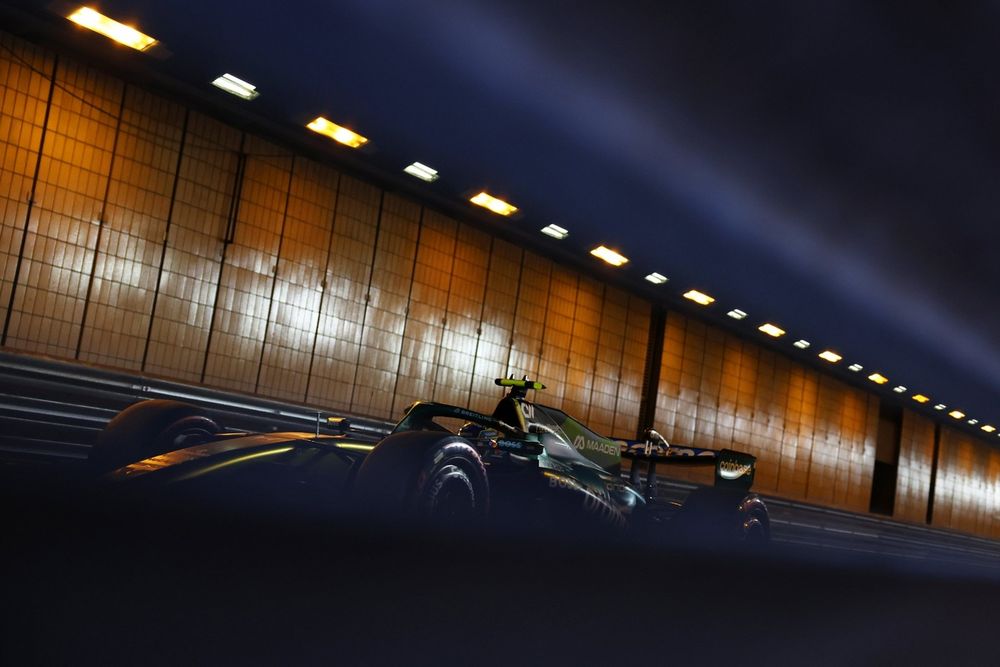
Fernando Alonso (Aston Martin)
Hybrids: Anathema to Alonso?
For Fernando Alonso, the conclusion is radical and unequivocal: hybrid cars simply shouldn’t be racing. “It’s just the rules. Hybrid cars shouldn’t be racing. It’s as simple as that,” he states, questioning the very rationale behind hybrid technology in Formula 1. This statement might come as a surprise, given that F1 has used hybrid power units since 2014, and energy recovery systems like KERS existed as early as 2009.
These technologies, initially introduced to improve efficiency and performance, now seem to divide drivers. While some see them as a necessary technological advancement for the future of motoring, others, like Alonso, lament the loss of sensation and the increased complexity they entail. The Monaco circuit, with its blind corners, elevation changes, and precision braking zones, particularly highlights the limitations of these systems in a pure driving context.
Monaco: A Revealer of Limitations
The Principality’s street circuit is often considered the season’s ultimate test. Its narrowness, lack of run-off areas, and constant proximity to the barriers demand surgical precision from the drivers. In this context, the engine braking inconsistencies mentioned by Alonso can turn a perfect line into a costly excursion off track. The slightest hesitation, the slightest system surge, and the race is compromised.
While F1’s governing bodies have attempted to limit the top speed of these new cars on the Rock, notably through energy management measures, the problem appears to be more profound. It’s not just a matter of raw performance, but of the driving experience and the drivers’ ability to control their machines in extreme conditions. Alonso’s criticism raises a fundamental question about the direction F1 is taking, balancing cutting-edge technology with driving enjoyment.
Key Takeaways from Alonso’s Comments
- Harsh Criticism: Fernando Alonso describes the 2026 F1 cars as the “worst generation” ever driven at Monaco.
- Identified Cause: Inconsistencies in engine braking due to hybrid energy management are highlighted as the main issue.
- Impact on Driving: A lack of engine braking when the battery is full makes the car unpredictable.
- Radical Stance: Alonso believes hybrid cars should not be competing in Formula 1.
- Historical Context: F1 has used hybrid systems since 2014, but the 2026 generation seems to present specific problems.
- Monaco as a Revealer: The street circuit exposes the difficulties drivers face with these technologies.
[TITLE]
[CONTENT]
Related articles about McLaren F1
Selection of articles, guides and advice about McLaren F1.

Ferrari tipped as Monaco favourite, Russell admits Mercedes is playing catch-up
Scuderia Ferrari looks set to be the team to beat at the Monaco Grand Prix, according to Mercedes…

McLaren’s Monaco Woes: Pace Gap Widens, Optimism Fades
The Monaco Grand Prix is already shaping up to be a challenging weekend for McLaren. Following the initial…

Alpine’s Monaco struggles: Gasly admits car isn’t responding well
Alpine’s Monaco woes: Gasly admits car isn’t responding well Following an encouraging Canadian Grand Prix, Alpine has struggled…

Verstappen airs Red Bull setup frustrations as victory hopes dim
Max Verstappen didn't hold back after Canadian Grand Prix qualifying, revealing Red Bull had ignored his setup advice.…

Formula 1 secures Las Vegas future until 2037
Long-term deal cements F1's American ambitions Formula 1 and the glitz of Las Vegas are set to be…