


After more than 50 years of loyal service, Audi‘s turbo five-cylinder engine will bid farewell on the continent. Favoured by enthusiasts in the RS3 Sportback and saloon, this iconic unit will be replaced by less polluting alternatives due to Euro 7 regulations. But fear not, it will continue to exist in other markets where the rules are more lenient.
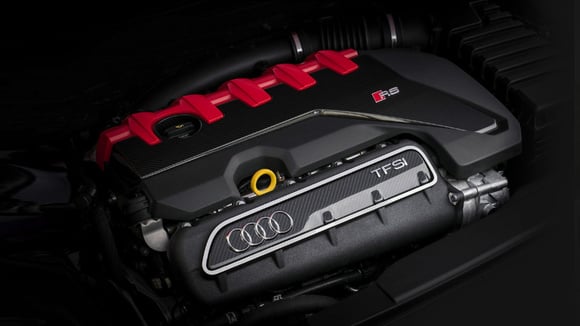
A Legacy of Sound and Performance
The Audi turbo five-cylinder, which made its debut under the bonnet of the Audi 100 in 1976, has become a true icon. With its unique sound and undeniable power, it has carved out a special place in the hearts of car enthusiasts. It has also been the cornerstone of performance for iconic models like the Audi RS3 and TT RS, providing an unparalleled driving experience thanks to its atypical architecture.
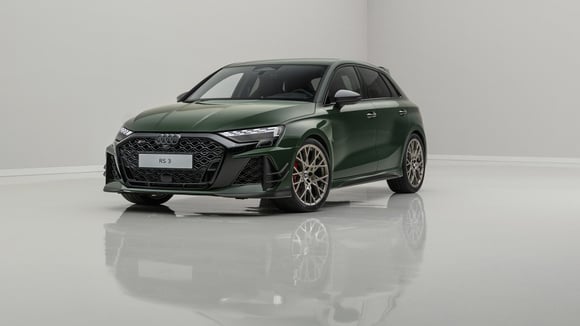
End of European Production
The Ingolstadt plant will cease production of the 2.5 TFSI engine by summer 2027
, a decision driven by the need to comply with increasingly stringent emissions regulations. This unit, which produces 400 hp and 500 Nm of torque, will make way for more environmentally friendly powertrains. In a context where emissions reduction is crucial, Audi prefers to invest in the future rather than continue producing an engine with a compromised future.
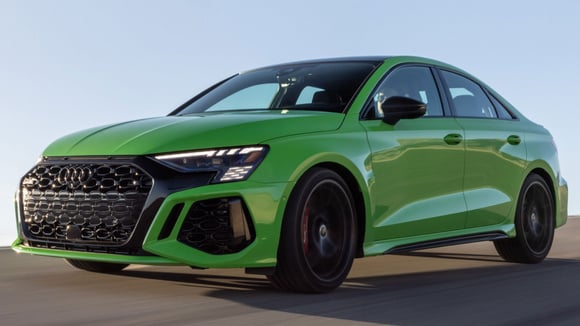
A Final Limited Edition to Say Goodbye
Audi is not leaving without a final flourish: the brand will launch a limited edition, the Audi RS3 Competition Limited. This high-end version retains the engine’s power while offering an exclusive presentation and optimised chassis settings. But beware, this elitist RS3 comes with a hefty price tag: nearly €113,000, plus a maximum penalty of €80,000 in France. For some, the total could rise to €200,000 with a few options.
The Five-Cylinder Lives On Elsewhere
While the future of the five-cylinder looks uncertain in Europe, it continues its journey in other markets. Julia Winkler, spokesperson for the Audi A3 range, confirmed that RS3 models will remain available in American and Middle Eastern markets, where emissions regulations are less stringent. Indeed, in the United States, the Audi RS3 will only be offered as a saloon, with no requirement for a front number plate in certain states.
The Stakes of Euro 7 Regulations
From 29 November 2026, the Euro 7 regulation will require car manufacturers to reduce their emissions by 90% by 2035 compared to 2021 levels. This constraint has pushed Audi to abandon its five-cylinder engine in favour of more eco-friendly powertrains. Other models such as the Mazda MX-5 and Honda Civic Type R have also disappeared from the European catalogue for similar reasons.
At a Crossroads
Audi now faces a dilemma: how to balance performance with environmental compliance? The answer seems to lie in the development of less polluting technologies. The end of the five-cylinder engine could thus mark the beginning of a new era for the German brand, which will need to rethink its engines while keeping enthusiasts’ expectations in mind.
In Summary
- The Audi turbo five-cylinder engine will leave the European market in summer 2027.
- Audi will launch a limited edition RS3 Competition Limited before this date.
- Euro 7 regulations impose a drastic reduction in emissions for manufacturers.
- The five-cylinder will continue to thrive in less restrictive markets.
- Audi must reinvent its powertrains to balance performance with ecological compliance.
“}


