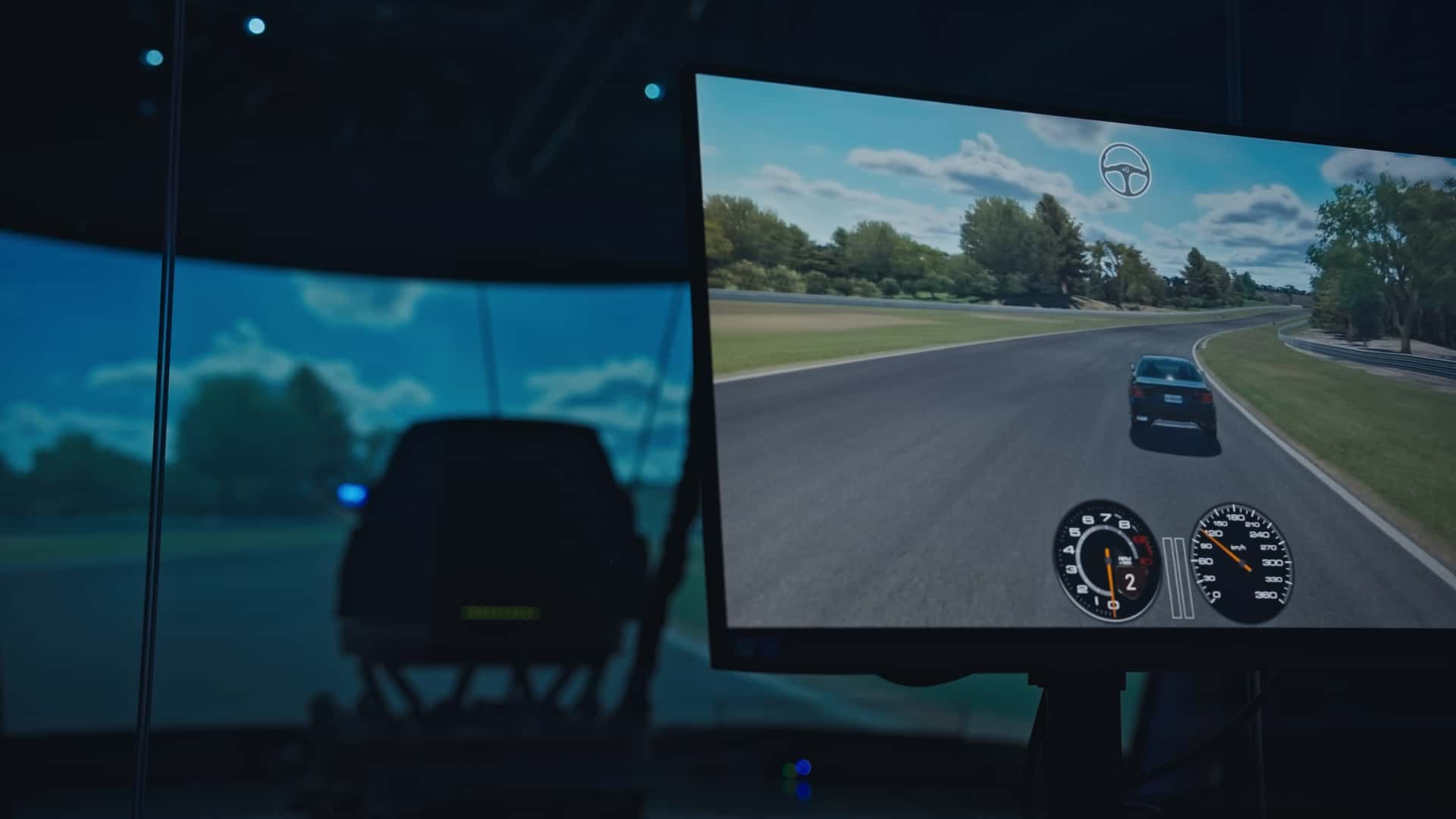
Bridgestone announces a discreet yet significant revolution in tyre development with its DiM500 simulator. By reducing the need for physical prototypes and optimising testing processes, the Japanese giant positions itself not only as a key player in innovation but also as a model of sustainability in a rapidly changing sector.
In an automotive world where speed and efficiency have become imperatives, Bridgestone takes a giant leap with its DiM500 Driver-in-the-Loop (DiL) simulator. Now operational at the brand’s R&D centre near Rome, this system employs advanced technology to test tyres in a virtual environment of unparalleled precision. In simple terms, this means fewer prototypes, less testing time, and a considerably reduced environmental impact, which could transform the entire industry.
A Game-Changing Simulator
The DiM500 is more than just a simulation tool; it combines high-fidelity simulations, artificial intelligence, and historical data to refine design choices. Consequently, engineers can focus on physical testing only during the final homologation phases. This approach promises to make the development process not only faster but also more precise.
In the future, this technology will also allow for the evaluation of extreme conditions, such as wet surfaces or complex terrains. By broadening the possibilities for innovation, Bridgestone could well set future industry standards. In a market where performance reigns supreme, every millisecond counts, and this simulator could give Bridgestone a decisive competitive edge.

Bridgestone, the DiM500 Driver-in-the-Loop simulator
Reducing Environmental Impact: A Strategic Necessity
The reduction of physical prototypes is at the heart of this innovation. Bridgestone estimates that the DiM500 could eliminate up to 12,000 experimental tyres per year. This not only translates into financial savings but also a significant decrease in raw materials and CO2 emissions, already reduced by up to 60% thanks to the Virtual Tyre Development technology.
In a context where the pressure to adopt sustainable practices is growing, this initiative could redefine the relationship between performance and environmental respect in the industry. It’s a masterstroke that places Bridgestone at the forefront of a necessary transition towards greener mobility, while strengthening its ties with car manufacturers.
Enhanced Collaboration with Manufacturers: A Major Asset
This technological advancement also allows Bridgestone to foster closer collaboration with vehicle manufacturers. By simultaneously developing tyres and cars, the Japanese manufacturer can create tailored solutions that optimise overall vehicle performance. This goes well beyond mere product adaptation; it’s an integrated strategy that values innovation.
This closer relationship could also reduce the time to market for new models, a crucial factor in a fiercely competitive sector. By aligning with the specific needs of manufacturers, Bridgestone is not just selling tyres; it is becoming an indispensable strategic partner.
A Long-Term Strategy: Towards Sustainable Mobility
Bridgestone is taking a calculated risk by committing to this digital path. Optimising development processes could well be the ticket to sustainable market dominance. Indeed, as environmental regulations tighten and consumers become increasingly demanding regarding ethics and sustainability, this strategy could prove rewarding in the medium term.
It remains to be seen whether other market players will follow suit. If Bridgestone succeeds in demonstrating the tangible benefits of this approach, it could encourage its competitors to adopt similar strategies. Conversely, those who are slow to adapt may find themselves lagging behind in a rapidly transforming sector.
In Summary
- The DiM500 simulator from Bridgestone optimises tyre development.
- This technology reduces the need for physical prototypes and environmental impact.
- Bridgestone strengthens its collaborations with automotive manufacturers.
- A sustainable strategy that could redefine market standards.
- The stakes of competition and environmental regulations are crucial.
In conclusion, this innovation positions Bridgestone as a key player in the transition towards sustainable mobility. For environmentally conscious consumers and car manufacturers seeking high-performance solutions, this advancement is promising. It remains to be seen how this strategy will be received by the market and whether it will inspire other players to follow suit.