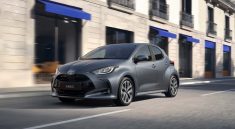
With a quality-price ratio that seems straight out of a modern fairy tale, the Geely Xingyuan is making its mark in the Chinese market, even surpassing giants like Tesla and BYD. Barely launched, this small electric sedan is already shaking its competitors, boasting astonishing sales that could redefine the standards of electromobility.
A meteoric rise
The Chinese automotive landscape is constantly evolving, and a new player is shining brightly. Geely Auto, the parent company of brands such as Volvo and Polestar, introduced the Xingyuan to the market last October. In record time, this electric sedan has captivated the hearts of consumers, becoming the best-selling electric model in China in the first half of this year. With over 200,000 units sold, it has dethroned the BYD Seagull and the Tesla Model Y.

Geely Xingyuan
In January, Geely reached an impressive milestone with nearly 430,000 units of the Xingyuan sold. But what explains this resounding success?
An irresistible offer
First of all, the Xingyuan positions itself as a true treasure on paper, beating models like the BYD Seagull hands down. The entry price for the 2026 model starts at around $9,700 (68,800 yuan, or €8,240), while the high-end version reaches $12,340. In a market where value for money reigns supreme, these prices are very competitive.
For this price, Geely offers cutting-edge technologies, generous interior space, and quality materials, as highlighted by several Chinese reviewers. The Xingyuan is built on the Sustainable Experience Architecture-Entry (SEA-E) platform, dedicated to affordable electric vehicles, and offers buyers a choice between two CATL lithium iron phosphate (LFP) battery options: 30 kWh and 40 kWh.

Geely Xingyuan
Performance that meets expectations
The version equipped with the smaller battery boasts a range of 310 kilometres, while the model with the larger battery can reach 410 kilometres according to the CLTC test cycle, which is generally more favourable than the EPA system in the United States. However, it should be noted that the real-world range may be lower.
But don’t be discouraged by these figures! China has the largest charging network in the world, which gives an electric vehicle with a more modest range a certain appeal. Currently, there are reportedly two charging stations for every five cars on the road. Petrol car owners, on the other hand, are starting to feel the effects of a declining network of petrol stations, with thousands of closures announced by the end of the decade.
A chassis that makes a difference
The Xingyuan is not just a simple electric vehicle; it surpasses its rivals in several ways. Its rear-wheel drive configuration and independent rear suspension provide it with a much more mature road behaviour than its competitors, which are often limited to front-wheel drive and less sophisticated suspensions.

Geely Xingyuan
This sedan also features the Flyme Auto intelligent cockpit system, equipment usually reserved for more expensive models. With a 14.1-inch infotainment screen and an 8.8-inch digital dashboard, it offers modern technology in a compact format. In terms of practicality, its 375-litre boot and 70-litre front trunk even surpass those of a much larger Volkswagen Golf.
Some concessions, but nothing prohibitive
However, Geely has made some notable savings. The Xingyuan does not offer rear windshield wipers, and its front wipers lack an automatic function. The air conditioning is manual, which may be surprising in such a modern model. But these details seem trivial compared to the overall quality of the package offered.
In just 14 months since its launch, Geely has already sold over half a million units of the Xingyuan. This meteoric success has allowed it to rank among the three best-selling electric vehicles in the world during the first three quarters of this year, just behind the iconic Tesla Model Y and Model 3.
Towards a new electric era?
If this momentum continues until the end of the year, it is possible that the Xingyuan will not only conquer the Chinese market but also aim for a place on the global podium of electric vehicle sales. Forecasts indicate that electric vehicle sales in the United States may slow in the last quarter, thus leaving an opportunity window for Geely.
In conclusion, the Geely Xingyuan is not just a new electric sedan; it could well be the catalyst for a disruption in the automotive landscape. With its competitive price and attractive performance, it could redefine consumer expectations for electric vehicles.