MINI will mark 25 years of its BMW-era revival in 2026, a milestone that says as much about industrial resilience as brand image. The anniversary matters because the modern MINI is no longer just a design-led small car: it now sits at the intersection of British manufacturing, premium positioning and a steadily growing shift to electric power.
That is the real story behind the celebrations. MINI is using the anniversary to underline how far the BMW-backed brand has travelled since production of the modern car began at Oxford on 26 April 2001, while also making the case that its mix of heritage, customisation and electrification still has room to work in a tougher market.
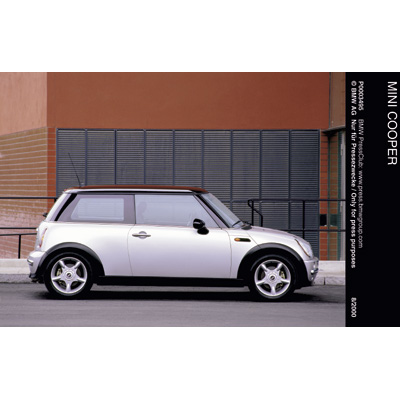
The 25-year anniversary is really about the success of BMW’s MINI reset
The original Mini’s place in motoring history was secure long before BMW entered the picture. Launched in 1959 and shaped by Sir Alec Issigonis’ compact, front-wheel-drive packaging, it became both a practical response to its era and, soon enough, a cultural fixture with real motorsport credibility under the Cooper name.
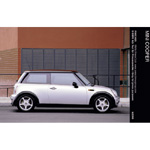
What changed in 2001 was not the mythology but the business case. When the first modern MINI rolled out of Plant Oxford, BMW had effectively rebuilt the brand for the premium small-car era, keeping the familiar design cues and agile character while moving it upmarket in technology, quality and price. That distinction matters, because the modern MINI’s quarter-century is less a simple birthday than proof that the reboot endured.
MINI’s current line-up is its broadest yet, but the mix tells its own story
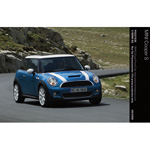
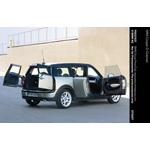
MINI says its present range is the widest in its history, with five models spanning fully electric and combustion powertrains. On paper, that breadth gives the brand more cover than the old days of leaning heavily on one hatchback formula, and it reflects how MINI has stretched from the classic 3-door idea into a broader family that now includes the Countryman and Aceman.
There is a trade-off, though. The more MINI grows, the harder it becomes to preserve the tight, coherent identity that made the brand distinctive in the first place. The company is clearly trying to square that circle by keeping design signatures and a strong emphasis on personalisation, from bonnet stripes to the multi-tone roof, while also using special editions such as the forthcoming MINI Paul Smith Edition to keep the image fresh.
Electric sales are growing quickly, even if MINI is not fully there yet
The clearest forward-looking detail in MINI’s announcement is the sales mix. In 2025, the brand recorded global sales of 288,290 vehicles, with battery electric models accounting for more than a third of worldwide deliveries.
That figure becomes more interesting when broken down by market. MINI says EVs already made up more than 50% of deliveries in the Netherlands, Turkey, Sweden and China, which suggests customer appetite is strong where infrastructure, taxation or local market conditions support it. It also shows the transition is uneven. More than a third globally is significant progress, but it is not yet a wholesale conversion across the full business.
John Cooper Works remains important because it protects MINI’s performance identity
For all the focus on electrification, MINI is also keen to show it has not diluted its enthusiast appeal. The John Cooper Works sub-brand reached a record 25,630 sales in 2025, equal to 8.9% of total MINI volume.
That matters beyond the raw number. JCW has long carried a fair share of the brand’s credibility, linking the current range back to the Mini Cooper and Cooper S competition story of the 1960s. In practical terms, strong JCW demand helps MINI argue that driving character still has commercial value, even as the line-up broadens and powertrain priorities change.
Oxford and Swindon remain central to the MINI story, not just as backdrop
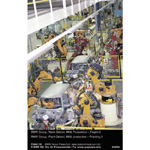
MINI’s anniversary messaging leans heavily on its UK production base, and with reason. Since 2001, 4,671,664 MINIs have been built in Britain, with Oxford as the main production home and Swindon supplying body panels. BMW says the two sites employ more than 3,000 people and produce around 800 MINIs a day, with one car leaving the Oxford line every 78 seconds.
Those numbers matter because they ground MINI’s British identity in something more concrete than styling references and Union Flag detailing. At a time when automotive manufacturing in the UK faces constant scrutiny over competitiveness, supply chains and the pace of electrification, MINI’s output gives the brand a stronger claim to authenticity than many heritage-heavy rivals can make.
The back story shows how MINI expanded, experimented and kept changing shape
The timeline behind the anniversary is familiar in places but still instructive. After the first Mini appeared in 1959, the Cooper arrived in 1961, the Cooper S followed in 1963-64, and Monte Carlo Rally wins in 1964, 1965 and 1967 helped turn a clever small car into something far more potent culturally.
The modern period has been busier and more varied. BMW premiered its first modern MINI in 2000 before production started in Oxford in 2001. The brand then broadened into Convertible, Clubman and Countryman territory, began MINI E trials in 2009, announced the MINI Electric in 2019, and started building fully electric series cars at Oxford in 2020 with the MINI Cooper SE. More recently, 2023 brought the fifth-generation MINI Cooper and third-generation Countryman in both electric and combustion forms, while 2024 added the Aceman and a new Cooper Convertible. The pattern is clear enough: MINI has survived by repeatedly stretching the original idea without entirely severing itself from it.
What 25 years of modern MINI actually show
- BMW’s 2001 relaunch did more than revive a famous name; it created a durable premium small-car brand.
- MINI sold 288,290 cars globally in 2025, with battery electric models making up more than one third of deliveries.
- In the Netherlands, Turkey, Sweden and China, EVs accounted for more than half of MINI deliveries.
- John Cooper Works hit a record 25,630 sales in 2025, representing 8.9% of total MINI volume.
- Since 2001, 4,671,664 MINIs have been built in Britain, with Oxford and Swindon still central to production.
- The next phase looks less like a nostalgia exercise and more like a test of whether MINI can keep its character while pushing deeper into electrification.