The new Porsche Cayenne Electric might easily pass for a big cat in appearance, but don’t be fooled by its 2,645 kg. With a weight similar to that of a rhinoceros and a battery that weighs almost as much as a small car, it might seem that the German giant struggles to move. However, Porsche assures that this behemoth will juggle its excess kilos like a gymnast at the Olympics.
A significant but controlled weight
At 5,831 pounds (or 2,645 kg), the Cayenne Electric stands out as the heaviest production vehicle ever made by Porsche. To put things into perspective, imagine the difference between lifting a simple suitcase and carrying an elephant. A large part of this weight comes from its giant 113 kWh battery, which alone weighs 600 kg, or nearly 1,322 lbs. By comparison, in the 1950s, the 356 SL model weighed almost as little as this modern battery, just 40 kg more. Who would have thought that a battery could rival a racing icon of yesteryear?
Porsche seems to be playing magician with the Cayenne Electric, promising that drivers won’t really feel this colossal weight thanks to the strategic positioning of the battery. Michael Schaetzle, vice president of the Cayenne range, explained to Drive that the weight is located below the vehicle’s centre of gravity. In reality, the heavy battery could even serve as ballast to enhance performance and handling:
‘The weight of the battery is very low. To be honest, the heavy battery helps with performance and maneuverability. We have new tires, new axles, and an active suspension system. The car feels lighter than the combustion model.’
A harmonious coexistence between electric and combustion
If you thought a Cayenne Turbo with a V8 was a lighter choice, think again! The European model weighs 2,570 kg, which is only 75 kg less than its electric counterpart. This brings us to the question: how will Porsche navigate between these two worlds? The German manufacturer has already promised that the V8 will remain in its portfolio well into the 2030s, even in Europe, while integrating updates to comply with the upcoming Euro 7 standards.
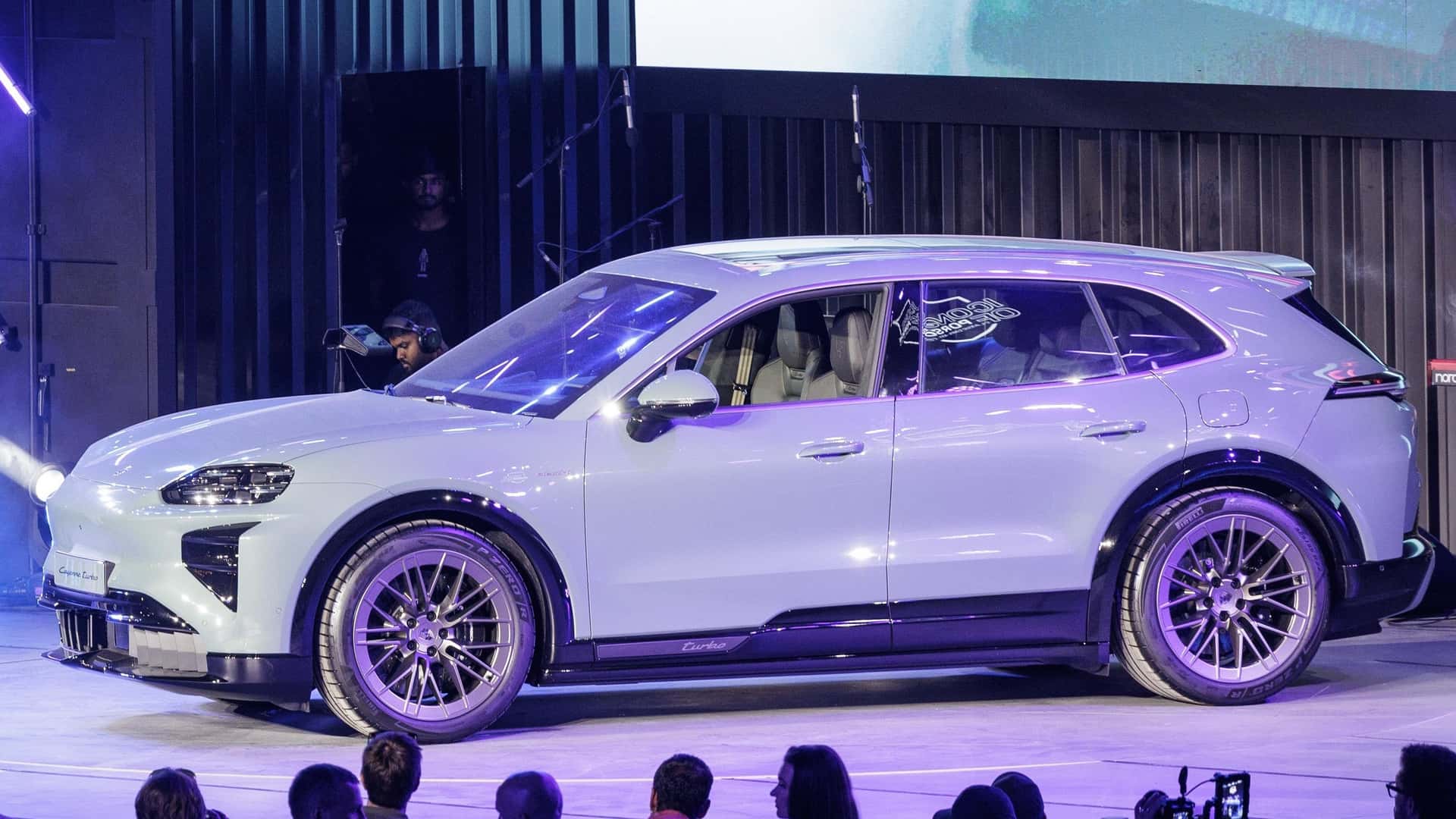
Beyond weight, Schaetzle also mentioned the off-road capabilities of the Cayenne Electric. With the instant responsiveness of electric motors and the flexibility to adjust power distribution, this SUV is “far better than its combustion counterpart” on rough trails. But let’s be realistic: how many Cayenne buyers – whether electric or not – actually venture off the beaten path? The original model had all the off-road advantages, including a low-range transfer case and an optional lockable rear differential. These features were dropped in subsequent generations to reduce weight, without causing major complaints about focusing on the road since the arrival of the second generation in 2010.
An uncertain electric future
Porsche isn’t stopping there. The manufacturer is working on another even larger electric SUV, dubbed “K1,” which was initially planned to be fully electric. However, faced with slower-than-expected adoption of electric vehicles, it will debut with combustion engines first to meet market realities and customer demands.
In summary, the Porsche Cayenne Electric stands out as a true powerhouse, defying the laws of gravity with its impressive weight. It proves that with smart engineering and a clear vision for the future, it is possible to create an electric SUV that is not just a mere substitute for combustion. The question remains whether this heavyweight will win over driving purists or simply become a member of the luxury SUV clan that never dares to leave the tarmac.
Official sources: