Aprilia is making waves in the MotoGP scene with an aerodynamic innovation that could redefine racing dynamics. With its new device, the RS-GP promises to marry performance and comfort, but at what cost to the competition?
A Game-Changing Innovation
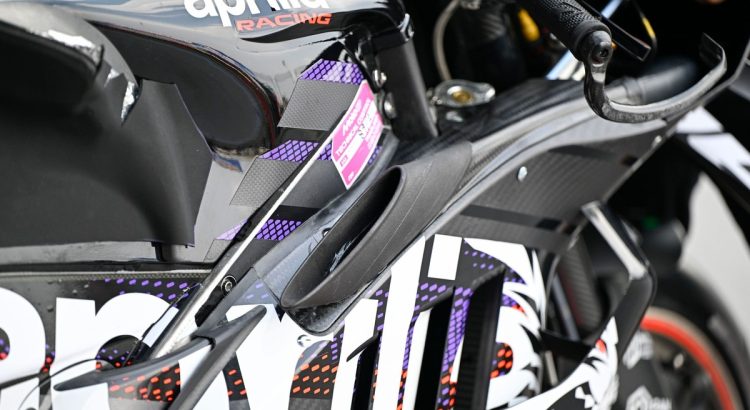
This season, Aprilia has surprised everyone with the introduction of an innovative aerodynamic system on its RS-GP. Two lateral openings, concealed by the rider’s forearms when in a prone position, regulate airflow. In a straight line, these ducts naturally close, minimising drag. However, as soon as the rider sits up to brake or negotiate a corner, the ducts open, exploiting ground effect to maximise downforce.
One cannot help but draw parallels with McLaren’s F-Duct in Formula 1, which revolutionised the aerodynamics of single-seaters in 2010. Aprilia’s trick lies in the fact that it requires no complex manoeuvres from the riders. This could prove to be a major asset in intense races where every second counts.
Positive Feedback, but Caution Ahead
Initial feedback from riders has been encouraging. Jorge Martín noted a slight sensation of additional airflow during straights, a detail that may seem trivial but can make all the difference in extreme heat conditions like those in Buriram. “I really like it because in this heat, you feel like you sweat less!” he stated. However, he remains cautious about the actual impact of this innovation on the overall performance of the bike.
Interestingly, Aprilia has chosen to keep its riders in the dark about the expected effects of this technology during the initial tests. This strategy aims to obtain unbiased feedback, but it also raises questions about transparency within the team. Should riders really be guinea pigs in this quest for innovation?
A Legal Device… and Soon to be Copied?

Massimo Rivola, the director of Aprilia, has not hidden his confidence regarding the legality of this innovation. Indeed, the MotoGP regulations prohibit movable aerodynamic elements, but Aprilia’s system complies with this rule as it involves no mechanical movement. “It’s perfectly legal,” he asserted confidently.
This boldness could well inspire competitors, who may be tempted to adopt similar solutions. Rivola himself seems to anticipate this reaction: “If others want to copy us, it won’t be the first time.” Aprilia’s ability to innovate while adhering to the rules could redefine the standards of aerodynamic development in MotoGP.
A Strategic Move in a Competitive Environment
In a paddock where every millisecond counts, this aerodynamic innovation could offer Aprilia a significant competitive edge. While other teams struggle to innovate within a strict regulatory framework, Aprilia appears to have found a loophole to exploit. It remains to be seen whether this strategy will pay off in the upcoming races.
The real challenge is whether this innovation will allow Aprilia to stand out sustainably against giants like Ducati or Yamaha, who already possess proven expertise in aerodynamics. The impact of this technology could also influence the decisions of other brands, pushing them to explore similar avenues to remain competitive.
Towards a New Era of Aerodynamics in MotoGP?
MotoGP is at a turning point, where aerodynamics plays a crucial role in bike performance. With the introduction of this system by Aprilia, we can expect a surge in innovations in this field. Will other teams need to react quickly to avoid being left behind?
In the medium term, this trend could also encourage regulators to revisit certain rules to maintain a balance between competition and innovation. If Aprilia succeeds in capitalising on this advantage, it could transform the brand’s perception and allow it to reach new heights.
In Summary
- Aprilia introduces an innovative aerodynamic system on its RS-GP.
- Riders notice a slight improvement in comfort during straights.
- Massimo Rivola asserts that the solution is perfectly legal.
- Competitors may be encouraged to innovate to keep up with Aprilia.
- This evolution could redefine aerodynamic standards in MotoGP.
Who is this innovation relevant for? Riders looking to enhance their comfort and performance in races will find a certain interest in this technological advancement. However, it remains to be seen whether this device will be sufficient to make Aprilia a true contender against the championship leaders. The answer will likely be revealed in the upcoming races, where every detail counts and where innovation can make all the difference.