Formula 1 is a world where every detail matters, and the recent controversy over the engines for 2026 is a perfect illustration of this. While the reduction of the compression ratio raises questions, the teams are engaging in a battle of wits worthy of the greatest duels. Who will have the advantage? One thing is certain, the FIA will need to tread carefully to avoid another chaotic chapter in the history of F1.
A story of compression ratios
The 2026 season is already shaping up to be a real puzzle for the Formula 1 teams, with a major modification to the compression ratio, lowered from 18:1 to 16:1. This change is not trivial: it directly affects the pressurisation of the air/fuel mixture and, consequently, the combustion process. In summary, it’s like switching from a strong coffee to a long coffee; the taste and intensity will not be the same.
Unfortunately, measuring the compression ratio in operation is no easy task. The FIA has therefore decided that these measurements would not be taken during the combustion cycle. It seems that some teams, like Mercedes and Red Bull, already have tricks up their sleeves. The materials used for their connecting rods could allow them to increase the compression ratio at operating temperature, creating a potentially decisive disparity.
A parallel with the past
If we look back at the history of Formula 1, we can draw a parallel with the FIA’s attempts in the 1980s to regulate ground effect aerodynamics. At that time, a simple wooden block was used to check the ride height of the cars at rest. This led to ingenious solutions, such as that of designer Gordon Murray, who mounted the bodywork of his car on pneumatic cylinders, allowing his vehicle to comply with the rules at rest while compressing under load on the track.
The creativity of engineers seems to know no bounds at times, and this season could well testify to that.
A call for trust
During the presentation of the 2026 livery of Audi, James Key, the technical director of the team, emphasised the importance of trust in the FIA. “We must, as we do, trust the FIA to make the right decisions on this matter. These are new regulations. A level playing field is necessary,” he stated. A phrase that resonates as a call for fairness in a sport where technical ingenuity can sometimes flirt with the limits.
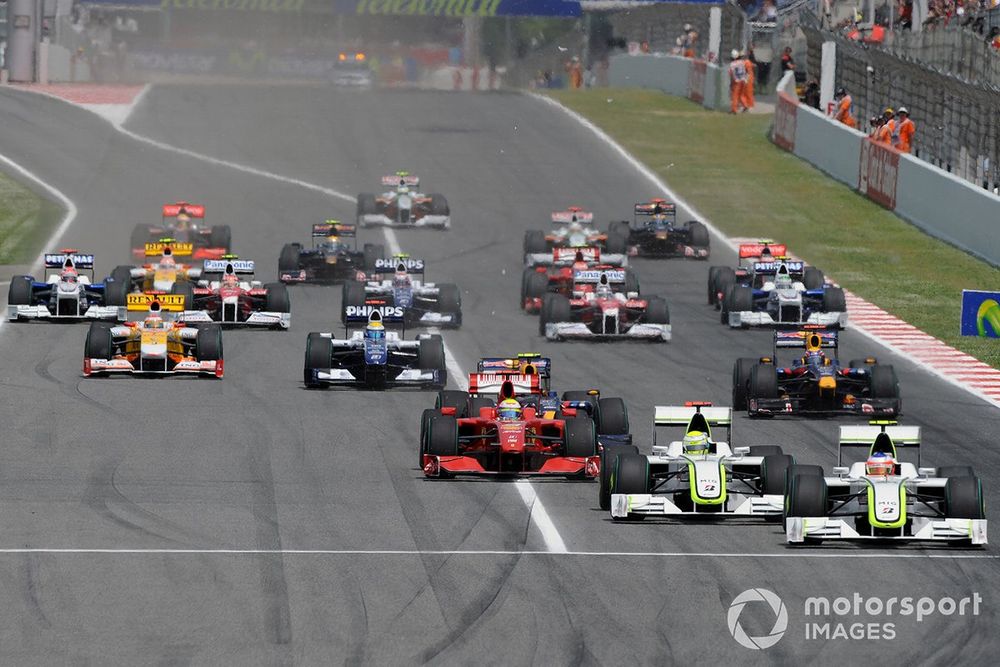
Key also mentioned the spectre of the 2009 season, where the introduction of “double diffusers” sparked a regulatory storm. Some teams had taken advantage of a loophole in the regulations to field cars equipped with these controversial devices, while others found themselves trapped by their technical choices. “If someone found an ingenious diffuser and we said that it’s not the right thing to do, that no one else can have it, but it can be kept for the rest of the year, that makes no sense,” he added. A remark that certainly gives pause for thought.
Dissenting voices
For his part, Ben Hodgkinson, director of Red Bull Powertrains, downplayed the controversy by stating that it was “much ado about nothing”. According to him, the team is compliant with the regulations: “I know what we are doing, and I am confident that it is legal.” A statement that contrasts with the concerns raised by other paddock players.
The FIA has also included in the 2026 engine regulations a performance balancing framework known as ADUO (Additional Development Upgrade Opportunities). However, no tangible evidence has yet been presented to corroborate the accusations regarding manipulation of the compression ratios.
Towards a sustainable solution?
However, the absence of evidence is not evidence of absence. A meeting between the FIA and F1 engine manufacturers is scheduled for 22 January. On the agenda: discussions on future methods of dynamically measuring compression ratios. But be warned, this will not be an easy task. If there is exploitation, it could yield an estimated gain of around 10 horsepower, which is not insignificant in the ruthless world of Formula 1.

The Audi F1 2026 livery could well be the stage for an unprecedented strategic battle.