

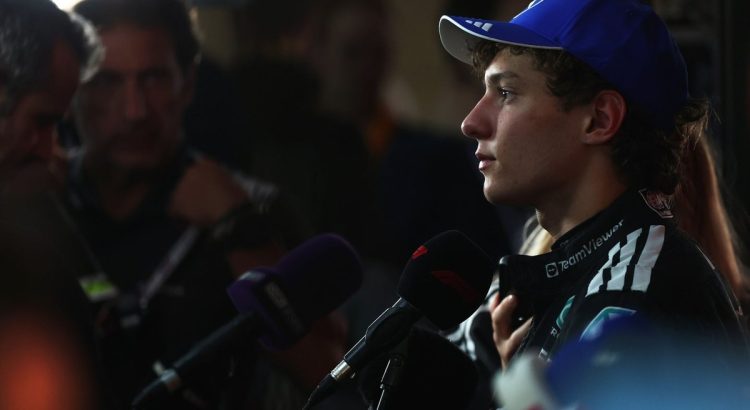
The world of Formula 1 can sometimes be as cruel as a boxing match in the final round. After the Qatar Grand Prix, Kimi Antonelli became the target of an unprecedented wave of harassment, prompting Red Bull Racing to break its silence. Amidst the buzz of the circuits, the team had to take a stand to protect its young driver, a victim of a media storm reminiscent of the fury of social networks.
The storm at the Losail circuit
During the final laps of the Losail Grand Prix, Kimi Antonelli was in fourth place, ready to deliver a memorable performance. But things quickly took an unexpected turn. Due to a controversial move on the track, fans and observers flooded social media with harsh criticisms against him. Imagine a young driver, on a meteoric rise, finding himself under the spotlight for reasons as unfounded as they are exaggerated, like a budding actor in a big-budget film being criticized for his acting by viewers with unrealistic expectations.
The reaction from Red Bull and Helmut Marko
Faced with this explosive situation, Red Bull Racing made the wise yet delicate decision to issue an official statement. Helmut Marko, the team’s iconic advisor, clearly expressed his concern. In a statement filled with regret, he wanted to highlight that some criticisms crossed the line of decency. It’s a bit like judging a Michelin-starred chef on a failed dish during an unexpected meal at friends’ house, rather than on the entirety of their culinary journey.
Marko insisted that drivers are human above all. They feel the pressure and the pain of the sometimes cruel words thrown into the tumult of social media. The official’s statements resonated like a note of solidarity, a call for empathy that should prevail in the highly competitive world of F1.
The stakes of online harassment
This case raises a crucial point: online harassment has become a troubling reality in all sports, including Formula 1. Drivers are constantly monitored, their performances scrutinised like a hamster in a spinning wheel. While some may argue that this is part of the game, it is essential to remember that behind every helmet lies a human being with emotions and limits.
If we are not careful, this culture of digital lynching could have far more serious consequences. Imagine a world where young talents hesitate to pursue their passion, fearing not only for their performance on the track but also for their mental health. That would be as tragic as a disaster movie scenario where heroism is overshadowed by despair.
Kimi Antonelli: a talent to watch
Let us not lose sight of the fact that Kimi Antonelli is above all a prodigy behind the wheel. At just 18 years old, he has shown undeniable potential that has already caught the attention of many industry experts. Every corner he takes is a promise of the future. Criticisms may fly, but they should never overshadow the raw talent that lies within him. Antonelli is like that young guitarist who starts playing in a small venue, and whose sound already promises full stadiums.
The upcoming races will be crucial for him. He will need to prove his worth on the track while also learning to manage external pressure. A task that will not be easy, especially in a discipline as demanding as Formula 1. Let’s hope he can focus on what truly matters: driving.
Conclusion: towards a necessary change
It is time for all of us to realise that behind every performance lie human stories. Antonelli’s case reminds us that the world of sport should not become a court where everyone feels entitled to judge without knowing the real stakes. Through this harassment scandal, let us hope that we can see a new era of empathy emerge in motorsport.
Official sources:
- Harassment and Red Bull’s reaction to Antonelli


