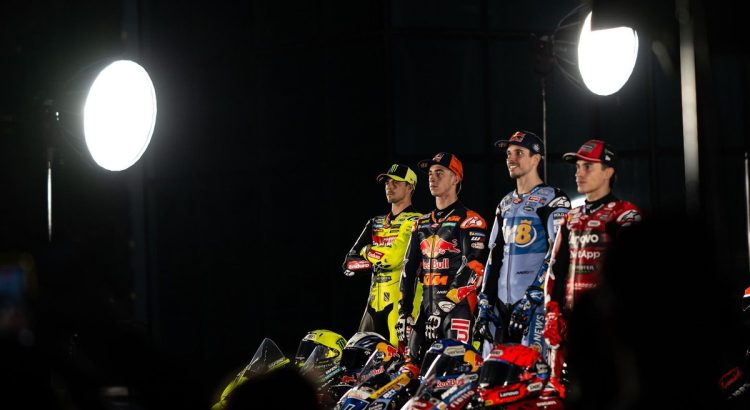
The 2027 MotoGP season is shaping up to be a significant turning point, but the deafening silence from teams regarding imminent transfers raises questions. At the heart of this silence is a collective strategy orchestrated by the MSMA, the manufacturers’ association, aimed at influencing commercial negotiations with the MotoGP promoter, SEG. It is clear that riders already know where they will be racing, but they are waiting for conditions to be clarified before making any announcements.
A Paradoxical Situation
The only official announcement regarding the 2027 grid concerns Marco Bezzecchi, who has renewed his contract with Aprilia. However, several agreements have already been made behind the scenes. This paradox raises the question: why such silence? The answer lies in a coordinated strategy, where each team plays its cards to maximise its interests in the context of renegotiating commercial contracts.
The Reasons for Silence
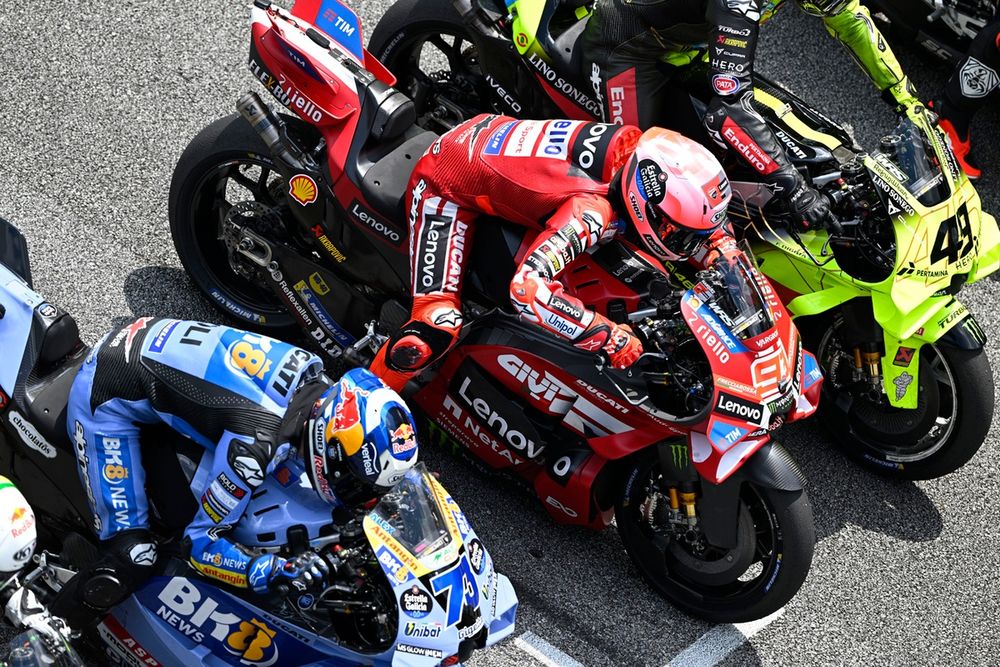
Several riders know where they will be racing in 2027… but cannot disclose it yet.
This silence is not accidental. It stems from ongoing discussions between the MSMA and MotoGP SEG, which have been taking place for nearly a year. These negotiations focus on new commercial contracts that will govern the distribution of championship revenues, a topic as crucial as the Concorde agreements in Formula 1.
The current contract expires at the end of the 2026 season, but teams are unwilling to disclose their decisions regarding riders until the new conditions are clearly defined. In fact, they prefer to act cautiously until there are contractual documents ensuring their participation in MotoGP 2027.
There are even reports that several announcements were ready to be made but were postponed until the outcome of these discussions is determined.
Frequent Meetings
The MotoGP logo.
The dynamics of meetings between the promoter and manufacturers are intense. A significant meeting took place in Sepang, where key figures such as Lin Jarvis from Yamaha and Massimo Rivola from Aprilia gathered. These discussions aim to reach a consensus on revenue distribution modalities, a topic that elicits divergent opinions.
Discussions continue to evolve, with a meeting scheduled just before the season opener in Buriram. The interests are clear: all parties involved want a strong championship in 2027, but disagreements persist.
A Matter of Money
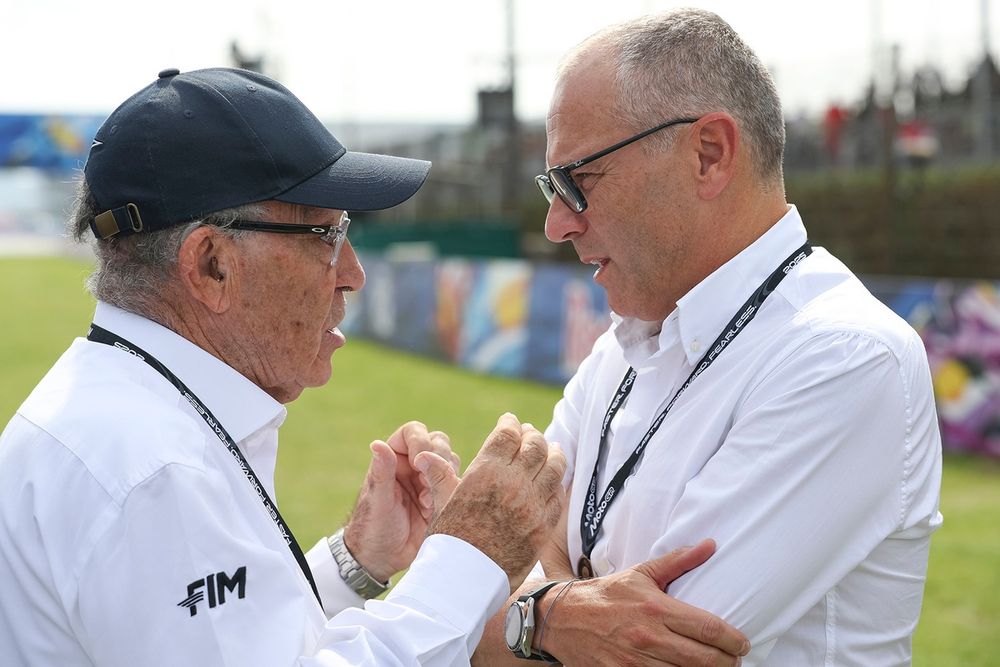
Carmelo Ezpeleta, MotoGP promoter, and his F1 counterpart, Stefano Domenicali.
At the centre of the negotiations is the crucial issue of revenue distribution. The current proposal from MotoGP SEG aims to guarantee a fixed amount of around eight million euros per team. In contrast, manufacturers aspire to a model similar to F1, based on proportional revenue distribution.
This desire for change is driven by the belief that Liberty Media’s acquisition of MotoGP could lead to significant growth for the sport. Teams believe that a fair distribution of profits would be a strong signal of the promoter’s commitment to the championship’s development.
The silence surrounding rider transfers thus appears to be a pressure strategy. Teams want to demonstrate their willingness to invest millions in developing new machines, but demand solid financial guarantees in return for 2027.
Consequences for the Championship
This orchestrated silence will not only impact the rider market but also the image of MotoGP. If teams continue to hold off on officialising their decisions, it could create instability that undermines the championship’s appeal. Fans and media are questioning the future of MotoGP stars, which may influence media coverage and enthusiasm for the races.
On the other hand, this situation highlights the fragility of relations between teams and the promoter. The lack of clear agreements could generate tensions that affect the morale of riders and teams, thereby impacting their performance on the track.
Summary
- The silence regarding rider transfers for 2027 is a coordinated strategy.
- Ongoing negotiations between the MSMA and MotoGP SEG focus on revenue distribution.
- Teams desire a fair distribution similar to that of F1.
- This silence could harm the image of MotoGP and its attractiveness.
- Tensions may arise between teams and the promoter if a solution is not found quickly.
Conclusion: For MotoGP, this phase of silence reveals a latent tension that could redefine the future of the championship in the coming years. Teams need to navigate between the necessity of securing solid contracts for their riders and the imperative of maintaining a positive image of the championship. Alternatives are already forming in the minds of market participants, but time is short. If a consensus is not reached swiftly, MotoGP could find itself at a crossroads, with consequences for its competitiveness and appeal to the public.