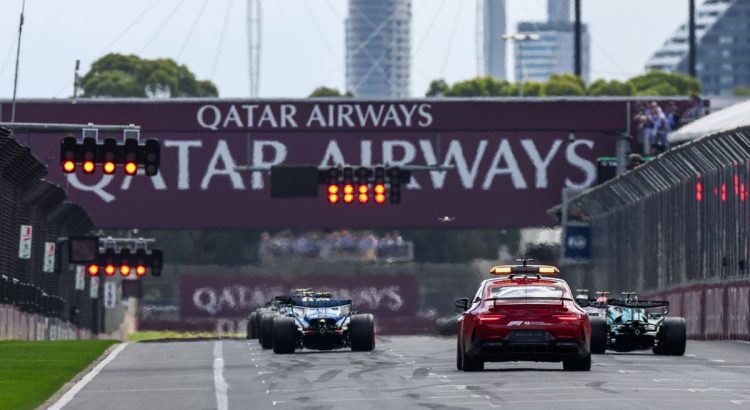
Recent incidents at the start of Formula 1 Grands Prix have raised significant concerns regarding driver safety. With the introduction of new engines in 2026, the risks of accidents are multiplying, and calls for urgent changes are growing louder. The current situation could mark a turning point in how race starts are managed.

Concerns Grounded in Reality
The 2026 season of Formula 1 has begun under a cloud of worry, and drivers are not shy about expressing their concerns. Following a near-miss incident in Melbourne, where Franco Colapinto managed to dodge Liam Lawson, the situation has become critical. Drivers are unanimous: the already complex start procedure has become even more dangerous with the new power units. The real issue is driver safety, which seems to be jeopardised by technology that is still not fully mastered.
A Necessary Change of Course
The FIA has attempted to mitigate risks by adding a five-second delay for turbo launches, but this appears insufficient. Sergio Pérez, one of the most experienced drivers, has voiced his dismay at the situation: “It’s a shame to have to say this, but it’s only a matter of time before a huge accident occurs.” These words resonate as a wake-up call, highlighting an urgent need for adaptation in the face of rapidly evolving car technology.
Staggering Accelerations: A Challenge for Drivers
The increase in engine power leads to explosive starts, but also to heightened risks. Franco Colapinto, after reviewing footage of his incident in Melbourne, shared his anxiety: “I was already over 200 km/h, so we were already very fast.” This increased speed results in performance differences that can be catastrophic if a driver encounters a problem. In practice, this creates a racing environment where danger becomes ever-present.
A Collective Reaction to Urgency
Concerns are not isolated. Carlos Sainz, also worried, stated: “I think we were extremely lucky that nothing happened in Melbourne.” This collective awareness among drivers could prompt the FIA to act swiftly. Discussions about enhanced safety measures are now on the table, but will this be enough to reassure a community of drivers plagued by doubt? Without concrete action, the threat of a major accident remains.
A Turning Point for Regulation
Pressure is mounting on the FIA to reconsider its safety protocols. Drivers are aware that their survival may depend on decisions made in advance. The introduction of new technologies must be accompanied by a reassessment of safety standards. In short, it is not just about performance, but also about ensuring the safety of drivers in a sport where every second counts.
In Summary
- Formula 1 starts have become more dangerous with the new 2026 engines.
- Drivers are expressing increasing concerns about their safety.
- Recent incidents highlight the need for a reassessment of start procedures.
- The FIA must act quickly to prevent a major accident.
- A collective reaction from drivers could influence future regulatory decisions.
Who is this analysis aimed at? Formula 1 enthusiasts, motorsport stakeholders, and anyone interested in safety in competition. As technology evolves at a breakneck pace, it is crucial to remember that safety cannot be sacrificed at the altar of performance. Alternatives exist, but they require a collective will to act. The strengths of this situation include a growing awareness, but the weaknesses lie in the time passing without concrete action.