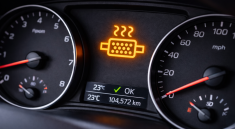
ESP warning light (or traction control light) illuminates when the stability control system detects an issue or is temporarily disabled. The ESP (Electronic Stability Programme) helps maintain vehicle control in the event of a loss of grip.
What Does the ESP Warning Light Mean?
Two possible situations:
- Flashing: the system is actively intervening (slippery road).
- Steady: a fault is detected or the system is disabled.
Is It Dangerous?
Yes, as the ESP contributes to vehicle stability during tight corners or emergency braking.
If the light remains on:
- The traction control system may be inactive
- Vehicle stability is reduced
- Emergency braking may be less effective
Most Common Causes
1. Faulty ABS Sensor
The ESP uses wheel sensors from the ABS system.
2. Steering Angle Sensor
A calibration fault can trigger the warning light.
3. Weak Battery
An unstable voltage can disrupt electronic systems.
4. Lateral Acceleration Sensor Issue
Rare but possible on certain models.
How to Diagnose?
- Read fault codes via OBD
- Check wheel sensors
- Monitor battery voltage
- Recalibrate if necessary
Repair Costs
| Cause | Estimated Cost |
|---|---|
| ABS Sensor | £85 to £215 |
| Steering Angle Sensor | £170 to £425 |
| ESP Module | £510 to £1,275 |
Key Takeaway
An illuminated ESP warning light indicates that your stability system may be disabled. Even if the vehicle remains drivable, a prompt diagnosis is advisable to ensure your safety.