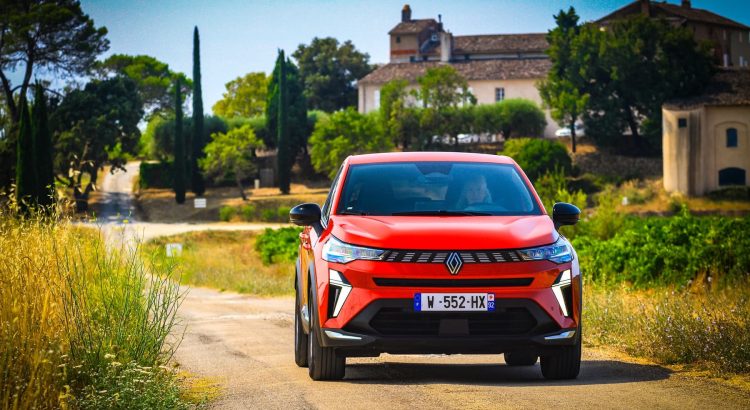
The Renault Symbioz, with its futuristic design and promises of innovation, is confronting an unexpected reality: the swift removal of its 1.3 TCe 140 hp engine from the French market. This decision raises questions about the brand’s strategy, caught between ecological constraints and adapting to a changing market.

Lightning-Fast Career for the 1.3 TCe
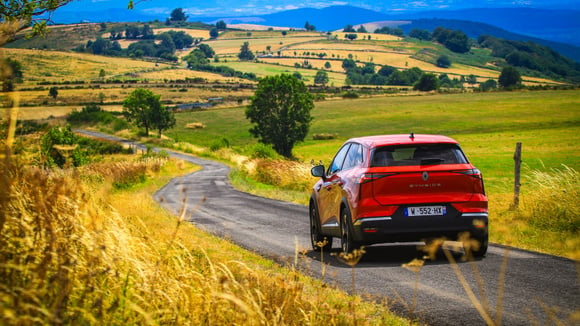
Just months after its launch in fall 2025, the 1.3 TCe mild-hybrid 140 hp engine has already vanished from the French catalog. This is surprising given the initial enthusiasm surrounding it. The 1.3 TCe, paired with a manual transmission and 12-volt mild hybridization, promised a solid balance between performance and efficiency. Yet, it was quickly sidelined in favor of the more powerful but pricier 1.8 E-Tech 160 hp. This rapid turnaround raises questions about Renault’s motivations in an increasingly demanding market.
Engine Full of Promises, But Too Costly to Maintain
Despite satisfactory performance and reasonable fuel consumption, the 1.3 TCe faced the harsh reality of France’s ecological tax. With emissions of 133 g/km, it was already penalized with a tax of €818 in 2025, a figure likely to rise with new regulations. In short, Renault had to navigate a delicate equation: offer an accessible engine while meeting increasingly strict CO2 targets. In a context where every gram counts, the decision to withdraw this engine appears to be a defensive maneuver to avoid potential fines.

Strategy Under Ecological Pressure
The pressure from the European Union on automakers’ CO2 emissions is unprecedented. Renault, already lagging in this area, cannot afford mistakes. By eliminating the 1.3 TCe, the brand aims to avoid a “slip-up” that could jeopardize its emission reduction goals. However, this approach may also lead to a loss of potential customers, who might turn to cheaper and more suitable alternatives.
Towards a New Entry-Level Engine
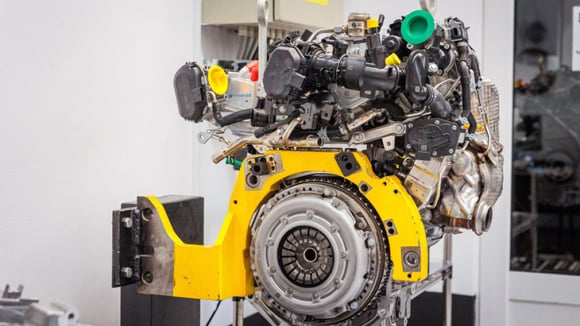
The removal of the 1.3 TCe is not just an end; it’s also a renewal. Renault is set to introduce a new entry-level engine, the three-cylinder 1.2 TCe compatible with gasoline-GPL, which should provide a more economical and environmentally friendly solution. This engine, recently adopted by the Captur and planned for the Symbioz, could tip the scales in Renault’s favor against increasingly fierce competition. By integrating this modern technology, the brand hopes to extend the lifespan of its model in the French market.

A Market in Full Transformation
The decision to remove the 1.3 TCe highlights the challenges Renault faces in a rapidly changing market. Consumers are now seeking vehicles that are not only performant but also fuel-efficient and environmentally friendly. Meanwhile, competition is intensifying, with brands like Dacia offering affordable models that comply with new regulations, posing a direct threat to Renault.

In Summary
- The 1.3 TCe engine of the Renault Symbioz was quickly removed from the French market after its launch.
- This decision is primarily due to constraints related to ecological taxes in France.
- Renault is preparing to introduce a new, more economical and environmentally friendly entry-level engine.
- The brand faces increased competition and must adapt to consumer expectations.
- Current strategic choices could significantly impact Renault’s image and position in the coming years.
Conclusion: The withdrawal of the 1.3 TCe from the French catalog underscores a complex strategy at Renault, marked by strict ecological imperatives and growing competition. For consumers, this means that choosing a vehicle is no longer just about performance or price; it must also consider environmental issues and regulatory changes. In the medium term, the arrival of the new engine could revitalize Renault’s offerings, but the brand will need to keep a close eye on its rivals to remain competitive in this ever-evolving market.