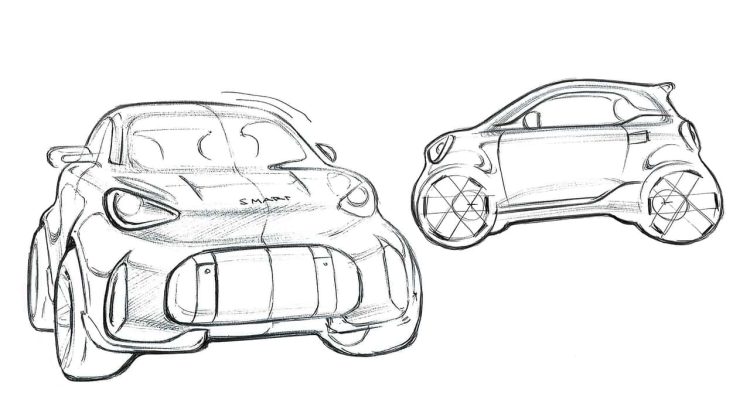
Smart is revisiting an idea many had written off: the proper two-seat city car. With the Concept #2, the brand is signalling a clear return to the Fortwo spirit, only this time with electric power and a more upmarket feel. The question now is whether a formula that once felt brilliantly left-field still fits how people drive, park and spend today.
There is more going on here than a simple design teaser. Smart is trying to make the case again for a body style the market has largely moved on from. In the latest car news, that is what makes this reveal worth watching: it is not just another new model, but a test of whether there is still room for a very specific vision of urban motoring.
Smart returns to its roots with a proper two-seater
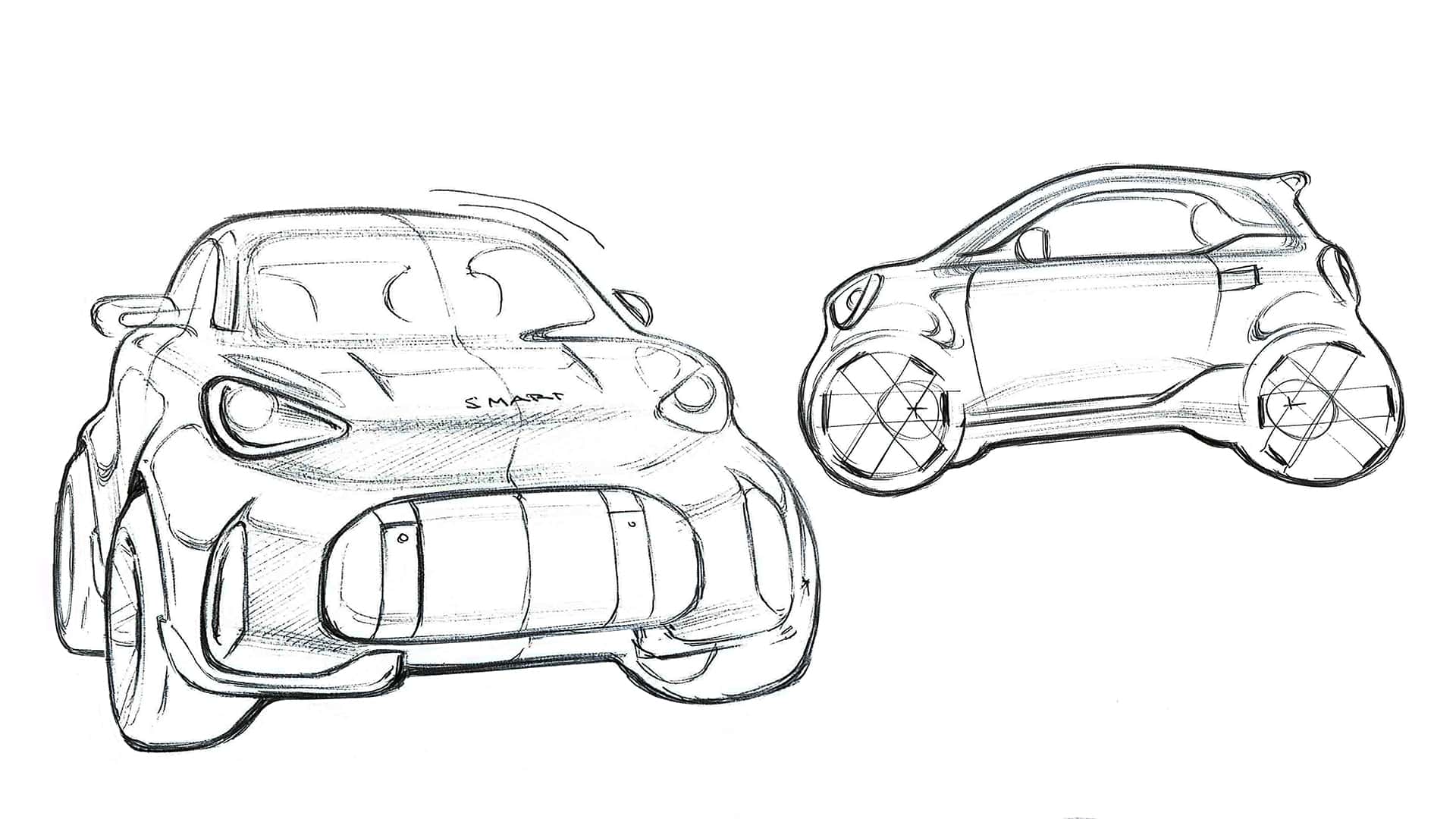
The new Concept #2 previews the future smart #2 electric car and very clearly leans on the Fortwo legacy. That matters. Over recent years, Smart has shifted towards larger, broader-appeal models. Here, it is heading back to the format that made its name: a compact body designed primarily for city use, with just two seats.
So the real story is not simply the arrival of another model. It is the revival of an almost defiant layout, arriving in a market obsessed with small SUVs and lookalike crossovers. The Fortwo once pushed a genuinely radical idea, rather like a scooter with a roof and four wheels. The Concept #2 appears keen to reclaim that role, only with more contemporary surfacing and a smarter presentation.
The design aims higher than pure practicality
The first official images show a car built around contrast. Smart mentions a two-tone finish combining matt white with warm gold details. The concept also uses leather inserts and cues borrowed from the fashion world. The message is fairly obvious: this small city car no longer wants to be seen merely as a clever tool, but as something buyers might actually desire.
That says plenty about the intended positioning. The original Fortwo won people over with its tiny footprint and offbeat charm. The future #2, by contrast, looks set to add a layer of sophistication. That makes sense, because urban EVs are no longer sold on practicality alone. Image, equipment and perceived quality now matter just as much, especially in a market where even the smallest hatchback likes to think of itself as premium.

The proportions are still described as compact, which keeps the link with the Fortwo intact. But Smart has yet to publish dimensions, technical specifications or any meaningful detail on the cabin or range. That absence is important: for now, this is more visual manifesto than product brief. And there is often quite a gap between the two.
The Beijing debut points to a strategy bigger than Europe
The Concept #2 is due to be unveiled on 22 April 2026 at the global “Change of Perspectives” event in Beijing, before appearing at Auto Beijing 2026. That is no incidental choice. Smart is placing this announcement in an international setting, and more specifically in a Chinese market that has become central to EV development and wider line-up planning.
The brand will also show the smart #6 EHD there, described as a premium fastback saloon initially aimed at the Chinese market. The contrast between the two models is telling. On one side, a two-seat urban car that stays true to Smart’s historic DNA. On the other, a more substantial silhouette designed to broaden the customer base. Smart is therefore trying to balance heritage with expansion. On paper, it is an appealing strategy. In commercial reality, it may prove rather trickier.

Smart’s gamble is simple: make the tiny city car make sense again
The return of a two-seat Smart raises a straightforward question: is there still a place for this sort of car? That is where the story becomes interesting. Cities are more congested, parking remains a daily nuisance and electric power makes obvious sense on short journeys. In that environment, a coherent microcar still has a case to make.
But the market has changed. Buyers now expect versatility, at least a bit of boot space, a reasonable operating radius and a cabin that feels worth the money. The strictly urban small car has lost ground to larger models that can do most jobs well enough. So the key issue is not Fortwo nostalgia, but whether Smart can make a car with obvious limitations feel desirable again. It is a brave move. Inevitably, it is also a risky one.
Without a spec sheet, enthusiasm should stay in check
At this stage, Smart has disclosed no battery size, power output, range, price or precise sales timetable for the production model. That caution is normal for a concept, but it also limits how far this announcement can be taken. A two-seat EV may be superb in the city centre and far less convincing once you head beyond the ring road. Everything will depend on how Smart balances compact dimensions, day-to-day usability, cost and real-world driving needs.
There is also the familiar question of what survives the trip from motor show stand to showroom. The flashiest styling details often do their job in the concept phase, then quietly disappear when production realities arrive. Smart will therefore need to show that this #2 is more than a stylish promise. A successful microcar is not a rolling mood board. It needs a well-judged chassis, a genuinely useful turning circle, real ease of use and a price that does not put people off before they have even sat in it.



If Smart gets it right, it could rebuild a forgotten niche
Ultimately, the Concept #2 opens up a fairly rare prospect: a return to the urban car designed unapologetically for the city. If the production version stays faithful to that thinking, Smart could regain a sharply defined identity at a time when plenty of brands are simply stretching the same old recipe. In a market crowded with tall silhouettes and interchangeable promises, that difference could become a strength again.
That said, the concept only really works if that distinctiveness lines up with buyers’ budgets and expectations. A premium two-seat electric city car looks great on a poster. It is a tougher sell on an order form. What happens next will come down to hard facts: price, range, practicality and whether this can be more than a nostalgic nod to the Fortwo. The idea is sound enough. Now Smart has to make it properly liveable.
In brief
- Smart is preparing a future two-seat smart #2 EV via the Concept #2.
- The project marks a clear return to the Fortwo legacy and to urban micro-mobility.
- The design signals a more premium positioning, with a more polished presentation.
- The reveal is scheduled for Beijing on 22 April 2026 as part of a clearly global strategy.
- No technical data has been released at this stage.
- Its success will hinge on one thing above all: making the true two-seat city car feel credible again.
In the end, the future smart #2 could appeal to drivers who spend most of their time in town and want something far more compact than a conventional supermini. But without figures for range, pricing or clear detail on the production version, it is far too early to talk about a triumphant comeback. For plenty of buyers, the safer choice will still be a small EV with broader abilities. Smart, though, is trying something different. In itself, that is newsworthy enough.