
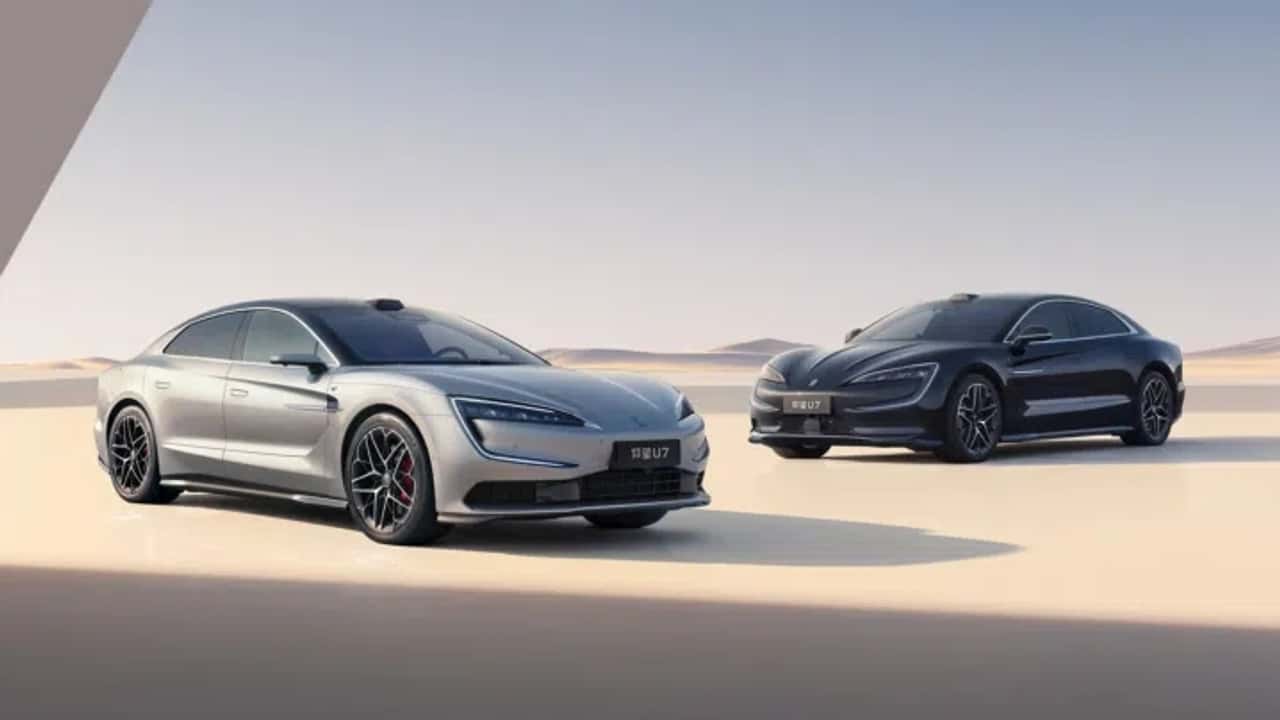
Chinese automaker BYD, already well-established in Europe, takes a significant step forward with the Yangwang U7, an electric sedan promising record range thanks to its Blade Battery 2.0. This strategy could redefine market standards, but it also raises questions about the real feasibility of such promises.
BYD, often recognised as a pioneer in the electric vehicle sector, is not just producing cars. Simultaneously, it positions itself as a major player in battery technology, a key element in the range wars. With the Yangwang U7, the brand unveils its first model equipped with the second-generation Blade Battery, which promises to enhance not only range but also performance and charging speed. This approach aims to capture a premium segment while addressing the growing expectations of European consumers.
Range That Inspires Dreams, But at What Cost?
The Yangwang U7 proudly boasts a range of 1,006 km according to the Chinese CLTC cycle. However, this impressive figure conceals a more nuanced reality. In Europe, where standards are stricter, a real-world range is expected to be between 680 and 720 km. This discrepancy raises questions about the accuracy of figures presented by manufacturers and encourages caution. The battle of numbers is well underway, but it’s essential to remember that these values can vary significantly based on driving style.
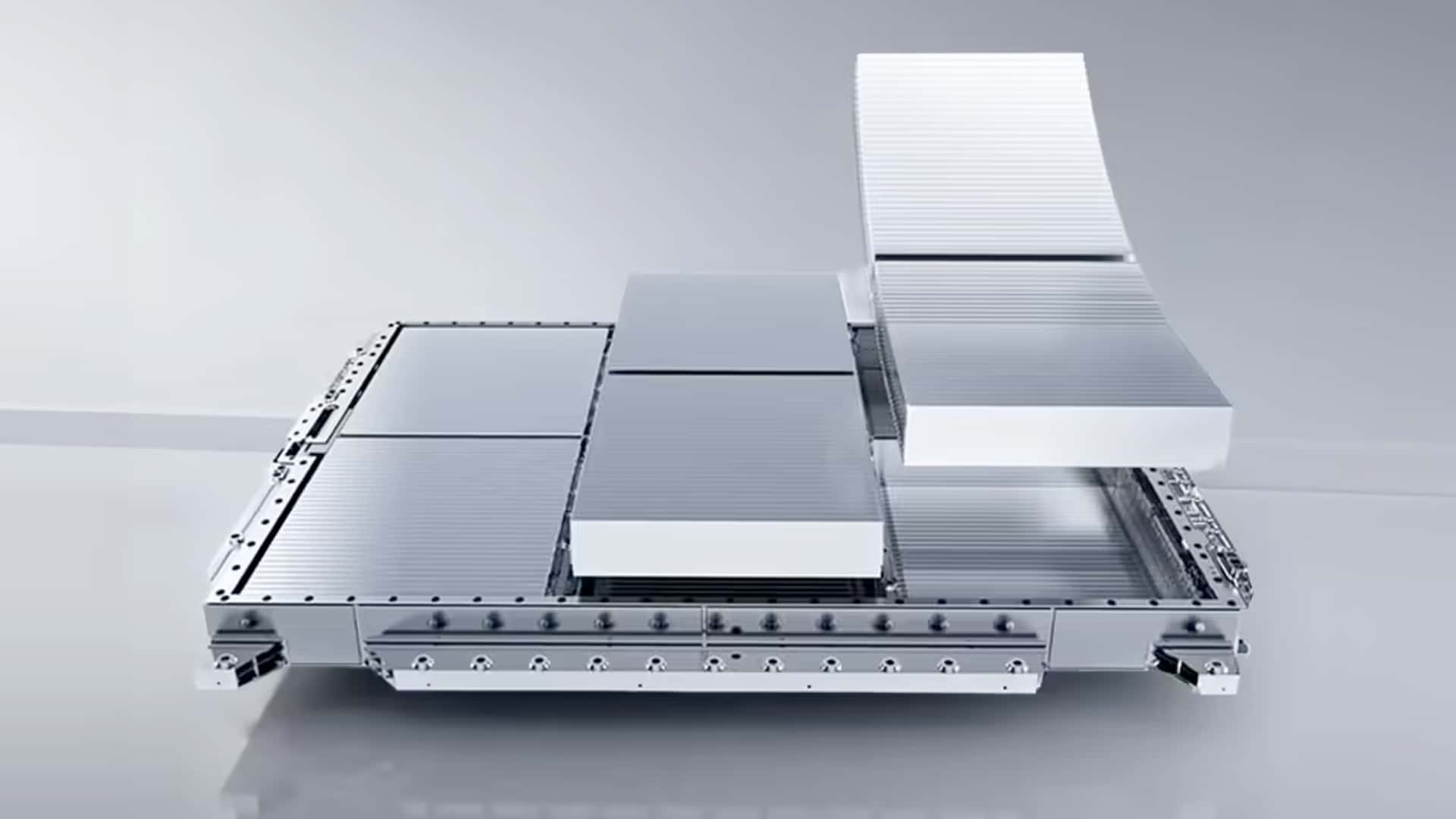
BYD Blade Battery 2.0
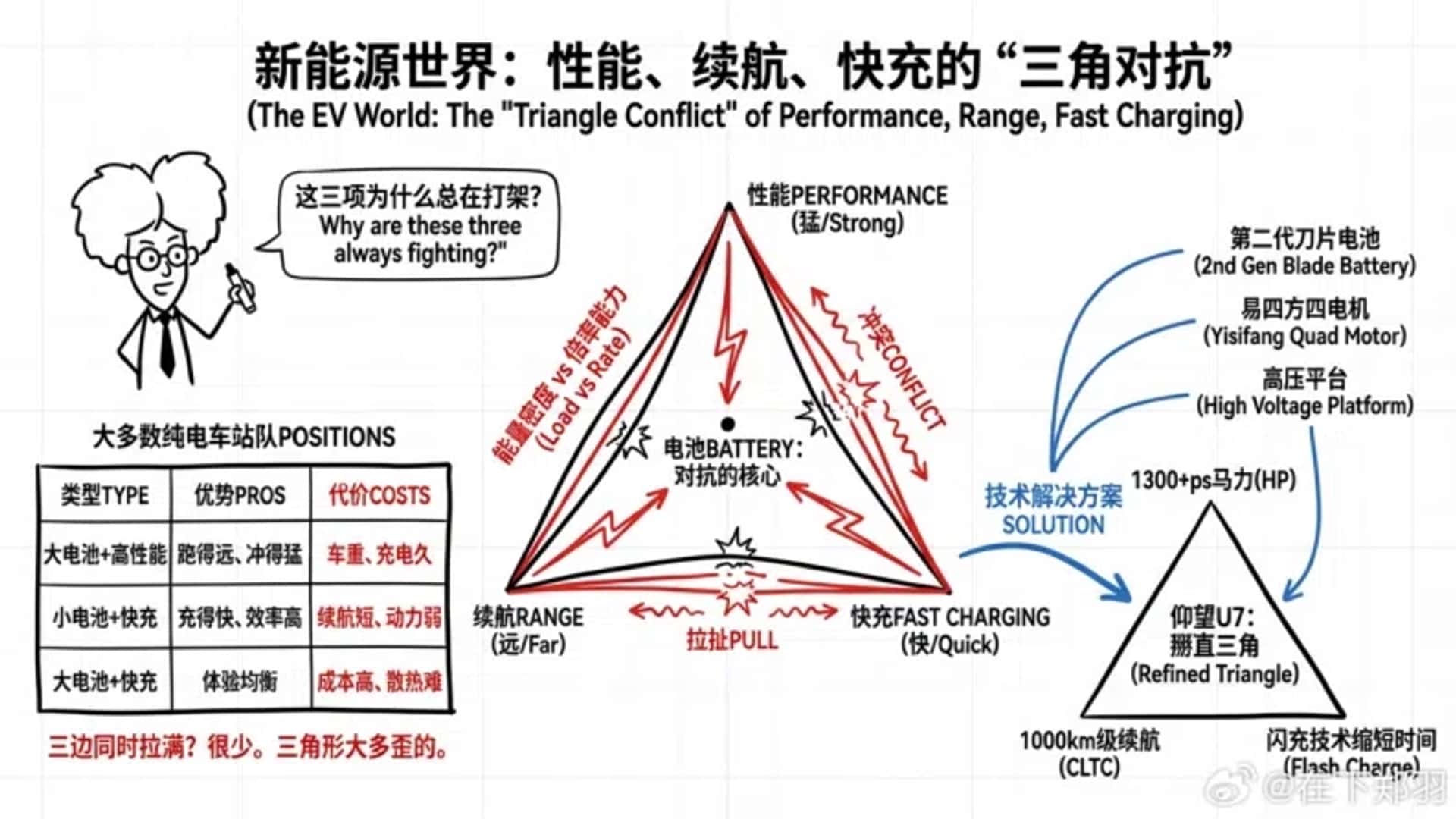
Indeed, battery performance is not solely measured by range. The Blade Battery 2.0 stands out for its ability to deliver both power and rapid charging, a challenge that Hu Xiaoqing, the general manager of Yangwang, describes as the “impossible triangle.” In essence, it’s a delicate balance between range, power, and charging speed, which has long been a puzzle for engineers.
The Impossible Triangle: Performance vs. Compromise
“Power? We can provide it, but battery longevity suffers. Range? We can extend it, but then we must compromise on acceleration. Fast charging? Certainly possible, but only with smaller battery packs.”
This statement highlights the challenges faced by electric vehicle manufacturers. Each technological advancement comes with compromises. A larger battery allows for better range but adds weight to the vehicle, negatively impacting performance. Conversely, a lighter battery could improve acceleration but may not guarantee satisfactory range.
To overcome these challenges, BYD introduces an innovative system called “Super Quad-Motors,” paired with a 150 kWh pack. This aims to combine extended range, enhanced performance, and rapid charging. It remains to be seen if this solution will meet the expectations of demanding consumers.
A Strategic Offensive in the European Market
With the Yangwang U7, BYD is not just improving its products; it is also strengthening its presence in the European market. The Chinese automaker aims to compete with well-established brands like Tesla and BMW. This raises questions about consumer perceptions of Chinese brands. Historically, they have often been viewed as less reliable or less capable. However, BYD’s rise could change that narrative.
This offensive comes with a clear intent to offer premium vehicles at competitive prices. Leveraging its technological advancements and mastery of battery production, BYD could attract European customers seeking innovation without breaking the bank.
Environmental Considerations at Play
The rise of electric vehicles is not without criticism, particularly regarding their environmental impact. Battery production, especially lithium-based ones, raises ecological concerns. By opting for lithium iron phosphate (LFP) batteries, BYD makes a more sustainable choice, as this chemistry is less polluting and less subject to lithium price volatility.
However, the question of battery durability and recycling remains a crucial issue. Consumers are increasingly sensitive to these matters and expect brands to commit to these fronts.
An Uncertain Future for Electric Vehicles
While the Yangwang U7 represents a significant advancement in electric battery technology, its success will depend on several factors: acceptance in the European market, consumer perceptions of range and performance promises, and environmental challenges related to battery production and recycling.
In the medium term, we could see a shake-up in the electric vehicle market. If BYD manages to establish its credibility and capture a significant market share, it could prompt other brands to intensify their efforts in innovation and sustainability. Consumers may then benefit from a broader and more capable offering.
In Summary
- The Yangwang U7 boasts impressive range but raises questions about its reliability.
- The “impossible triangle” highlights the technological challenges manufacturers face.
- BYD strengthens its position in the European market with premium ambitions.
- Environmental issues related to batteries remain crucial for the future of electric vehicles.
- BYD’s success could transform the competitive landscape in the coming years.


