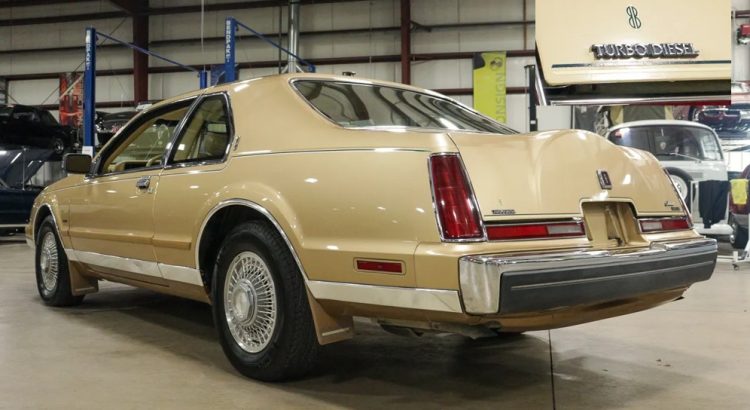
In the grand book of automobiles, some pages are more intriguing than others. Take the Lincoln Continental Mark VII Turbo Diesel, a coupe that marries American luxury with German engineering. A boldness that inevitably recalls a poorly balanced cocktail but oh so fascinating, between a bourbon on the rocks and a blonde beer. How did this attempt to conquer the luxury sedan market take shape? Hold on tight, we are diving into the unusual history of this model.
An ambitious coupe
The Lincoln Continental Mark VII was introduced to the market in 1984, a time when America was desperately trying to compete with the sophistication of European cars. Ford understood that it needed to make an impression. And for that, what better than to integrate a BMW engine under the hood? Thus, here is the Continental, with its M21 turbo diesel engine, a Germanic heritage that promised an explosive mix of power and luxury.
Although Americans had long had a fascination with diesels, particularly thanks to General Motors models, time was running out. Ford then decided to opt for the efficient 2.4-litre inline six-cylinder from BMW, rather than developing its own block. A bold choice that allowed Lincoln to proudly display an engine worthy of its ambitions.

Performance to temper
The M21 engine produces 115 horsepower and 155 lb-ft of torque, which might give the impression that the Mark VII is a real rocket. However, don’t be fooled by the numbers: it wasn’t really fast. In comparison, the model with the 5.0-litre V8 engine offered a “high power” version that almost made the turbo diesel’s performance pale in comparison. The latter had to contend with a 3.73:1 axle ratio, helping to compensate for its power deficit.
The powertrain was paired with a ZF four-speed automatic transmission. A transmission that, while effective, did not prevent moderate acceleration performance, with a 0 to 100 km/h time exceeding thirteen seconds. Yes, you heard that right: it wasn’t really a racing beast. But at least, it stood out for its energy efficiency with an estimated consumption of 23 mpg in the city and 29 mpg on the highway.

A sumptuous interior
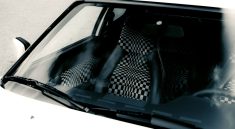
If the performance was relative, the interior was a feast for the senses. Imagine sliding into luxurious leather seats while being surrounded by elegant electronic instrumentation. The Mark VII offered unprecedented comfort with high-end equipment and a warm atmosphere, far from the technological coldness that could be felt in some European models.
Ford even took care to install an electronic air suspension system. An impressive feature that ensured a smooth ride… until the system encountered problems. Who doesn’t remember the Mark VII dragging its rear on the pavement? A small detail that tarnished the image of an otherwise majestic car.

A rarity in automotive history
The production of turbo diesel models was limited to two years and around 2,500 units in 1984. This makes it a rare collector’s item today. But like many brilliant ideas poorly synchronized with their time, the Mark VII Turbo Diesel did not achieve the expected success. Selling a diesel model during a period of disaffection for this type of engine was a risky bet. It found itself mired in an ocean of forgetfulness with a value that struggles to exceed $6,000 on the collector’s market.
This automobile, however, deserves to be rediscovered. It embodies a time when America was trying to reinvent itself in the automotive field while keeping its roots firmly planted in American soil.

A unique legacy
Ultimately, the Lincoln Continental Mark VII Turbo Diesel is much more than just a vehicle: it is a piece of automotive history that evokes memories of a time when the boundaries between luxury and performance began to blur. Perhaps if Ford had launched this model a little earlier or a little later, it could have changed the game for diesels in the United States. But as often happens in this ruthless world of automobiles, it’s not just about having a good idea; it’s also about knowing how to sell it at the right time.
That said, it remains in our memories as a fascinating example of a crossover between two distinct automotive philosophies – American and German – offering enthusiasts an inexhaustible topic of discussion over a drink, whether at a bar counter or in a showroom.