


Recent military tensions in the Middle East, exacerbated by attacks involving the United States, Israel, and Iran, have not gone unnoticed in the motorsport world. Formula 1, which has seen its presence strengthen in this region, now faces an unprecedented reality: the direct impact of geopolitics on its calendar. What consequences will these events have on upcoming races?
Immediate Repercussions on Testing
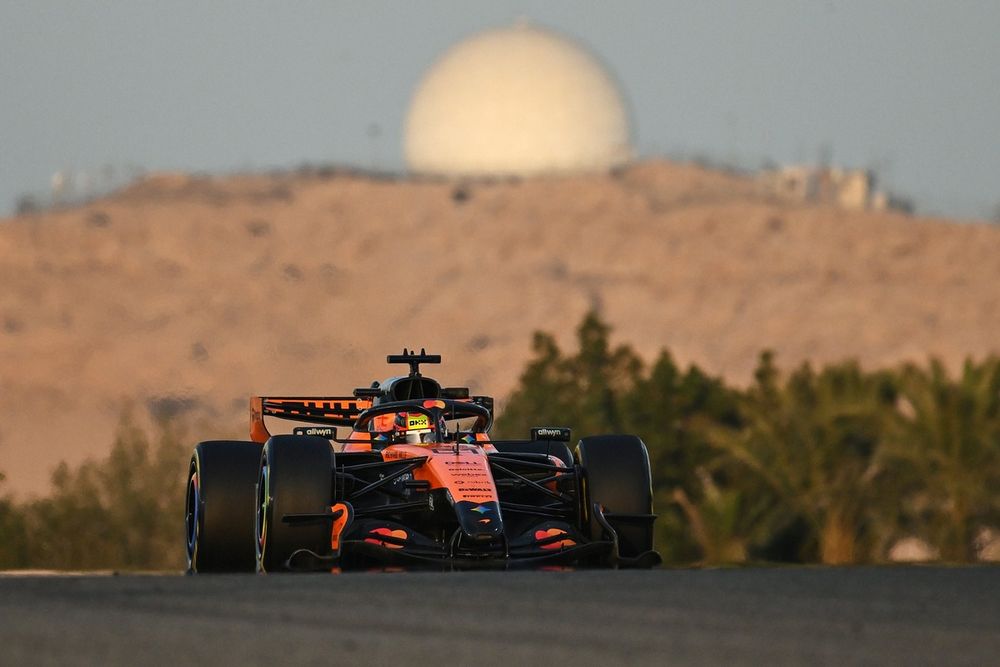
The first collateral victim of this military escalation is the cancellation of Pirelli’s scheduled tests in Bahrain. The reason for this decision is the threat posed by potential Iranian retaliation against US bases in the region. This cancellation is not trivial: it disrupts the preparation programme for teams, particularly Mercedes and McLaren, who had planned to evaluate specific tyres for wet conditions.
In a statement, Pirelli emphasised that the safety of its personnel was paramount and that measures were being taken for their swift return to Europe. However, this situation poses a genuine logistical challenge for the teams, who must contend with compromised testing conditions. In summary, preparations for the season start are in jeopardy, and on-track performance could be affected.
The F1 Calendar Under Pressure
The Bahrain Grand Prix, scheduled for the weekend of 10-12 April, and the Saudi Arabian Grand Prix a week later, raise crucial questions. While F1 has bet on expansion in these emerging markets, the current situation may force organisers to consider postponements or even cancellations. What was once seen as a growth opportunity could quickly turn into a logistical headache.
Practically, this means teams may need to modify their strategies and adapt their preparations based on the evolving situation. For local sponsors and partners, this is also a cause for concern: the image of a jeopardised F1 could harm their investments in the region.
Impact on the Image of Formula 1
Formula 1 has always positioned itself as a vector of glamour and excitement, but geopolitical tensions could tarnish this image. Fans and the media are closely watching F1’s reaction to this crisis. A cancelled or poorly managed event could be interpreted as an admission of helplessness in the face of issues that transcend the realm of sport.
However, the real problem also lies in the social responsibility of the organisers. F1 must navigate between the thrill of racing and respect for security concerns. At a time when countries like Saudi Arabia are heavily investing in sports to improve their image, the legitimacy of these events is an urgent matter.
Other Disciplines in the Crosshairs
The situation does not only affect F1. Other competitions, such as the WEC (World Endurance Championship) and MotoGP, are also scheduled in this region. With the WEC Prologue planned in Losail and upcoming MotoGP races, organisers must question the viability of these events in such an unstable context.
Practically, this could lead to a reconfiguration of the global sports calendar, with a possible relocation of races to territories deemed safer. However, such a manoeuvre could prove costly in terms of already committed investments and signed contracts.
Towards a Strategic Shift?
In light of this crisis, a question arises: could F1 consider a strategic shift? If the current trend continues, it would be wise for organisers to diversify their race locations and reduce their reliance on potentially unstable markets. In summary, this would imply a return to more traditional circuits in Europe or North America to ensure some continuity.
This strategy could also be seen as a defensive manoeuvre in response to the growing competition from other motorsport events that may see an opportunity to attract sponsors and spectators.
In Summary
- Geopolitical tensions are directly disrupting the F1 calendar.
- The cancellation of Pirelli’s tests in Bahrain jeopardises team preparations.
- The Bahrain Grand Prix and Saudi Arabian Grand Prix are at risk.
- A reconfiguration of the sports calendar may be considered.
- F1 must navigate between glamour and safety to preserve its image.
In conclusion, the current situation in the Middle East places F1 in a delicate position, balancing commercial opportunities and security risks. For whom? For the teams that must quickly adapt to an uncertain context. Alternatives involve a return to more stable circuits while keeping an eye on the evolving situation. The strengths of this regional expansion could become limitations if the safety of events cannot be guaranteed.


