

As the first winter tests approach, Ford seems ready to redefine its role in the world of Formula 1. Between innovations and strategic adjustments, the American manufacturer is no longer content with mere financial support but is fully committed to the development of thermal engines alongside Red Bull. An alliance that could well change the rules of the game.
A New Era for Ford in Formula 1
In less than a month, the two Red Bull teams will discover for the first time their new power unit, the result of three years of collaboration with Ford. Even though the first winter test in Barcelona will take place behind closed doors, it represents a pivotal moment for both partners. Mark Rushbrook, director of Ford Performance, emphasises that this test will be crucial for assessing the competitiveness of the power unit.
During the initial discussions, while Christian Horner was still leading Red Bull, Ford was to limit itself to financial support and its expertise on electrical components. However, reality took an unexpected turn. As Rushbrook explains in an exclusive interview with Motorsport.com: “The initial list focused on electrification: the battery cell, the electric motor, the inverter, the software, and the calibration map.” But this approach evolved, paving the way for a much more significant involvement.

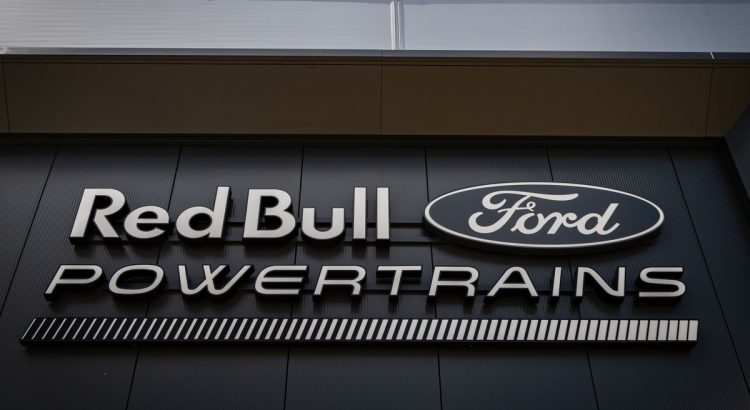
The Red Bull Powertrains workshops in Milton Keynes.
In line with the overall strategy of Ford Motor Company, the priorities have been adjusted in the F1 project. The focus has shifted to the development of the thermal engine, which has become essential in Ford’s vision for its production cars. Rushbrook specifies: “In our plans for production cars, we will continue to have thermal engines, full hybrids, and 100% electric vehicles.” This diversification offers Ford welcome flexibility in the face of regulatory changes in the automotive sector.
Unexpected Synergies
Ford hopes to leverage its involvement in F1 to enhance its expertise in thermal engines. “By working on the electric side and seeing what was happening on the thermal engine side, we saw an opportunity to participate and contribute.” The parts currently manufactured in Dearborn, where Ford’s development campus is located, are primarily related to the thermal aspect of the power unit, illustrating an active collaboration.
Rushbrook insists that this involvement does not reflect a lack of expertise at Red Bull Powertrains, but rather an opportunity for knowledge sharing. “When technical minds work together, they ask questions and exchange ideas. What would Ford do in this situation?” This dynamic allows both entities to push their technical boundaries while creating innovative synergies.
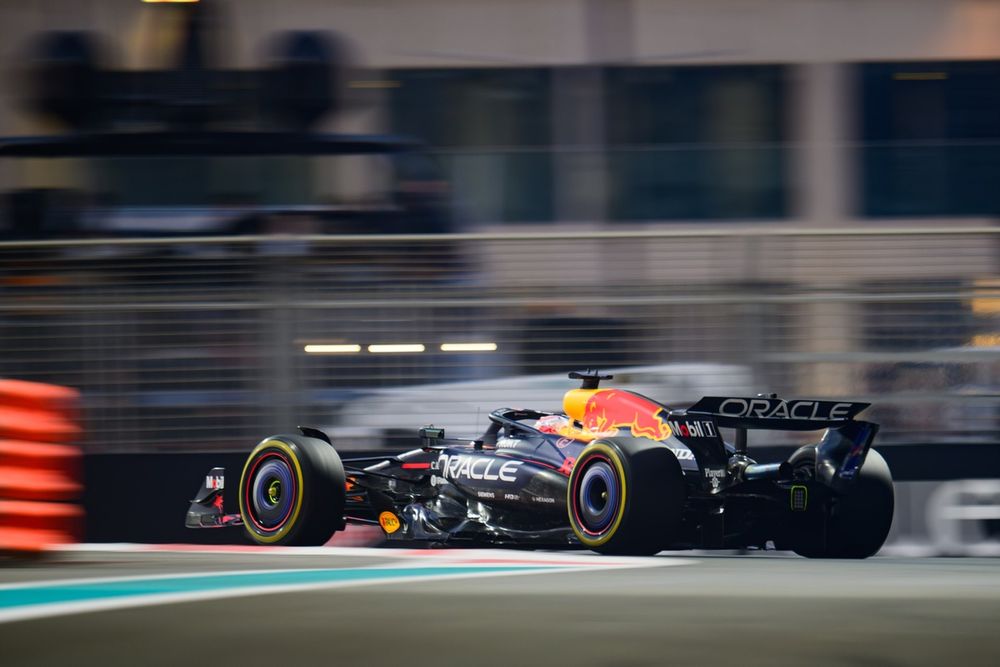
Max Verstappen (Red Bull)
The Benefits for Ford
This collaborative approach is not just a marketing strategy; it enables Ford to strengthen its position in the thermal engine market while learning from the advanced technologies used in F1. Rushbrook states: “On the electrification side, for example, the chemistry of battery cells, we have been able to contribute while learning immensely.”
The benefits of this experience are also visible in the design and manufacturing of components. “This has really pushed us to a much higher level than in previous programmes.” In terms of quality control and innovation, Ford is now better equipped to meet the challenges of the modern automotive market.
A Sustainable Commitment in F1
Ford’s choice to continue developing thermal engines reflects the long-term importance of Formula 1 for the manufacturer. As discussions are already underway regarding engine regulations beyond the current cycle, Ford appears determined to stay in the race. Rushbrook asserts: “We know we will have thermal engines, hybrids, and 100% electric vehicles for the foreseeable future.”
This strategic positioning could also pave the way for an extended partnership with Red Bull, especially if future regulations favour a return to V8 engines with electrification. Rushbrook responds directly to this possibility: “Yes.” An answer that could redefine Ford’s future in Formula 1.
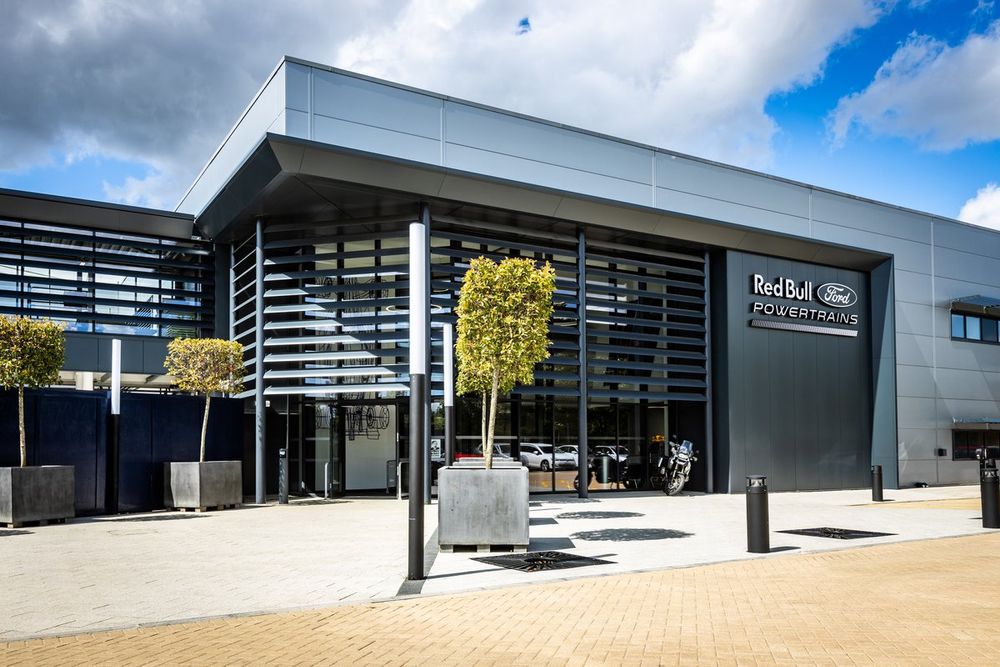
The Red Bull Ford Powertrains factory in Milton Keynes.
With a diverse range of powertrains for its production cars, Ford is positioning itself to take advantage of regulatory developments in F1. Rushbrook concludes: “As long as the rules remain reasonably relevant to us, we will be satisfied.” The future therefore looks promising for this innovative collaboration between Ford and Red Bull, ready to explore new horizons in the competitive world of Formula 1.


