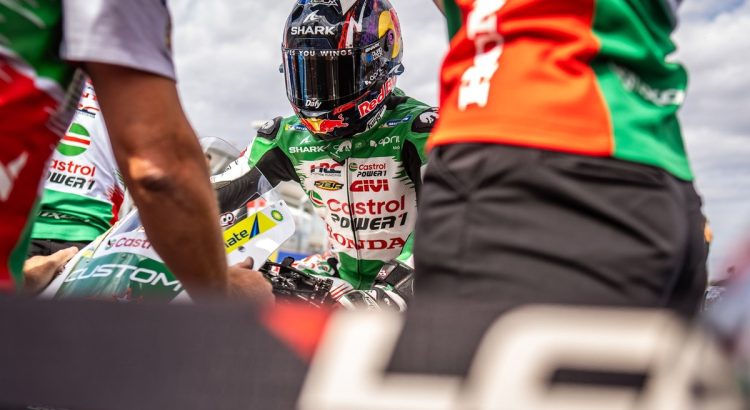
In the frenetic world of MotoGP, communication between riders and their teams has always been a challenge. As the bikes roar on the track, riders often find themselves isolated, receiving only rudimentary messages. But with the potential introduction of radio, can we hope for an evolution or is it merely a superfluous gadget?
An archaic system in need of modernisation
When a MotoGP rider takes off, they find themselves in a world where direct communication with their team is almost non-existent. Information primarily reaches them through signage and a few pre-recorded messages displayed on their dashboard. In the event of an incident, race control also uses this rudimentary tool, supplemented by flags and light signals scattered along the track.
Communication is not always smooth. For instance, Aleix Espargaró famously confused the finish line with an extra lap during the 2022 Catalonia Grand Prix. Fortunately, MotoGP is aware of the shortcomings of this system and has been working for several years on a project to integrate radio to improve exchanges between riders and their teams.
Promising yet delicate tests
Trials have multiplied throughout 2025, aiming to refine a system that could eventually resemble that used in Formula 1. The initial idea of transmitting pre-recorded messages has evolved into interactive communication between the team and the rider, allowing the latter to respond in real-time.
However, this innovation is not without sparking debates. In the F1 paddock, radio exchanges can influence the decisions of officials, sometimes to the detriment of sportsmanship. As MotoGP becomes part of Liberty Media, can we imagine riders starting to communicate live with the public during races?
Riders divided on the idea
Johann Zarco, during a meeting with his supporters after his victory at the French GP, mentioned this possibility. He admitted that the development of the system could provide enriching content for viewers: “The system, for now, they want to develop it to give content to viewers. It’s true that it could be small moments of exchange.” But he remains aware of the stakes: “You’re going to hear beeps all the time!”
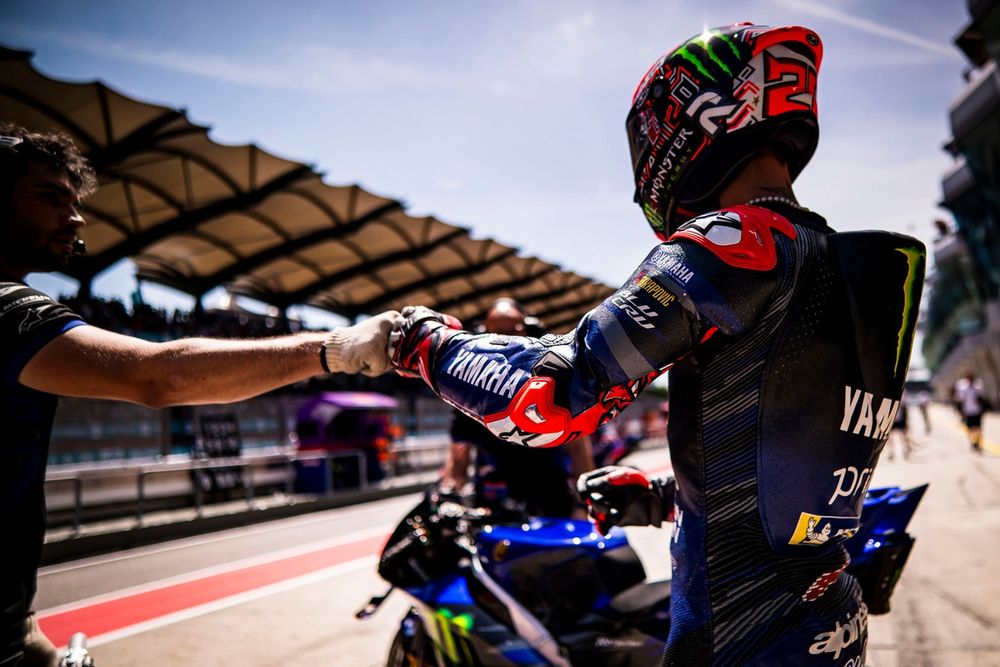
In contrast, his compatriot Fabio Quartararo is more sceptical. For him, communication on a motorcycle is not as easy as in a car. “Honestly, I think we won’t talk too much,” he explains. “It’s not the same physical effort. We move a lot on the bike, so it’s mainly about listening to the engineers more than anything else.”
For Quartararo, messages sent by the team wouldn’t really impact his performance: “It won’t change anything for us because in the end, no matter the state of the tyres, we have to finish the race.”
Fabio Quartararo
Technical challenges to overcome
Despite the potential interest in this communication system, several obstacles still need to be overcome. During tests at the MotorLand Aragón circuit, the audio quality was deemed insufficient. Zarco even criticised the crackling that made the system almost unusable: “It’s absurd to be so far from the plate.”
MotoGP has chosen not to use earpieces like those in F1, preferring a bone conduction system. This allows riders to remain alert to their surroundings. However, this poses a problem: the snug helmets worn by riders do not allow for the use of noise-cancelling earpieces.
As Zarco explains: “We are very exposed to the wind… A Formula 1 driver is better protected. They can fit a nice earpiece with quality sound.”
Johann Zarco
A question of balance
Zarco also highlights the complications related to the size of helmets used in MotoGP: “Currently, those who have tried this big Formula 1 earpiece say it hurts too much with the type of helmets we wear.” The shape of current helmets makes it difficult to integrate high-performance audio devices.
This problem greatly complicates communication between riders and their teams. Zarco insists that when he tested the system, he struggled to hear the transmitted information, and teams would likely need to wait until he stopped to catch his voice: “One moment we move left, one moment right… it shakes.”
An uncertain yet intriguing future
If these technical issues are resolved, there remains the debate about the impact this communication could have on riders’ concentration during the race. Quartararo admits that it wouldn’t bother him too much: “It doesn’t disturb me too much,” he says. Riders seem capable of filtering messages, even if Álex Márquez specifies: “Maybe if they send one message, we’ll listen. If it’s all the time, we stop listening.”
As MotoGP continues to explore these new avenues, the future of communication between riders and their teams remains as fascinating as it is uncertain. Between the desire to innovate and the necessity to preserve the spirit of competition, a delicate balance will need to be found.
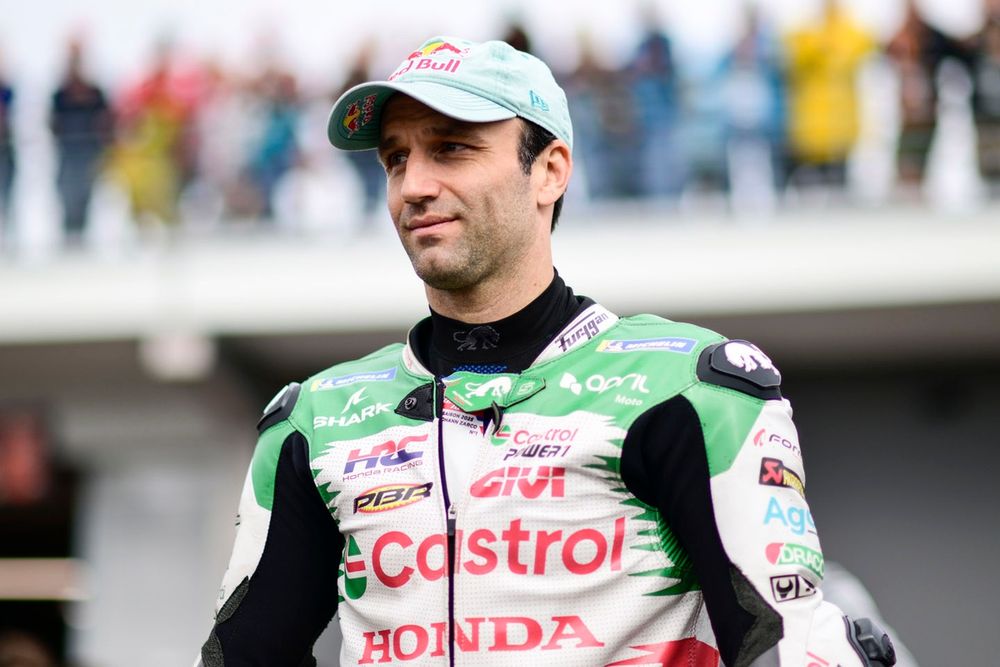
Johann Zarco