The Miami Grand Prix will not begin at the original time after all. The FIA has brought the start forward by three hours to avoid the most weather-exposed part of the afternoon, with thunderstorms forecast later in the day in Florida.
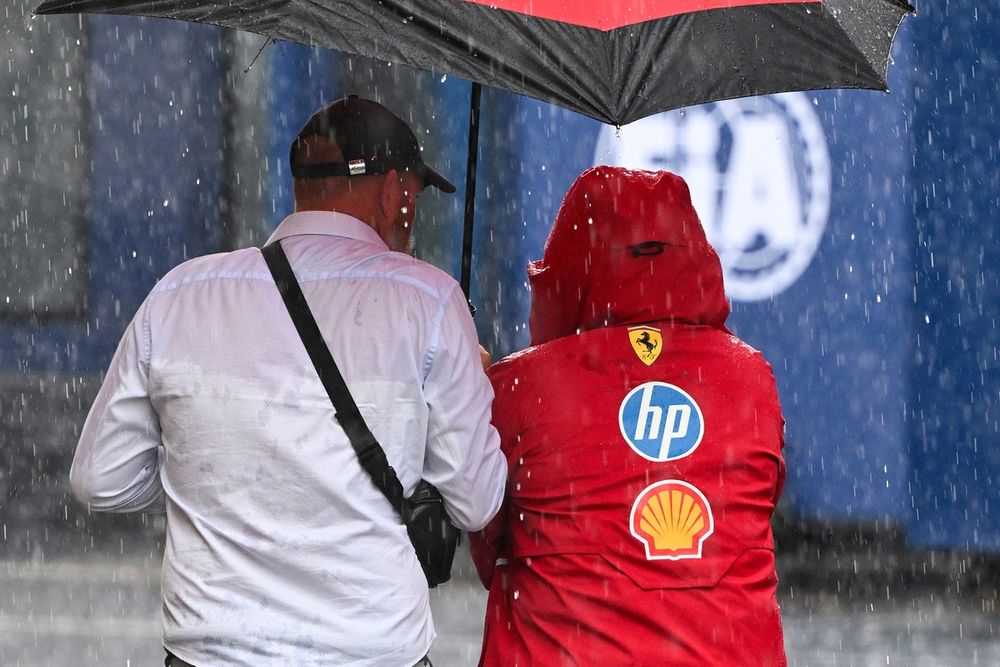
On paper, it is a small scheduling tweak. In reality, it could alter the race completely. In Formula 1, a few hours can be the difference between a Grand Prix run at full speed and one strangled by safety cars, interruptions and strategy calls nobody planned for.
For the broader weekend context, our Formula 1 coverage keeps this decision in perspective. In Miami, the weather is not a backdrop; it is part of the race.
Start brought forward to protect the race
The Grand Prix was originally due to start at 16:00 local time, which would have been 22:00 in France. It will now get under way at 13:00 in Miami, or 19:00 in France. The FIA took the decision with FOM and the local promoter after the forecast showed the original slot sitting squarely in the highest-risk weather window.
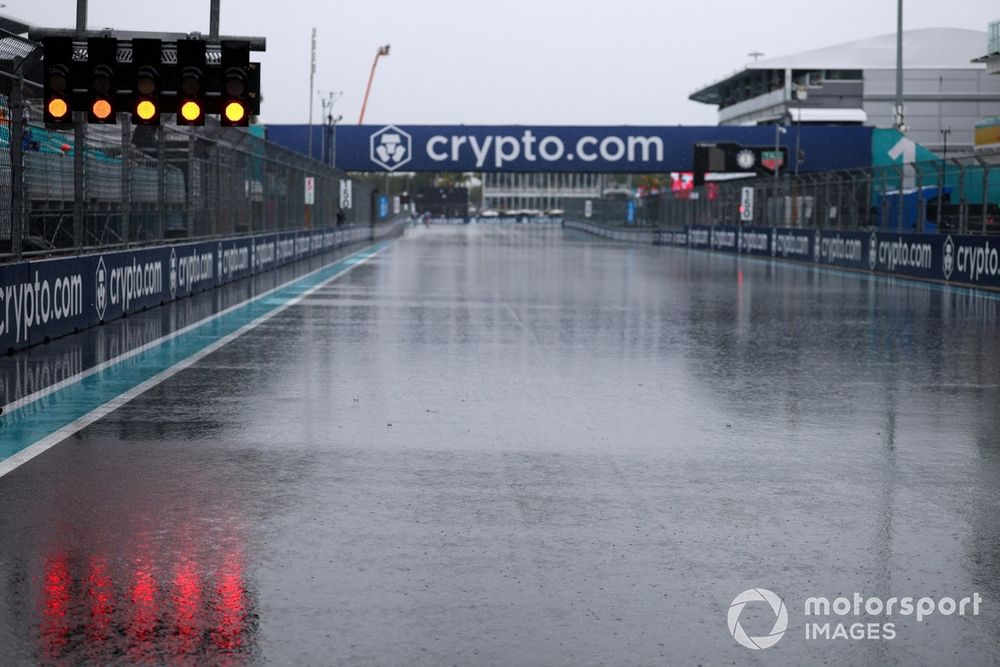
The real issue is not viewer convenience, but whether the race can actually run to completion. In Florida, a thunderstorm is not just a heavier shower. Once lightning is detected nearby, local regulations require outdoor activity to be suspended immediately, with spectators and staff moved to safety.
So Formula 1 has chosen to act early rather than leave the clock to chance. Better to lose three hours on the schedule than a large chunk of the race behind the safety car, or far more if the sky closes in at the wrong moment.
Miami is particularly exposed to the weather
The Miami circuit, laid out around the Hard Rock Stadium, does not offer the same margin for error as a conventional track. Water needs to clear quickly, visibility can fall off a cliff in seconds, and lightning-related stoppages leave no room for improvisation.
And the problem is not just sustained rain. It is the sequence that can follow: a delayed start, a move to shelter, then a messy restart. On a race already vulnerable to rhythm changes and strategic disruption, even a brief stoppage can throw every team’s plan into disarray.
The FIA and F1 have therefore gone for the simplest option: shift the start time and widen the window before the forecast storms arrive. It is common-sense stuff, really, but it shows how modern Grands Prix are sometimes decided by weather models as much as tyre simulations.
What the rain means for the teams
Miami’s weekend is not only being affected on the clock. Rain also changes how teams prepare for the race, because Formula 1 leaves very little to chance when grip becomes scarce.
If an official risk of rain and thunderstorms is declared, two further exceptions to parc fermé rules are allowed: ride height can be altered, and the opening angle of the front wing’s straightline flap can be adjusted. Those changes give engineers a little more scope to tailor the car for a slippery surface.
This is not just for the obsessives in the pit lane. On a wet track, a few millimetres or a handful of degrees can change braking, cornering and acceleration. Safety improves, but so does performance, because an incorrectly set-up car becomes almost impossible to use properly.
Wet-weather rules are already tighter
The FIA has also set out a specific framework for damp conditions, with several restrictions intended to limit the spread in car behaviour. MGU-K deployment is limited to 250 kW, while boost mode is banned when grip is low.
Active aerodynamics is also more tightly controlled: the rear wing is locked, and the front wing can only open partially and within limited zones. There is also a higher blanket temperature for intermediate tyres, helping them come up to working temperature more easily.
On paper, the aim is to preserve some sporting balance. On track, it is a reminder that when rain arrives, technology does not tame the elements completely. It helps. It does not remove the danger.
A race that could still become tricky quickly
Even with the earlier start, the race remains vulnerable. Rain is still expected to affect the Grand Prix, and Miami is not the sort of circuit that forgives mistakes. A lack of experience in these conditions can turn a simple switch to intermediates into a test of survival.
The complication is that this generation of cars has not often spent long periods running hard in heavy rain under such complex circumstances. Between low-grip set-up changes, poor visibility and the risk of interruptions, the race could change character very quickly.
What the FIA has at least done is give the event a fighting chance of taking place before the storm takes control. In Formula 1, that is not always possible. In Miami, the governing body has at least tried to get one step ahead of the weather.
Miami’s Grand Prix is already being shaped by the forecast
The Miami Grand Prix is therefore about more than a simple timetable change. It is another reminder of how modern Formula 1 has to balance safety rules, local regulations and weather conditions that now act as a sporting factor in their own right.
- The start has been brought forward by three hours, to 13:00 local time, to avoid storms forecast later in the afternoon.
- The FIA’s priority is clear: protect the race, the drivers, the teams and the public.
- If rain arrives, teams still have a little room to alter set-up despite parc fermé.
- Wet-weather rules remain strict, with limits on MGU-K deployment and active aerodynamics.
- Miami remains a track where rain can quickly complicate drainage and race reading.
- In the end, this Grand Prix may be decided as much on the pit wall as under the Florida lightning.